Gezicht op Kleef van de Galgenberg — History & Facts
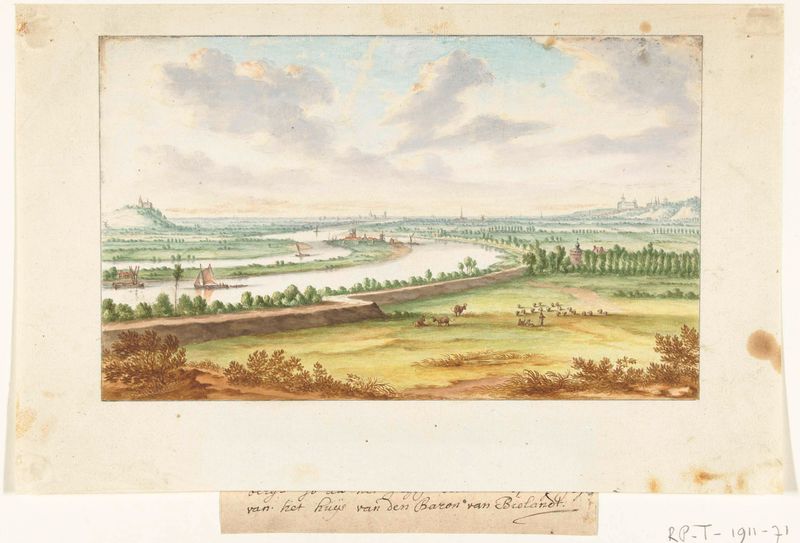
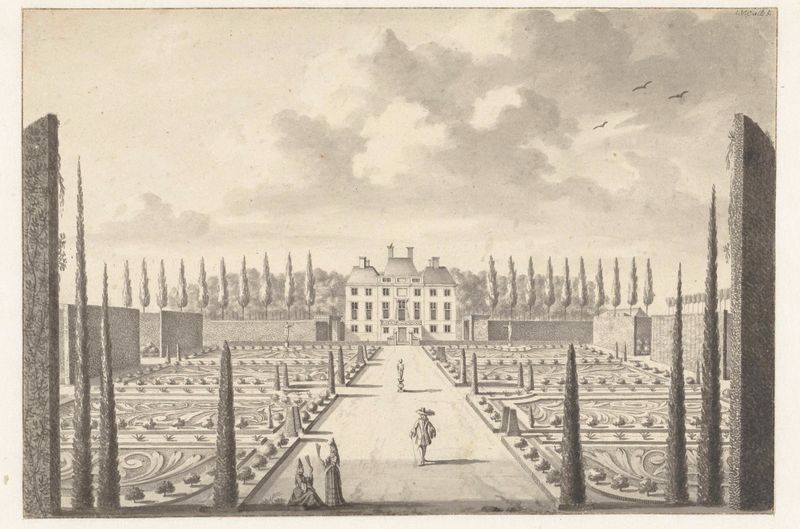
This haunting notion resonates deeply within the realms of perception and madness, where vibrant hues wrestle with the shadows of reality. Look to the left at the rolling hills that embrace the horizon, their vivid greens cooling into soft blues where they meet the sky. The artist's meticulous brushwork captures the texture of the landscape, while delicate strokes of white evoke clouds drifting lazily. Notice how the play of light dances across the composition, casting a gentle glow on the quaint village nestled below, a serene contrast to the turbulent sky above, suggesting an unsettling undercurrent of disturbance. As your gaze wanders, hidden narratives emerge — the house at the forefront, seemingly tranquil, hints at lives lived within its walls, possibly tinged with the madness of existence.
The juxtaposition of the idyllic landscape and the looming darkness of the sky speaks to the complexities of mental anguish, where beauty coexists with chaos. The entire scene pulses with a tension that evokes introspection, leaving the viewer to ponder the delicate balance between serenity and turmoil. Jan van Call (I) created Gezicht op Kleef van de Galgenberg between 1680 and 1685, during a period marked by shifting artistic sensibilities in the Netherlands. Emerging from the Baroque era, he sought to capture the essence of his surroundings, blending realism with an expressive interpretation of light and color.
In this work, he reflects the world around him — one filled with both burgeoning beauty and the unsettling whispers of madness that often underlie the human experience.