
Gezicht op Maassluis — History & Facts
In the quiet embrace of twilight, hope lingers just beyond the horizon, inviting viewers to reach for what resides within themselves. Look to the lower right where the gentle lapping of water reflects the fading light, shimmering in shades of violet and amber. The horizon stretches profoundly, leading the eye towards a soft, hazy sky that melds seamlessly with the tranquil landscape. Notice how the subtle strokes of the brushwork echo the ebb and flow of life, blending fluidly with the muted tones of the houses and boats nestled along the canal.
Each element is thoughtfully composed, creating a sense of serenity and anticipation. Deeper emotional currents run beneath Jongkind’s surface. The juxtaposition of the calm water against the urgency of the boats suggests a delicate balance between stillness and movement, while the palette, dominated by pastels, evokes fleeting moments of dusk — a reminder that even in endings, there is the promise of renewal. This interplay reveals the artist’s exploration of transience and the quiet hopes that arise in times of change. In 1862, Johan Barthold Jongkind painted this piece while living in France, amidst a burgeoning movement that sought to capture the essence of light and atmosphere.
As one of the pioneers of Impressionism, he was influenced by the interplay of color and nature, establishing a connection between his own emotions and the world around him. His dedication to realism and the effects of nature marked a significant transition in the art world, setting the stage for generations to come.
More Artworks by Johan Barthold Jongkind
Browse all →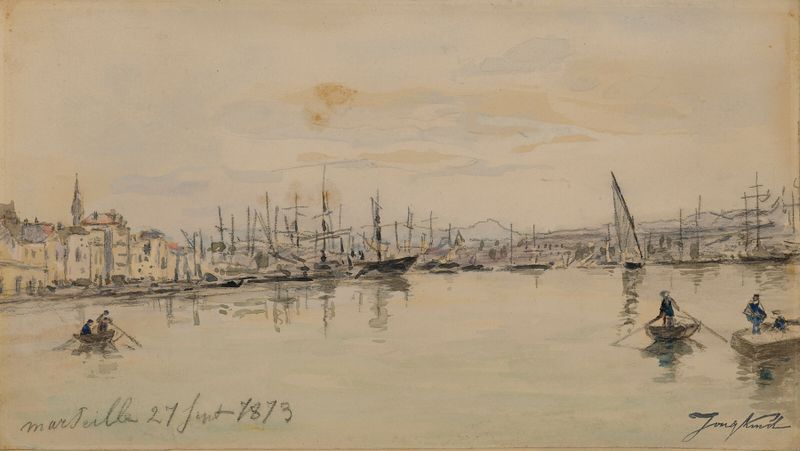
Le Port de Marseille
Johan Barthold Jongkind

Canal Saint-Martin
Johan Barthold Jongkind

Countryside near Brezins, between Grenoble and Vienne
Johan Barthold Jongkind

Notre-Dame vue du quai de la Tournelle
Johan Barthold Jongkind

Environs de Grenoble
Johan Barthold Jongkind

Clair de lune à Overschie (environs de Rotterdam)
Johan Barthold Jongkind

Port de Honfleur
Johan Barthold Jongkind
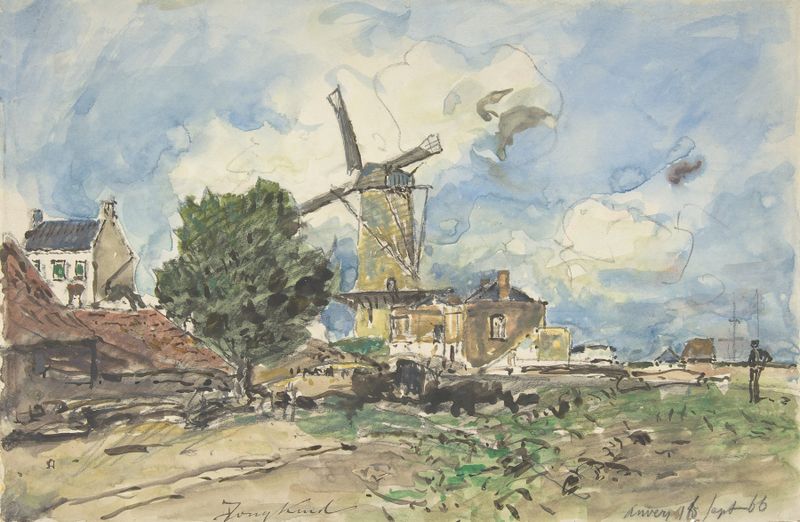
Wind Mill at Antwerp
Johan Barthold Jongkind

Le Havre
Johan Barthold Jongkind

The Church of Overschie
Johan Barthold Jongkind





