
Gezicht op Maassluis — History & Facts
What secret hides in the quiet of the canvas? Here, in Gezicht op Maassluis, the stillness of the moment beckons us to explore the depth of desire infused within the landscape. Look to the left at the gentle curve of the river, its surface reflecting the soft hues of dawn. The vibrant blues and warm yellows breathe life into the scene, while the delicate strokes create a rhythmic movement that invites the eye to roam. Notice how the distant buildings stand like silent sentinels, their soft outlines merging with the misty sky, hinting at stories untold.
Each brushstroke resonates with the longing for connection, echoing the ephemeral nature of the world captured in this fleeting instant. Delve deeper into the layers of Jongkind’s work, where contrasts come alive. The calmness of the water juxtaposes the bustling activity implied by the boats moored nearby, suggesting the desire for both tranquility and adventure. The light dances across the canvas, illuminating the subtle tension between the serenity of the landscape and the unseen lives that inhabit it.
There’s a palpable yearning woven through the composition, an invitation to lose oneself in the expansive beauty of the scene. In 1862, Jongkind painted this evocative vista while living in the Netherlands, a time when the art world was shifting towards Impressionism. The influence of contemporaries like Monet was beginning to seep into his work, as he sought to capture not just the physicality of places, but also the emotional resonance they held. He navigated a landscape both literal and metaphorical, revealing the inner landscapes of his own desires as well as those of the viewers who would stand before his painting.
More Artworks by Johan Barthold Jongkind
Browse all →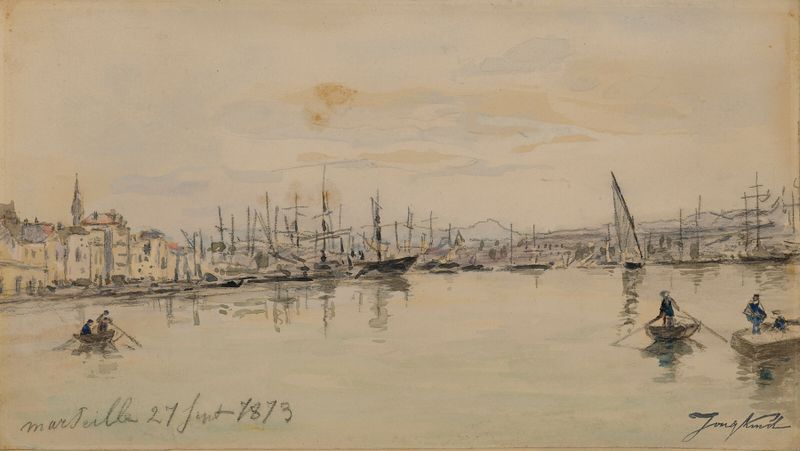
Le Port de Marseille
Johan Barthold Jongkind

Canal Saint-Martin
Johan Barthold Jongkind

Countryside near Brezins, between Grenoble and Vienne
Johan Barthold Jongkind

Notre-Dame vue du quai de la Tournelle
Johan Barthold Jongkind

Environs de Grenoble
Johan Barthold Jongkind

Clair de lune à Overschie (environs de Rotterdam)
Johan Barthold Jongkind

Port de Honfleur
Johan Barthold Jongkind
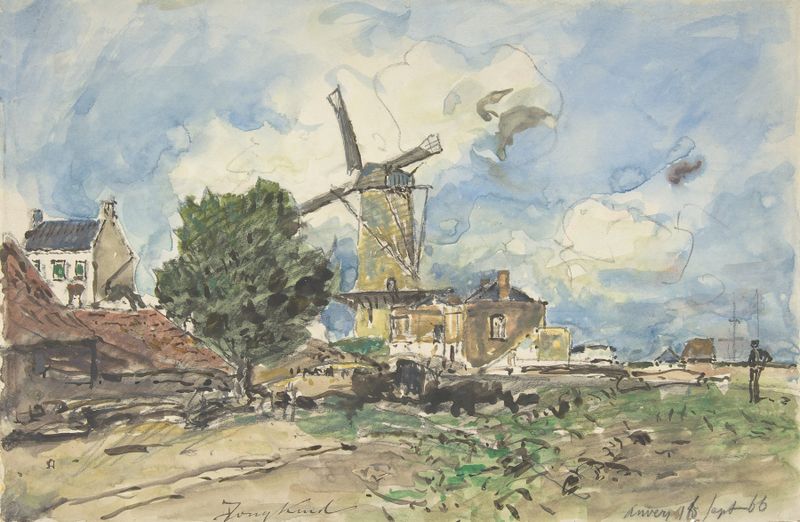
Wind Mill at Antwerp
Johan Barthold Jongkind

Le Havre
Johan Barthold Jongkind

The Church of Overschie
Johan Barthold Jongkind





