
Gezicht op Mariakerke — History & Facts
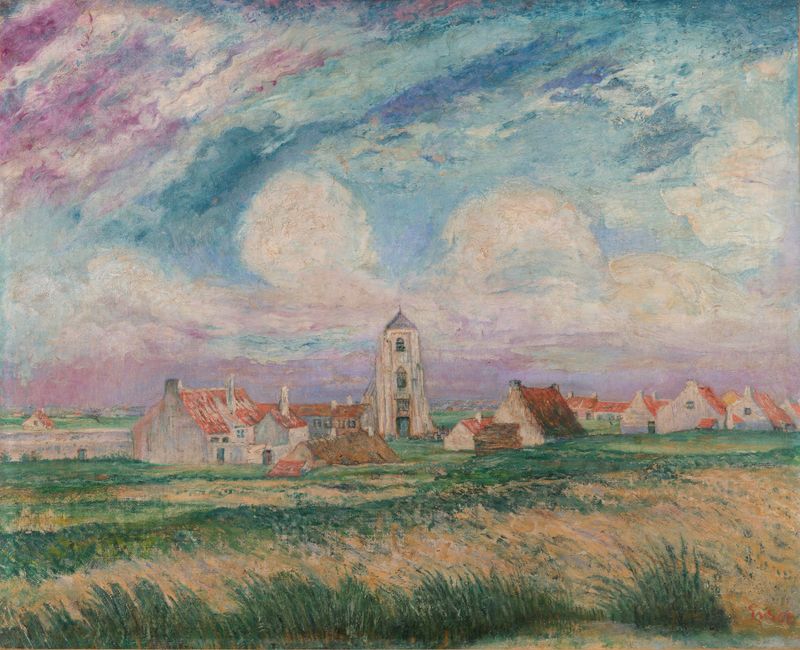
In the hands of an artist, color transforms the mundane into an extraordinary visual symphony, whispering untold stories. Look to the left at the whimsical houses, their facades awash in vibrant hues that dance in the sunlight. The plethora of colors—yellows, pinks, and blues—contrast sharply against the muted backdrop of the sky, creating a playful tension. Notice how the brushstrokes thicken in places, imparting texture and life to the buildings, while the gentle swirl of the clouds envelops the scene like a soft embrace.
The composition guides the eye towards the horizon, inviting viewers to explore the convergence of land and sky. Beneath the surface, there lies a deeper commentary on the nature of perception. The exaggerated colors evoke a sense of joy, yet they also hint at the fragility of life in this idyllic village. The apparent tranquility belies an underlying chaos, as if the vibrant palette is a reminder of the fleeting nature of beauty and existence.
Each architectural detail, though seemingly simple, becomes a vessel of emotion, bridging the realms of reality and imagination. In 1900, Ensor painted this piece during a time of personal and artistic upheaval in Belgium. The art world was shifting towards modernism, while he grappled with his own identity as an artist. Reflecting on his roots, Gezicht op Mariakerke captures a moment of nostalgia intertwined with his innovative spirit, making it a significant work within his oeuvre and the broader context of Western art.
More Artworks by James Ensor
Browse all →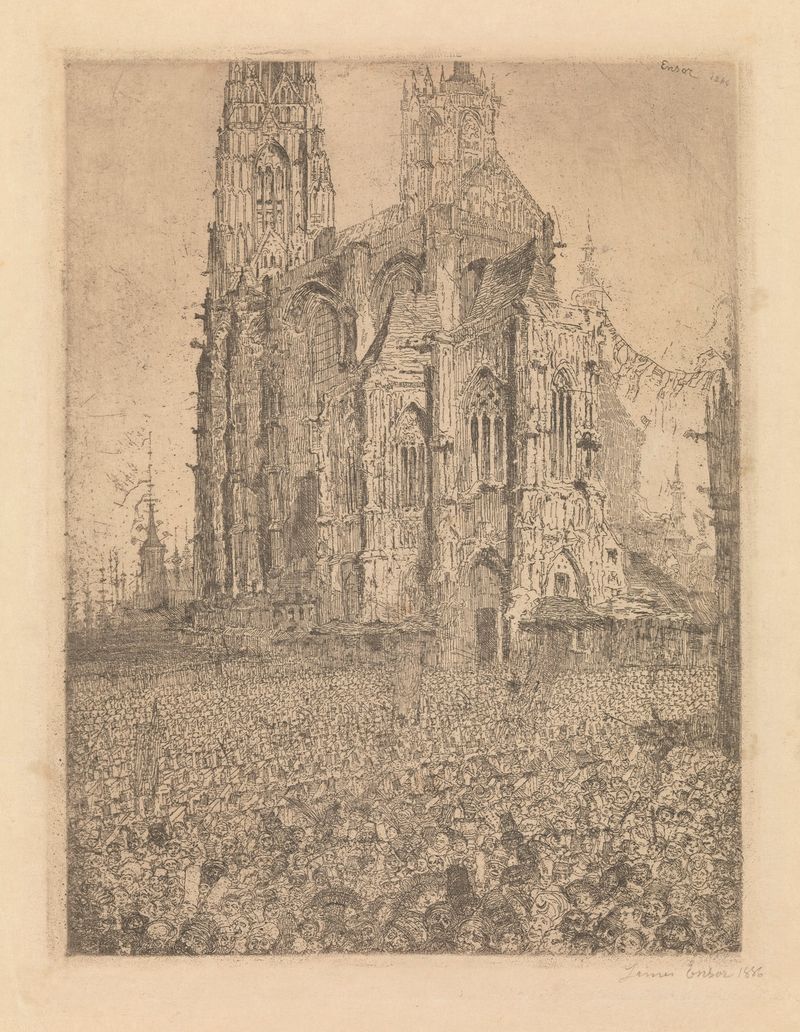
The Cathedral
James Ensor
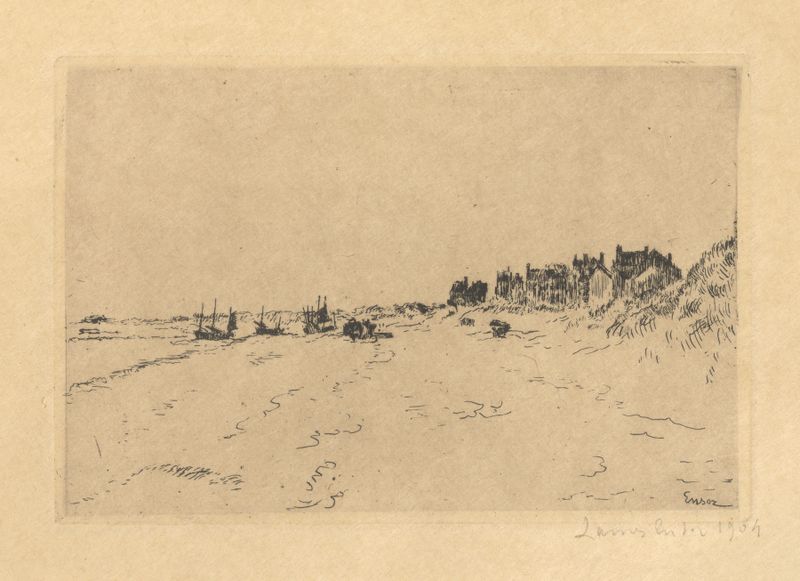
Het strand van De Panne
James Ensor
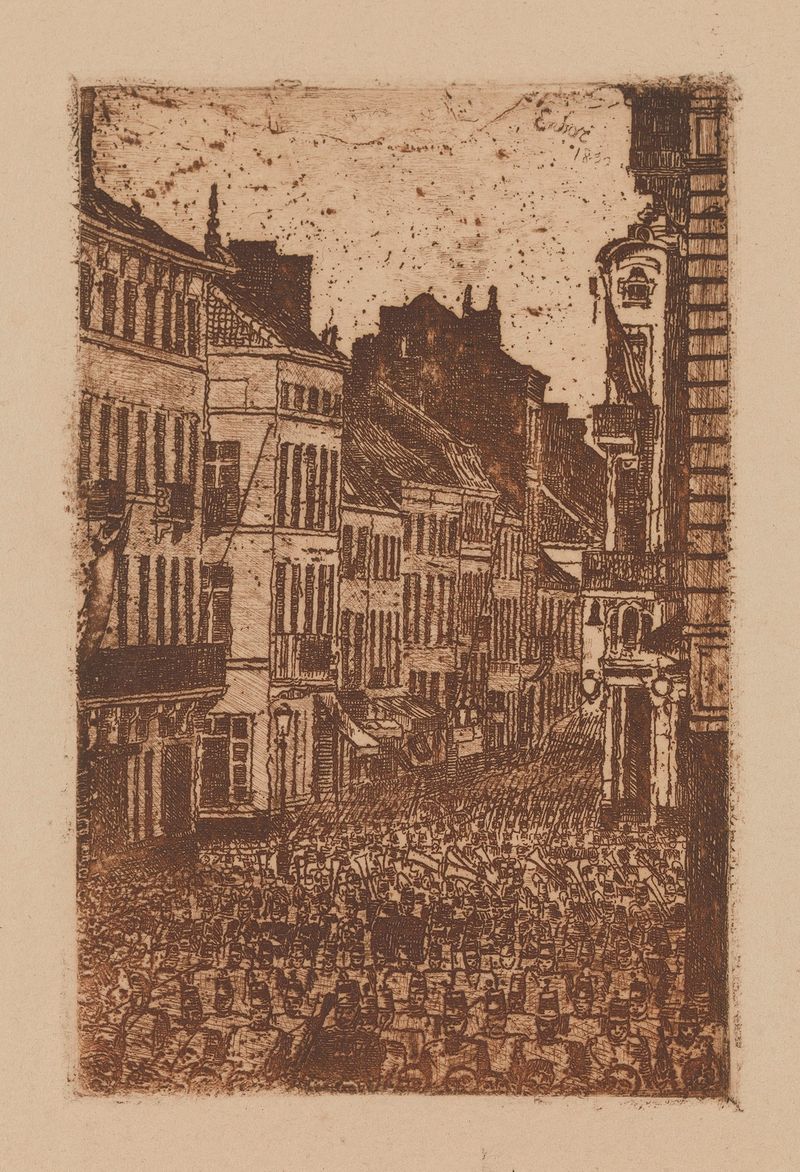
The Music in the rue de Flandre, Ostend
James Ensor
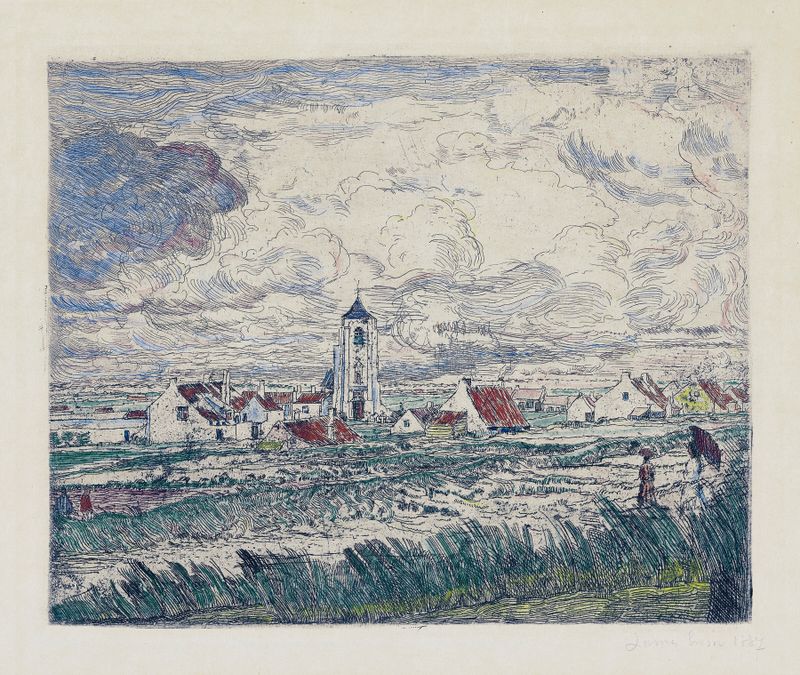
Grande vue de Mariakerke
James Ensor
View of Mariakerke
James Ensor
The Rooftops of Ostend
James Ensor
Huisjes in Mariakerke
James Ensor
The rooftops of Ostend
James Ensor
The Music in the rue de Flandre, Ostend
James Ensor
Verovering van een vreemde stad
James Ensor





