
Girl peeling potatoes — History & Facts
What draws the eye first is the hush of concentration: a young girl stands absorbed in her task, the gentle curve of her profile lit by a soft, golden light that seems to settle as quietly as dust on the wooden surfaces around her. Every element in Girl peeling potatoes by Albert Anker is tuned to this moment of stillness—the careful hands, the mound of potatoes waiting in their basket, the thin, curling skins accumulating on the table. The kitchen shelves behind her, lined with red-glazed crockery and simple jugs, frame her in a world of domestic order, their warm tones echoing the flush of her cheeks and the straw-blonde of her hair.
The artist’s brush lingers on the textures: the crisp folds of her sleeve, the rough weave of her apron, the glint of the knife. This is a scene that asks the viewer to pause, to notice the dignity and quiet pride in the everyday. Painted in 1886, this work belongs to a period when images of rural childhood and household labor were both a celebration and a record of vanishing ways of life. In Switzerland and beyond, artists like Anker became known for their meticulous, affectionate studies of village interiors and the rhythms of ordinary existence.
Such paintings were often commissioned or collected by a rising middle class eager to affirm values of simplicity, honesty, and industriousness. The appearance of Girl peeling potatoes at Koller Auktionen, Zürich in December 2022 is a reminder of how these intimate glimpses into the past continue to resonate. Look again at the girl’s bowed head and steady hands: in her quiet focus, the everyday becomes quietly monumental.
More Artworks by Albert Anker

Portrait Of A Girl
Albert Anker
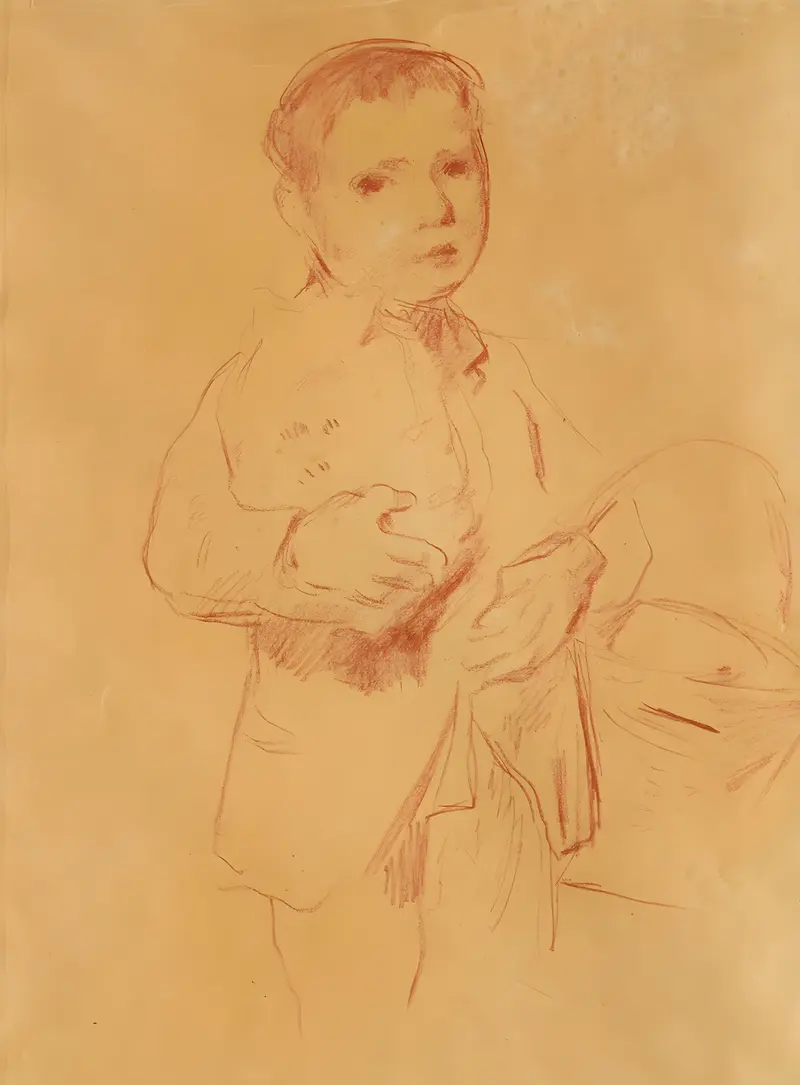
Boy with a basket
Albert Anker
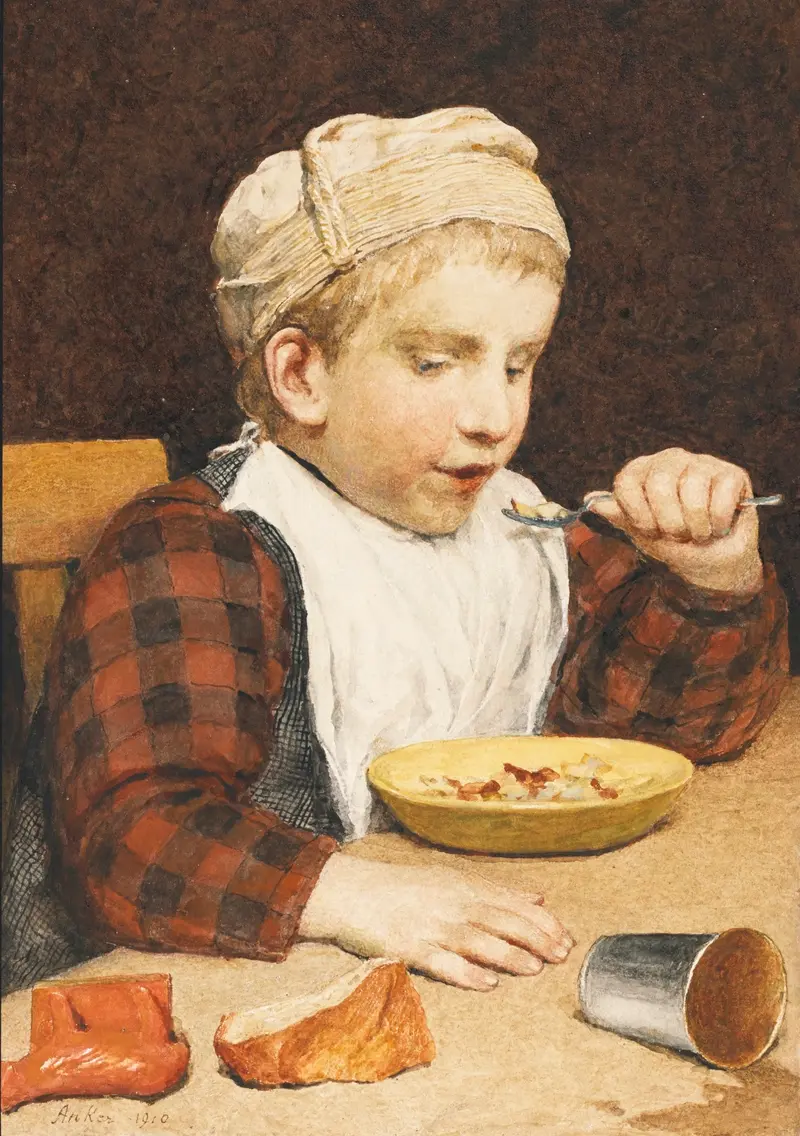
Knabe Mit Mütze Beim Essen
Albert Anker
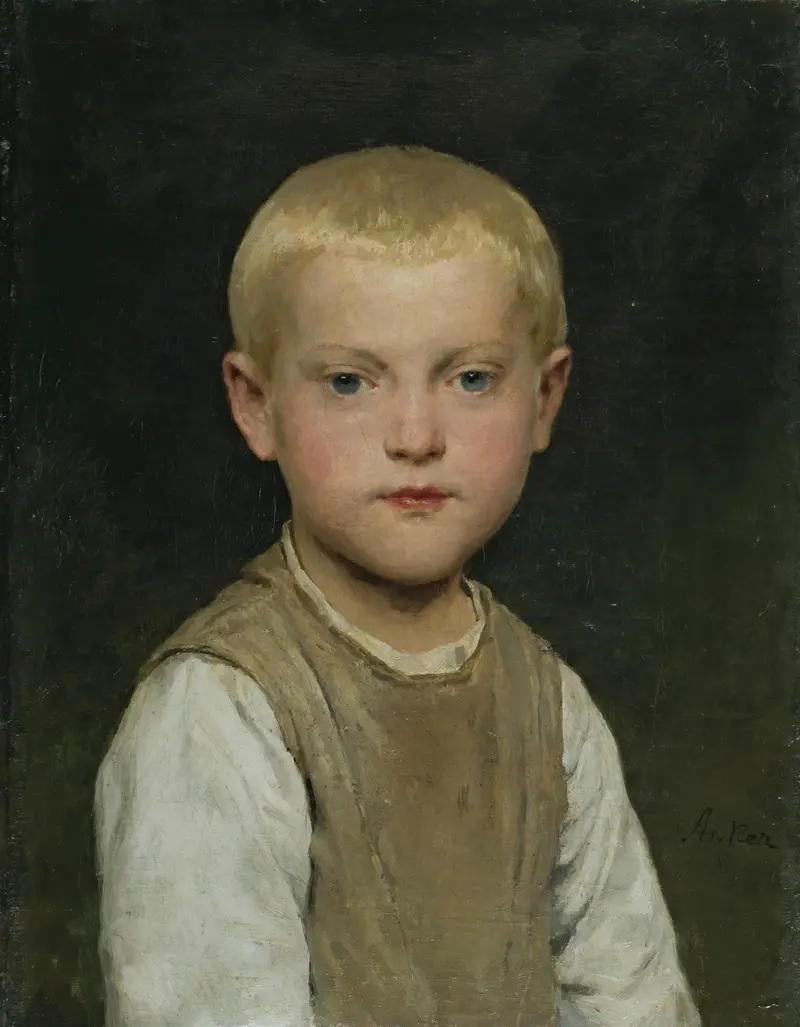
Knabenbildnis (Dr Heiri)
Albert Anker
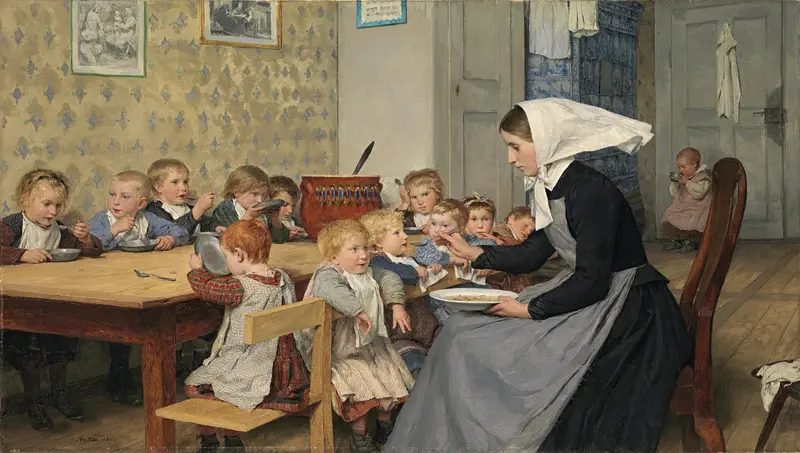
Die Kinderkrippe I
Albert Anker

L’instituteur et le pasteur
Albert Anker
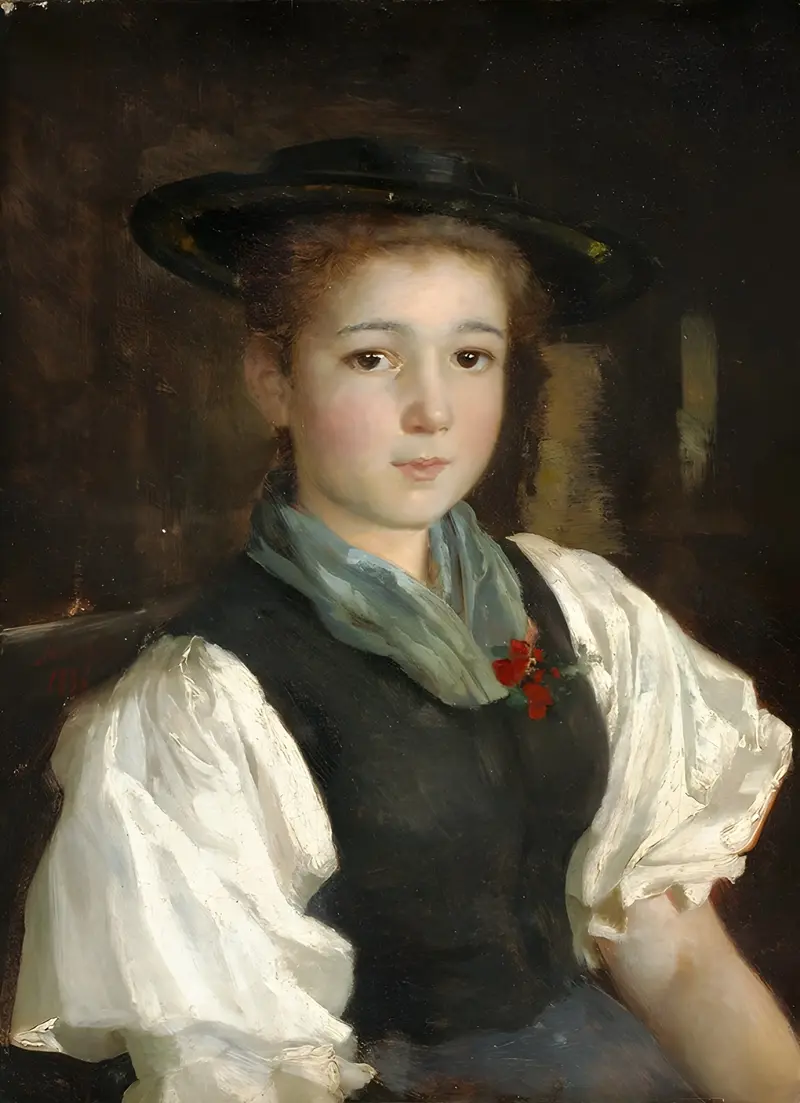
Bauernmädchen (Farm Girl)
Albert Anker
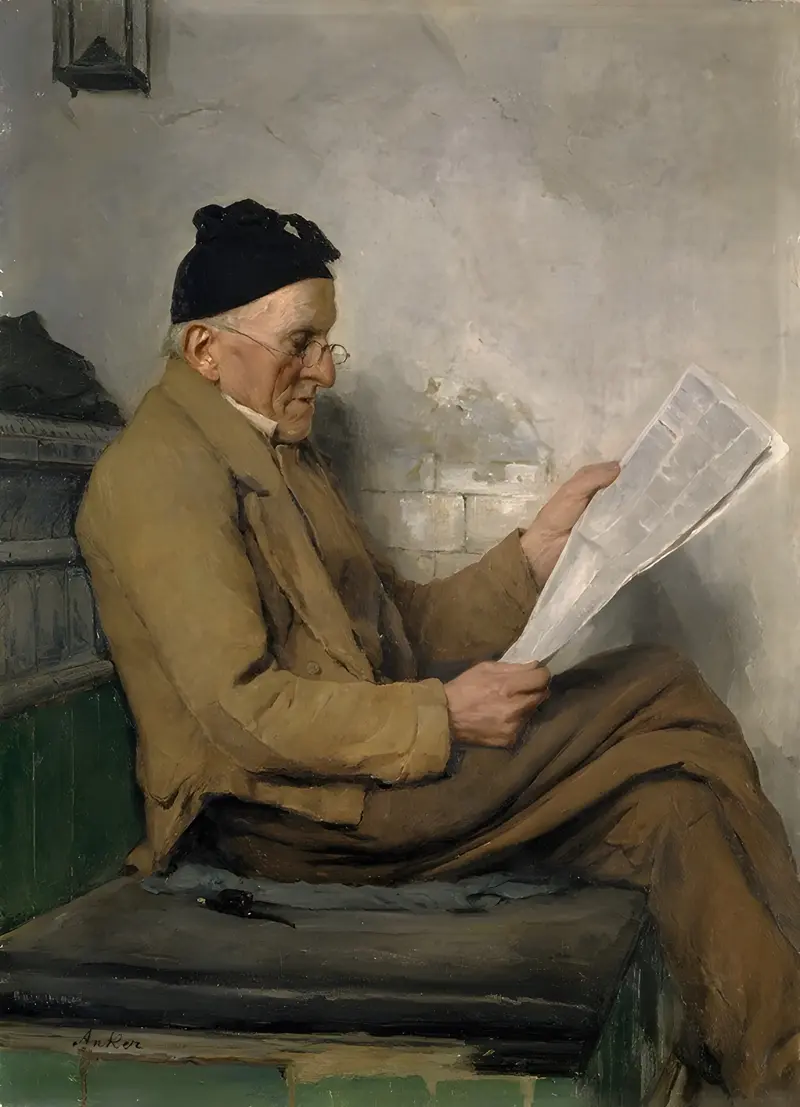
Farmer Reading on the Stove Bench
Albert Anker
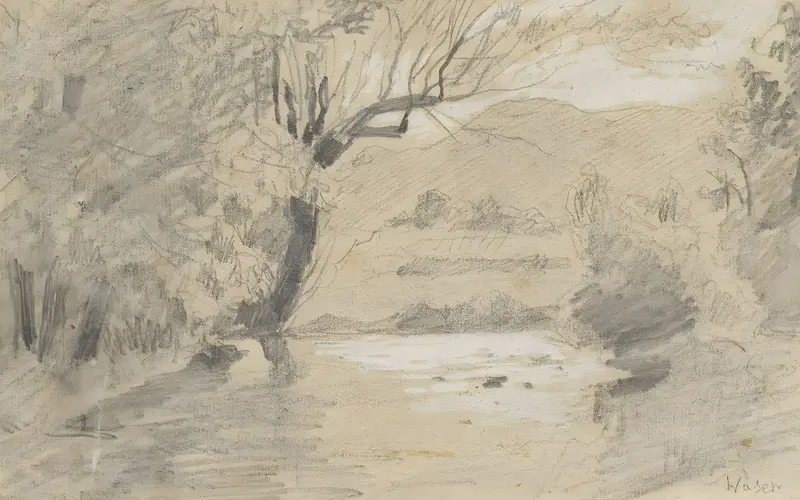
Flusslandschaft in Wasen (Emmental)
Albert Anker
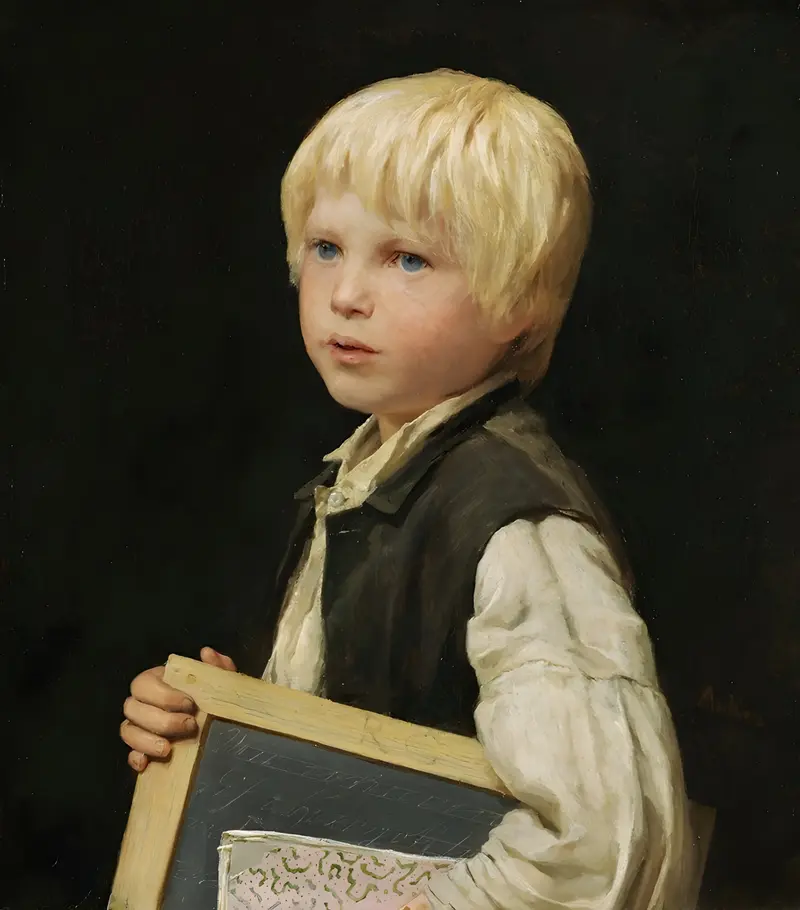
School Boy
Albert Anker
More Genre Scene Art

Banquet of the Officers of the St George Civic Guard
Frans Hals

Rembrandt and Saskia in the Scene of the Prodigal Son
Rembrandt van Rijn

Bal du moulin de la Galette
Pierre-Auguste Renoir

Quadrille at the Moulin Rouge
Henri de Toulouse-Lautrec

A Burial at Ornans
Gustave Courbet

When Will You Marry?
Paul Gauguin