
Giverny — History & Facts
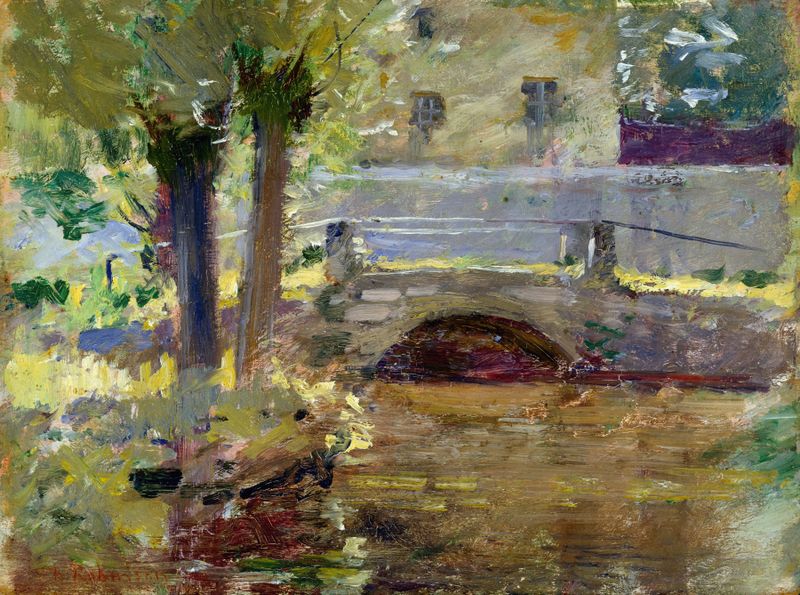
What secret hides in the quiet of the canvas? In the stillness of Giverny, a world unfolds, steeped in a gentle melancholy that whispers to the soul, beckoning us to linger awhile. Look first to the left, where the soft brushstrokes blend shades of greens, blues, and faint lilacs, creating an inviting pathway that draws the eye deeper into the tranquil scene. The light dances delicately across the surface of the water, revealing a serene reflection that oscillates between reality and impression. Notice how the trees, with their dappled leaves, frame the scene, lending a sense of enclosure—both protective and isolating—while the distant house stands as a silent witness to the passage of time. Beneath the surface, there exists a subtle tension between the vibrancy of nature and the somber emptiness of the setting.
The vibrant colors suggest life, yet the stillness hints at absence and loss, evoking a sense of longing. The interplay of light and shadow becomes a metaphor for the duality of existence; while beauty flourishes, so too does a quiet sorrow. Those who gaze upon the canvas can feel an unspoken narrative, a yearning for connection that transcends the idyllic scene presented. During the late 19th century, Robinson created Giverny while immersed in the artistic community of France, a period characterized by the rise of Impressionism.
Though specific dates are unclear, Robinson's time in Giverny followed his study under the masters, where he sought to capture the essence of the landscape and the emotional resonance within it. This painting reflects his pursuit of beauty and introspection as he navigated both his personal struggles and the shifting tides of the art world.
More Artworks by Theodore Robinson
Browse all →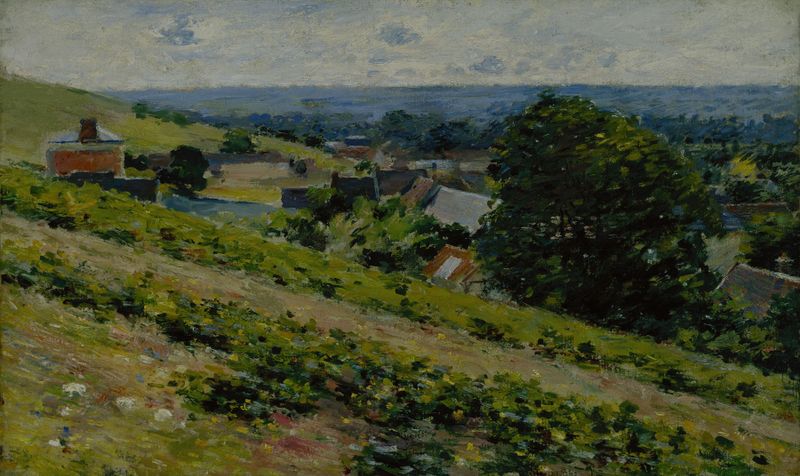
From the Hill, Giverny
Theodore Robinson

Giverny
Theodore Robinson

Old Church At Giverny
Theodore Robinson
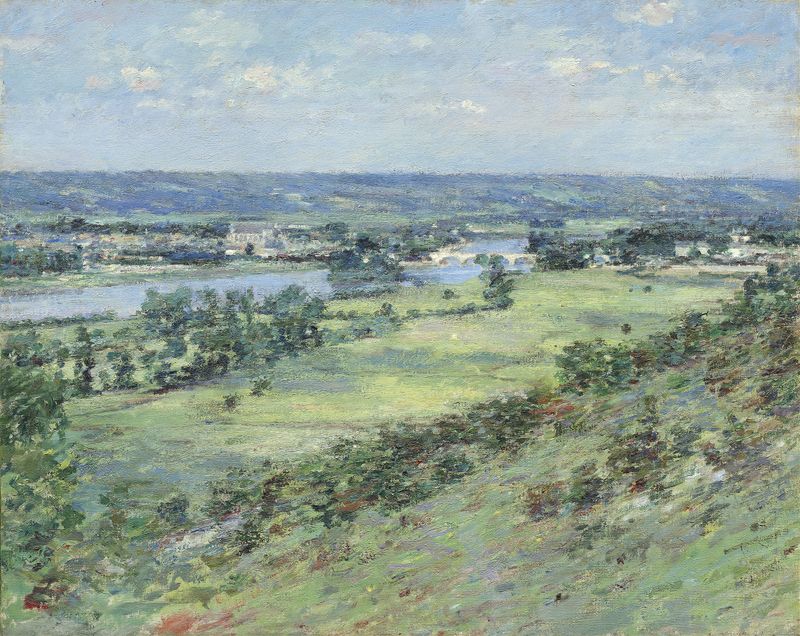
The Valley of the Seine,from the Hills of Giverny
Theodore Robinson
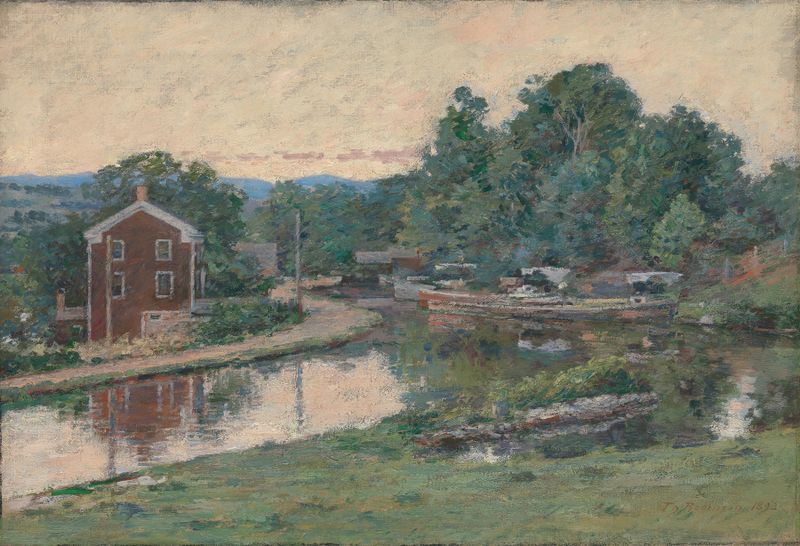
Evening at the Lock, Napanoch, New York
Theodore Robinson
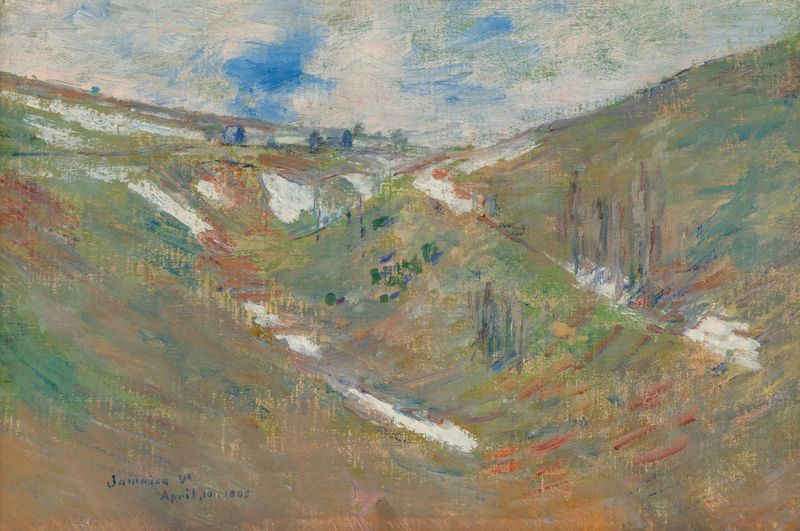
Jamaica, Vermont
Theodore Robinson
The Bridge at Giverny
Theodore Robinson

House In Virginia
Theodore Robinson
Low Tide, Riverside Yacht Club
Theodore Robinson
Vermont Hillside
Theodore Robinson





