
Glacier des Bois, Chamonix — History & Facts
Did the painter know this moment would outlive them? In the vastness of the mountains, there’s a haunting emptiness that speaks to the soul, an echo of time captured in ice and stone. Look to the foreground, where jagged rocks loom starkly against the brilliant white of the glacier. Notice how the sunlight glistens upon the snow, creating a dazzling contrast that draws the eye deeper into the scene. The subtle hues of blue and grey weave through the icy expanse, while the distant peaks hover like silent sentinels, framing this frozen landscape with imposing majesty.
Each stroke reflects a meticulous attention to detail, allowing the viewer to feel the chill of the air and the weight of solitude. In this moment, beneath the grandeur of nature, lies a poignant tension between beauty and desolation. The vast, untouched glacier symbolizes not just the raw power of the earth, but also the transience of human existence. Amidst the breathtaking vista, one can sense an overwhelming stillness, a reminder of our fleeting presence in a world that endures long after we are gone.
The interplay of light and shadow imbues the scene with a profound sense of loneliness, invoking reflection on the passage of time. In 1869, while confronting the challenges of a changing artistic landscape, Edward Theodore Compton painted this work in Chamonix, a region celebrated for its dramatic scenery. As the art world began to embrace Impressionism, Compton remained anchored in a more traditional approach, capturing the sublime beauty of landscapes in a way that emphasized their emotional weight and permanence. This piece stands as a testament to his dedication to the natural world, a moment preserved against the relentless march of time.
More Artworks by Edward Theodore Compton
Browse all →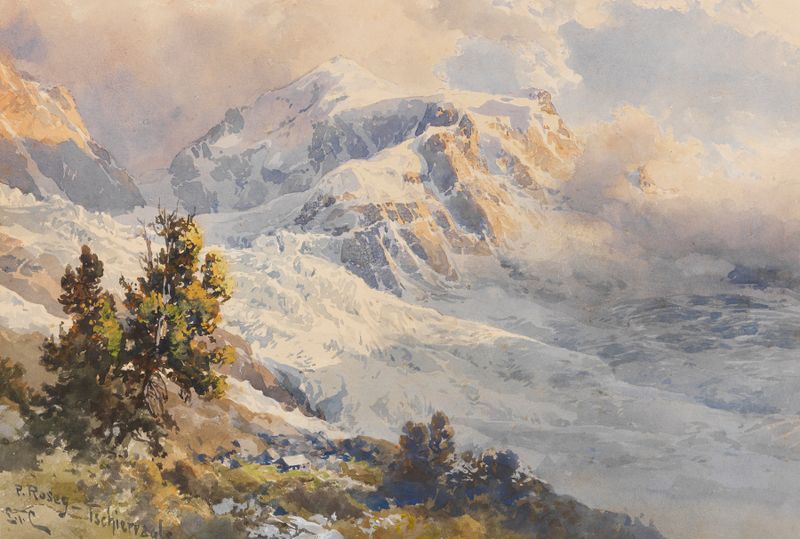
Piz Roseg – Tschiervagletscher
Edward Theodore Compton
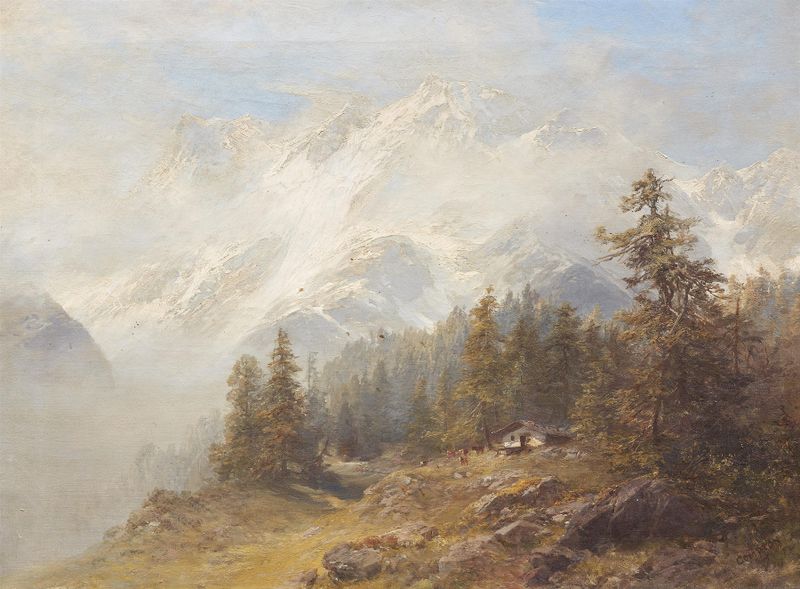
Alpenlandschaft vor schneebedecktem Massiv
Edward Theodore Compton
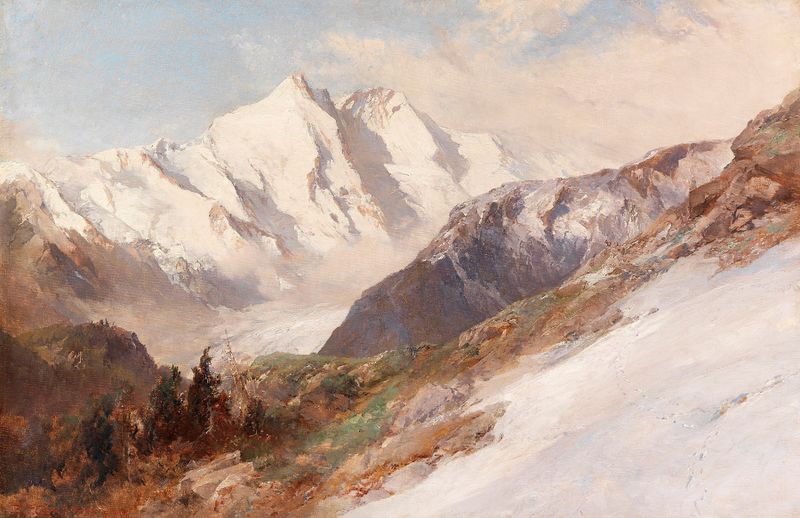
Blick auf die Nordseite des Großglockners
Edward Theodore Compton
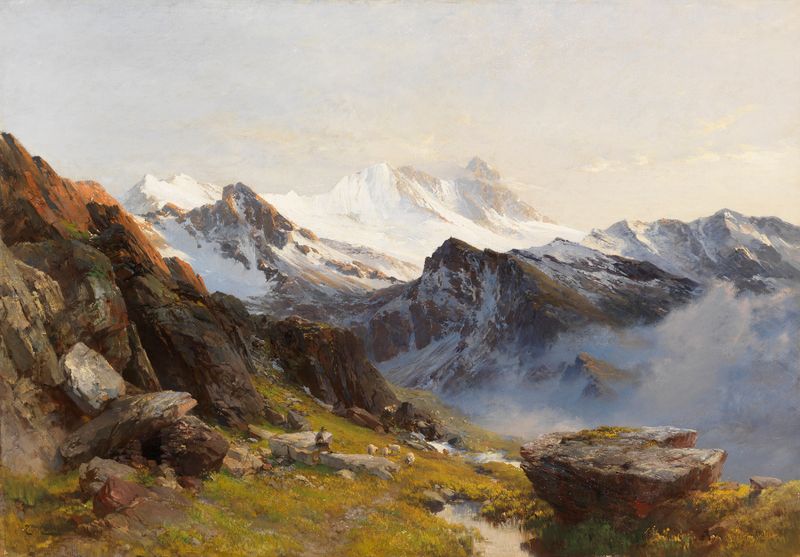
Großglockner von der Prager Hütte aus, früh
Edward Theodore Compton
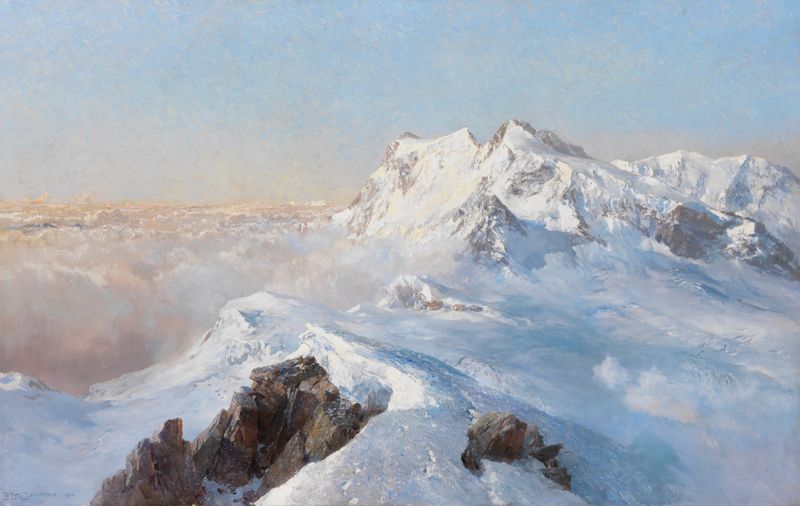
Über dem Nebelmeer (Monte Rosa vom Rimpfischhorn)
Edward Theodore Compton
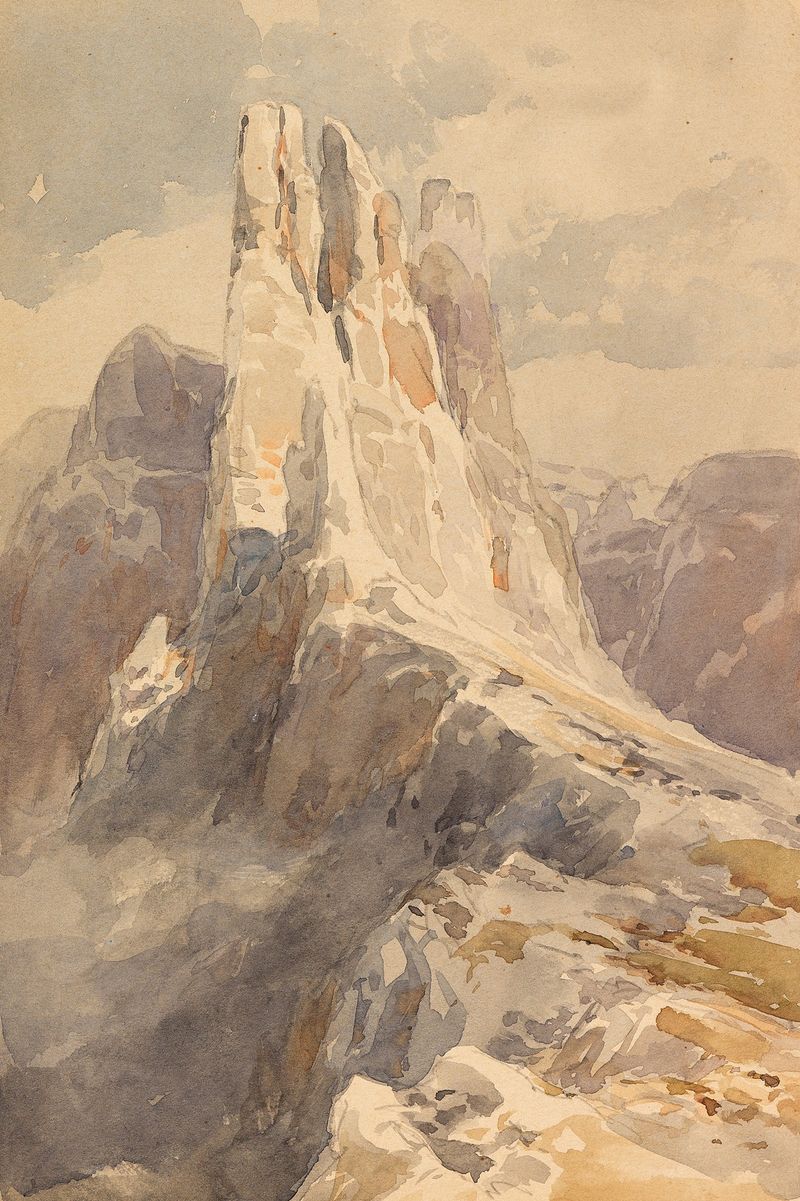
Blick auf die Vajolet-Türme in den Dolomiten
Edward Theodore Compton
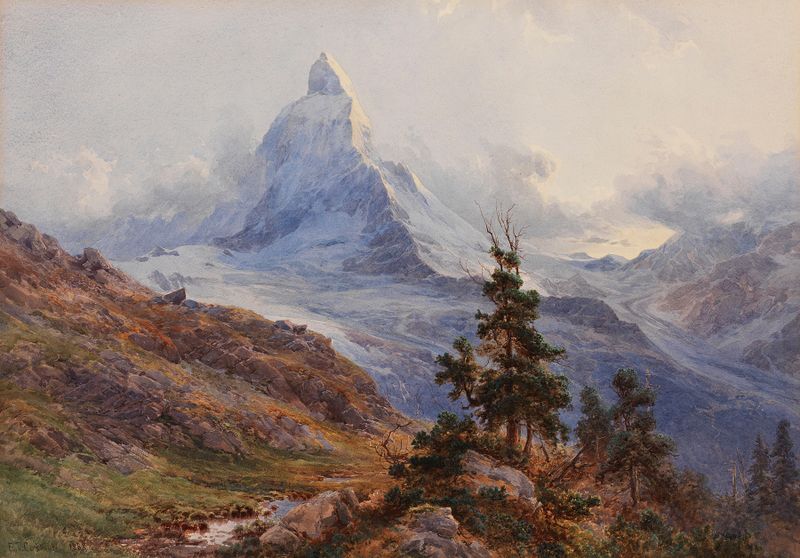
View of the Matterhorn
Edward Theodore Compton
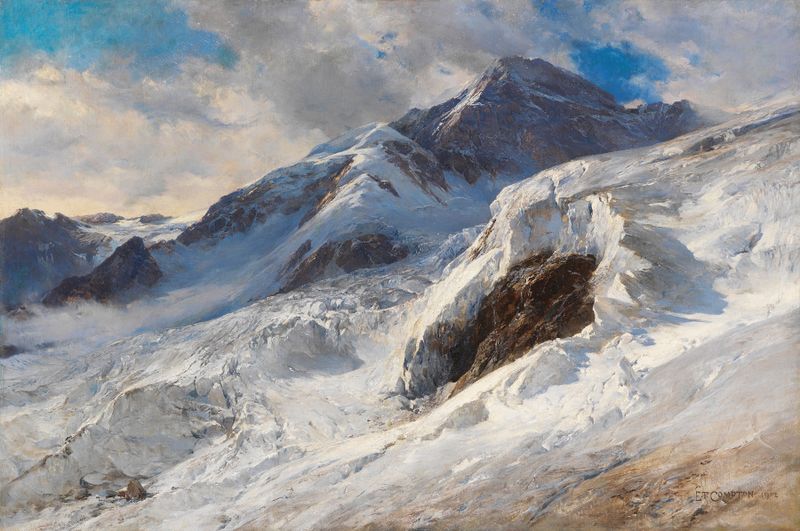
Lyskamm (Monte-Rosa)
Edward Theodore Compton
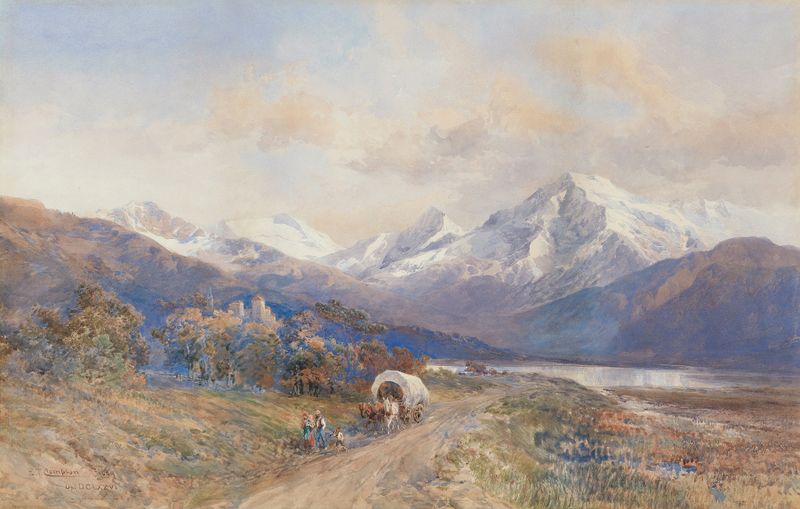
Blick auf den Ortler von St. Valentin
Edward Theodore Compton
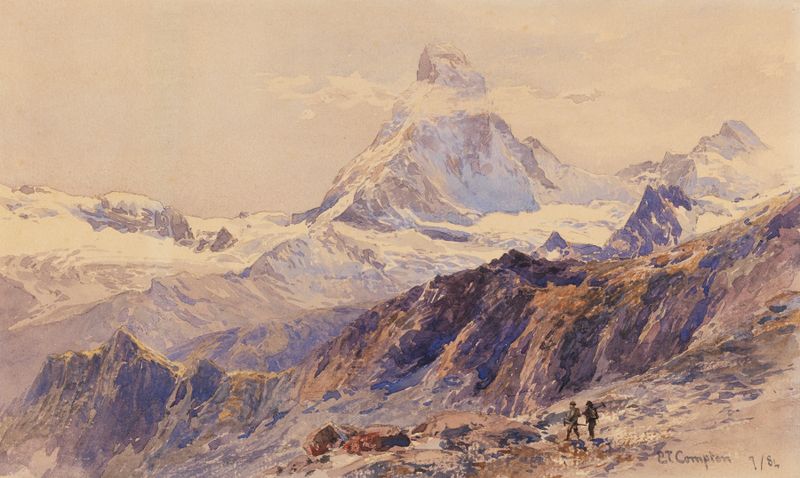
Das Matterhorn von der Triftkumme
Edward Theodore Compton





