
Gooseberries on a Table — History & Facts
What first draws the eye in Gooseberries on a Table by Adriaen Coorte is the almost theatrical lighting that lifts a humble cluster of fruit into something quietly monumental. The gooseberries, some blushing pink, others pale and veined, seem to glow from within, their delicate skins catching the light as if they were tiny lanterns. The branch sprawls across a stone ledge, its leaves waxy and robust, while a few desiccated petals cling to the stems—reminders of the plant’s recent bloom.
Against the deep, velvety darkness behind, every detail is heightened: the veins in each leaf, the soft bloom on the fruit, even the subtle cracks in the stone. Coorte’s choice to sign and date the ledge itself draws attention to the act of looking, as if inviting us to pause and see the ordinary anew. This painting comes from the world of late seventeenth-century Middelburg, a city where curiosity about nature flourished in gardens, books, and art alike. In this era, still lifes like Coorte’s were prized by collectors not only for their beauty but for their celebration of the everyday wonders of the Dutch landscape.
Gooseberries, once gathered wild, were being cultivated and improved in Dutch gardens, and their presence here speaks to both local pride and the era’s fascination with botanical study. The painting’s strong contrasts and intimate scale are typical of Coorte’s work, which stands apart from the lavish abundance of earlier Dutch still lifes. Few facts survive about the path this particular painting took to reach the Cleveland Museum of Art, but its quiet poetry makes clear why such works were cherished.
Look again at the illuminated fruit—what once seemed modest now feels quietly extraordinary.
More Artworks by Adriaen Coorte
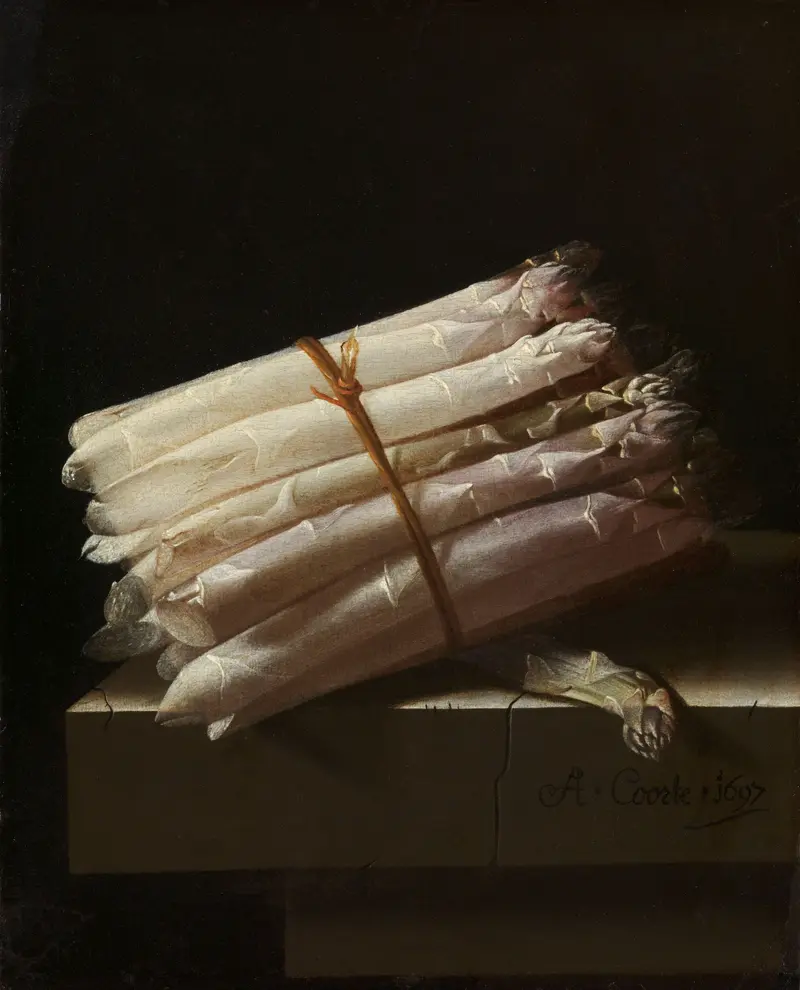
Still Life with Asparagus
Adriaen Coorte
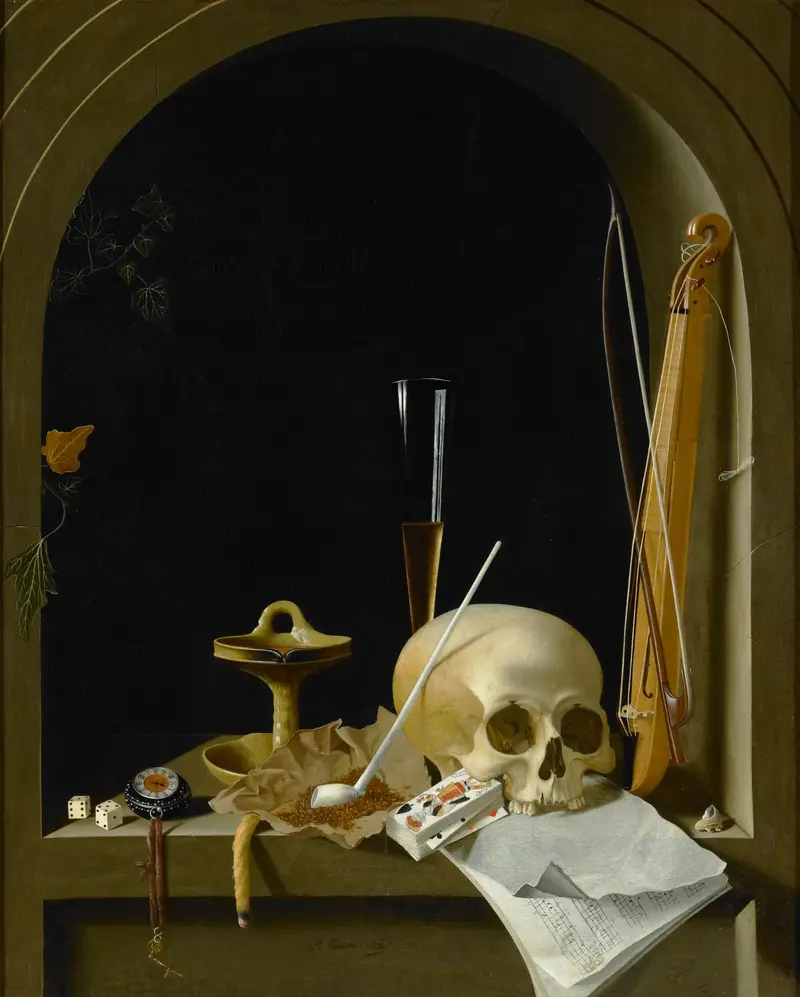
Vanitas still life in a niche
Adriaen Coorte
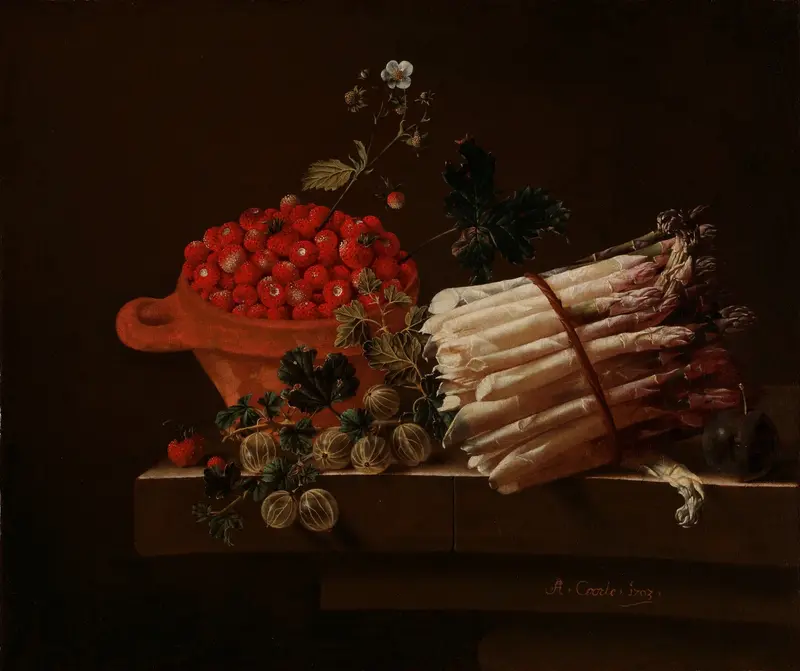
A Pot of Strawberries, Gooseberries, and a Bundle of Asparagus on a Stone Plinth
Adriaen Coorte
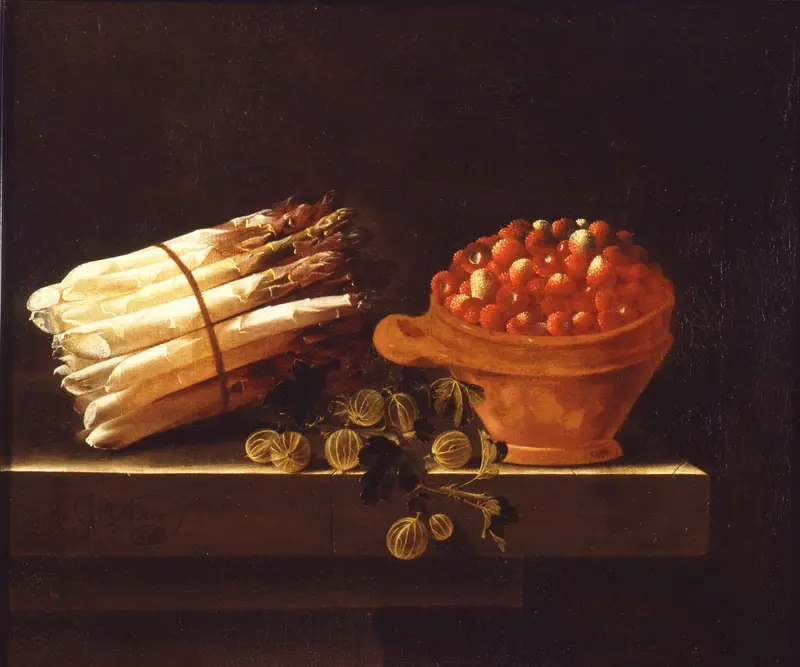
Asparagus, Gooseberries and Strawberries on a Stone Ledge
Adriaen Coorte
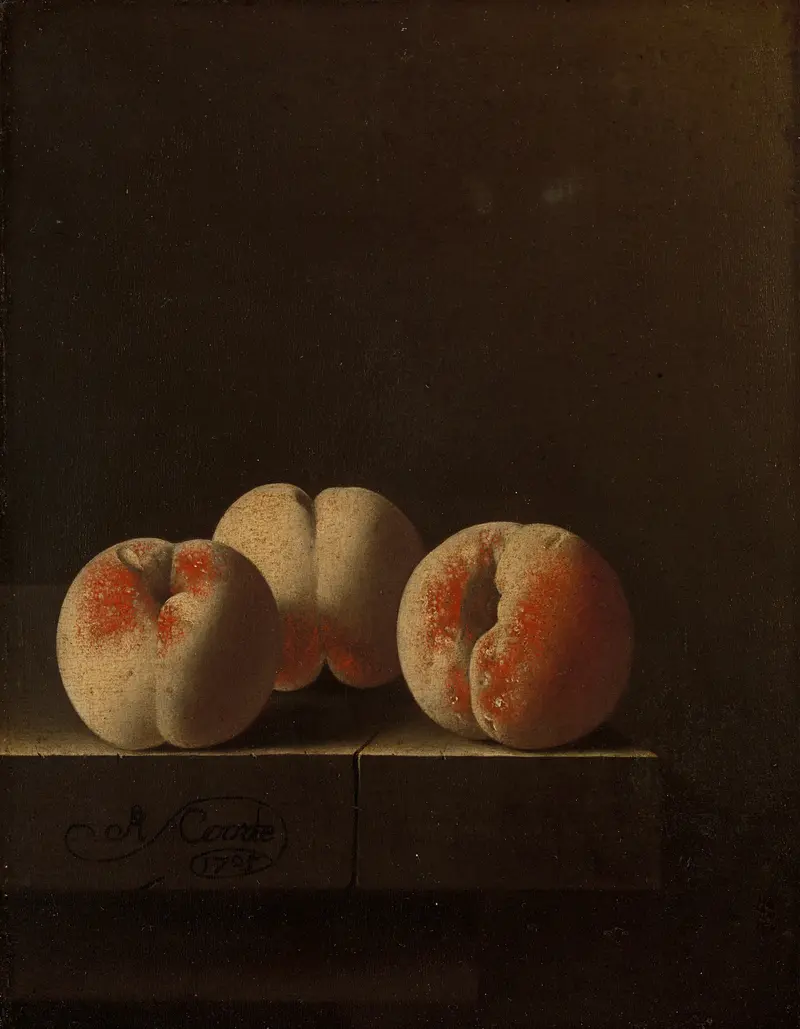
Drie perziken op een stenen plint SK A 5101 Rijksmuseum
Adriaen Coorte
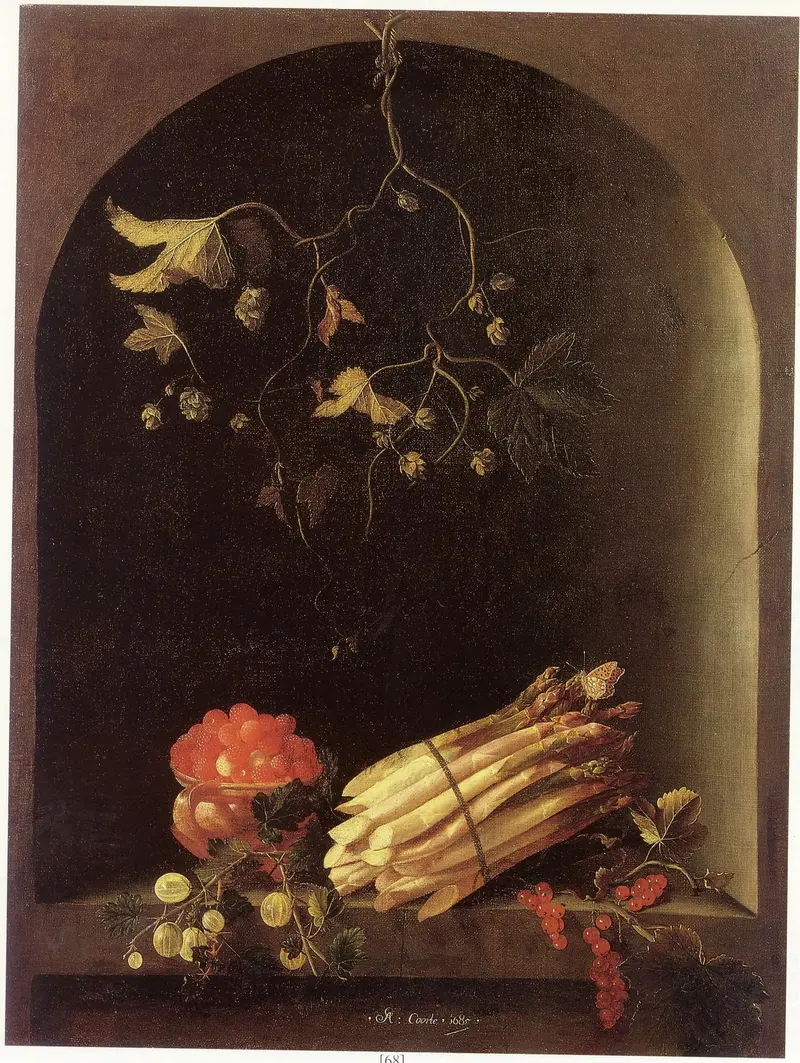
Strawberries, Asparagus, and Gooseberries in a Niche
Adriaen Coorte
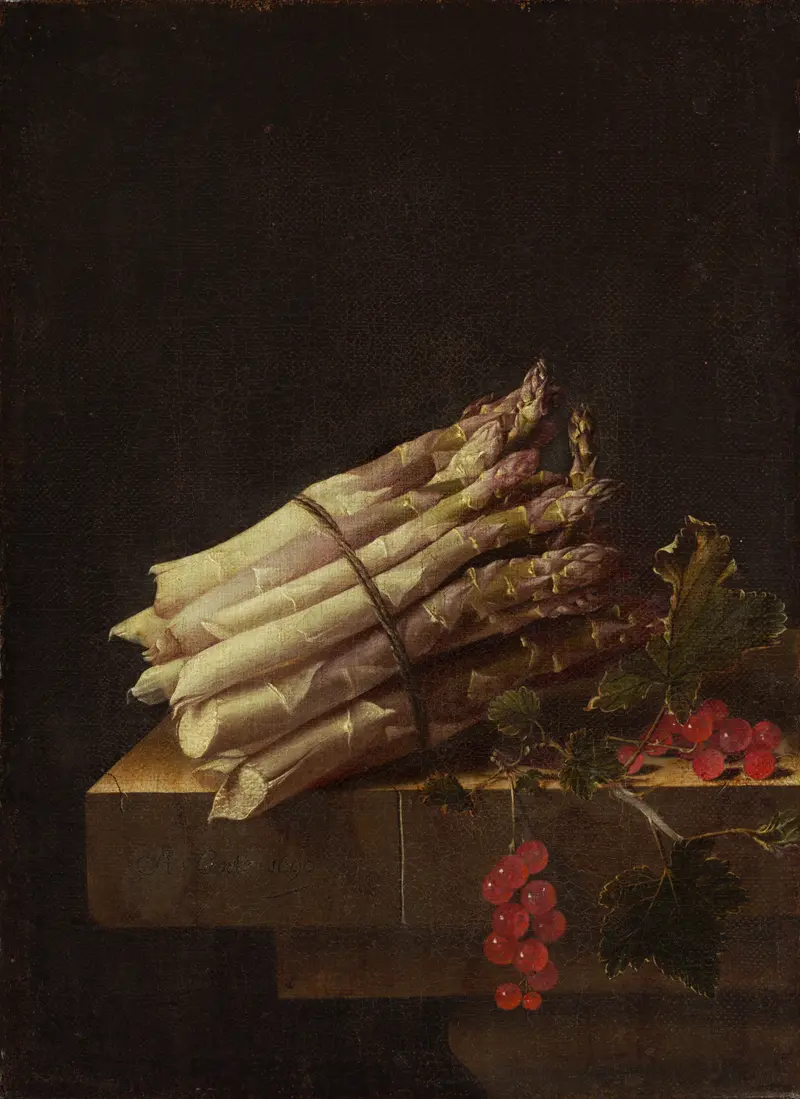
Still Life with Asparagus and Red Currants
Adriaen Coorte
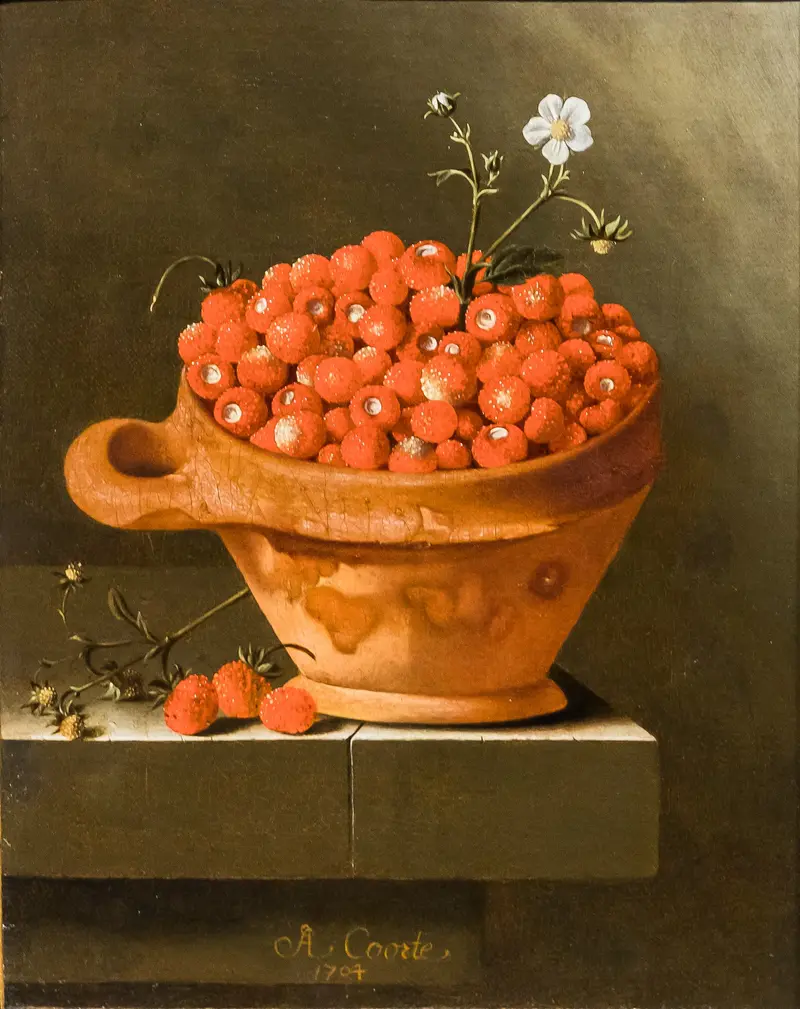
Still life with strawberries in a terracotta pot
Adriaen Coorte
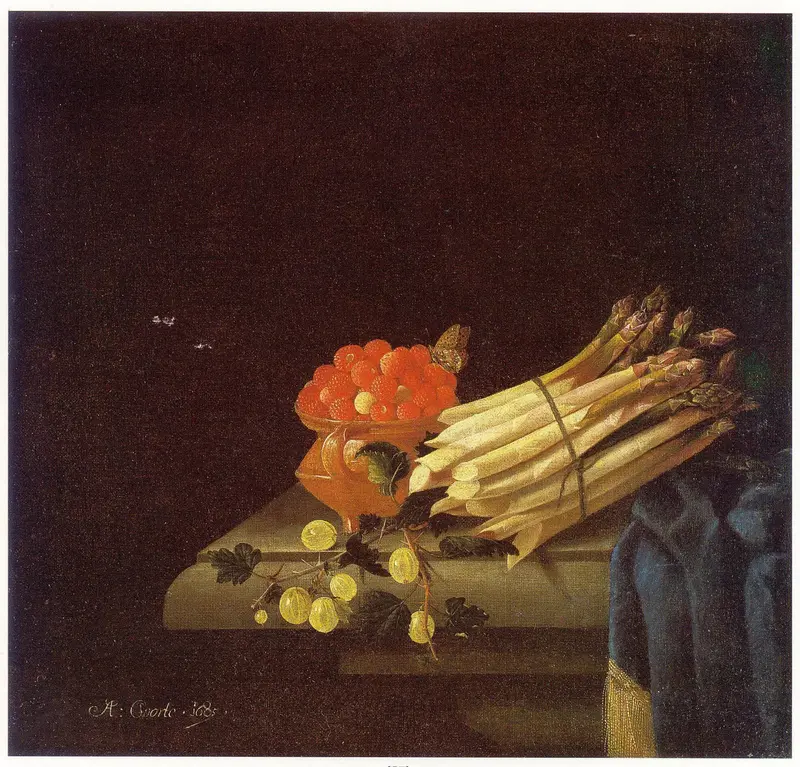
Strawberries, Asparagus, and Gooseberries with a Tablecloth
Adriaen Coorte
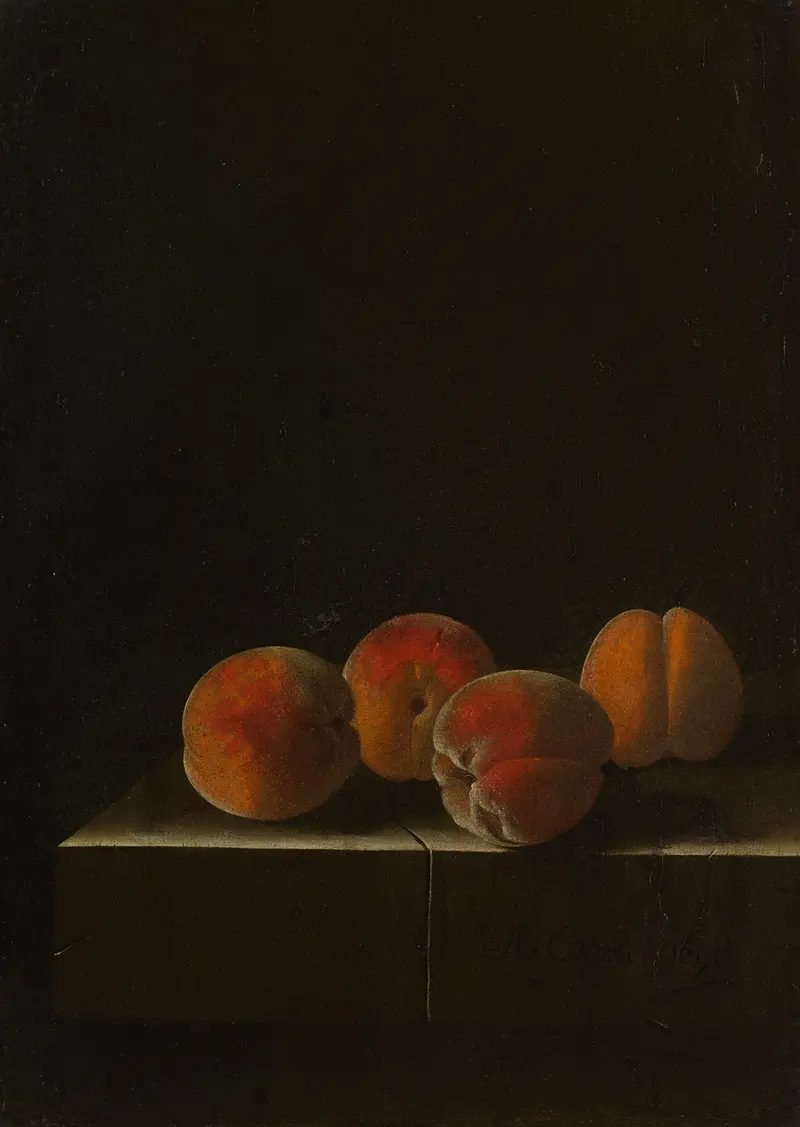
Four Apricots on a Stone Plinth
Adriaen Coorte





