
Grand Canyon, Arizona — History & Facts
Did the painter know this moment would outlive them? In Grand Canyon, Arizona, nature's majesty is captured, eternal yet subject to the slow decay of time. A testament to the relentless passage of eons, the painting invites us to ponder the impermanence of beauty and the lasting power of artistic expression. Focus on the deep, vivid hues of orange and gold in the canyon’s rock layers, where light spills dramatically across the canvas, illuminating the crevices and shadows. Look to the horizon, where the sky meets the canyon—a swirl of blues and soft whites—creating a sublime contrast against the earthy tones below.
The brushwork is expressive, each stroke revealing the artist's reverence for this colossal landscape, while the composition leads the eye into the infinite depths of the canyon, evoking both awe and humility. Hidden within the scene are whispers of contrasts: the vibrant colors versus the stark, rugged formations, the illusion of permanence against the backdrop of decay. The interplay of light and shadow tells a story of time’s relentless march, suggesting that even the most magnificent landscapes are susceptible to erosion and fading. This duality invites a contemplation of the transient nature of life itself, as if the canyon is both a sanctuary and a witness to the slow unraveling of existence. In 1913, Moran, already an established figure in American landscape painting, was living through a period of transition in both his life and the art world.
His works, inspired by the vastness of the American West, coincided with a growing national interest in nature conservation and the establishment of national parks. This painting reflects not only his mastery of light and color but also the societal acknowledgment of nature's fragile beauty during an era of industrial growth.
More Artworks by Thomas Moran
Browse all →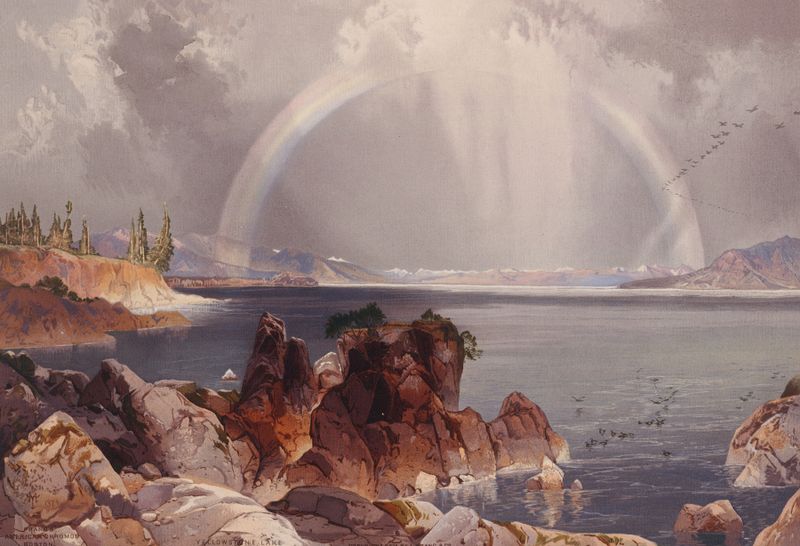
Yellowstone Lake
Thomas Moran

Grand Canyon of the Colorado River
Thomas Moran

Grand Canyon, Colorado River
Thomas Moran

The Towers of Tower Falls, Yellowstone
Thomas Moran
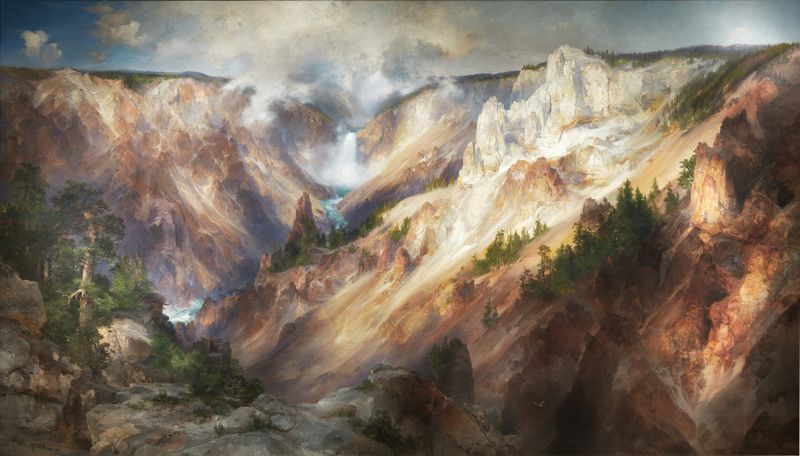
The Grand Canyon Of The Yellowstone
Thomas Moran

Mountain of the Holy Cross
Thomas Moran

Cliffs Of The Upper Colorado River, Wyoming Territory
Thomas Moran
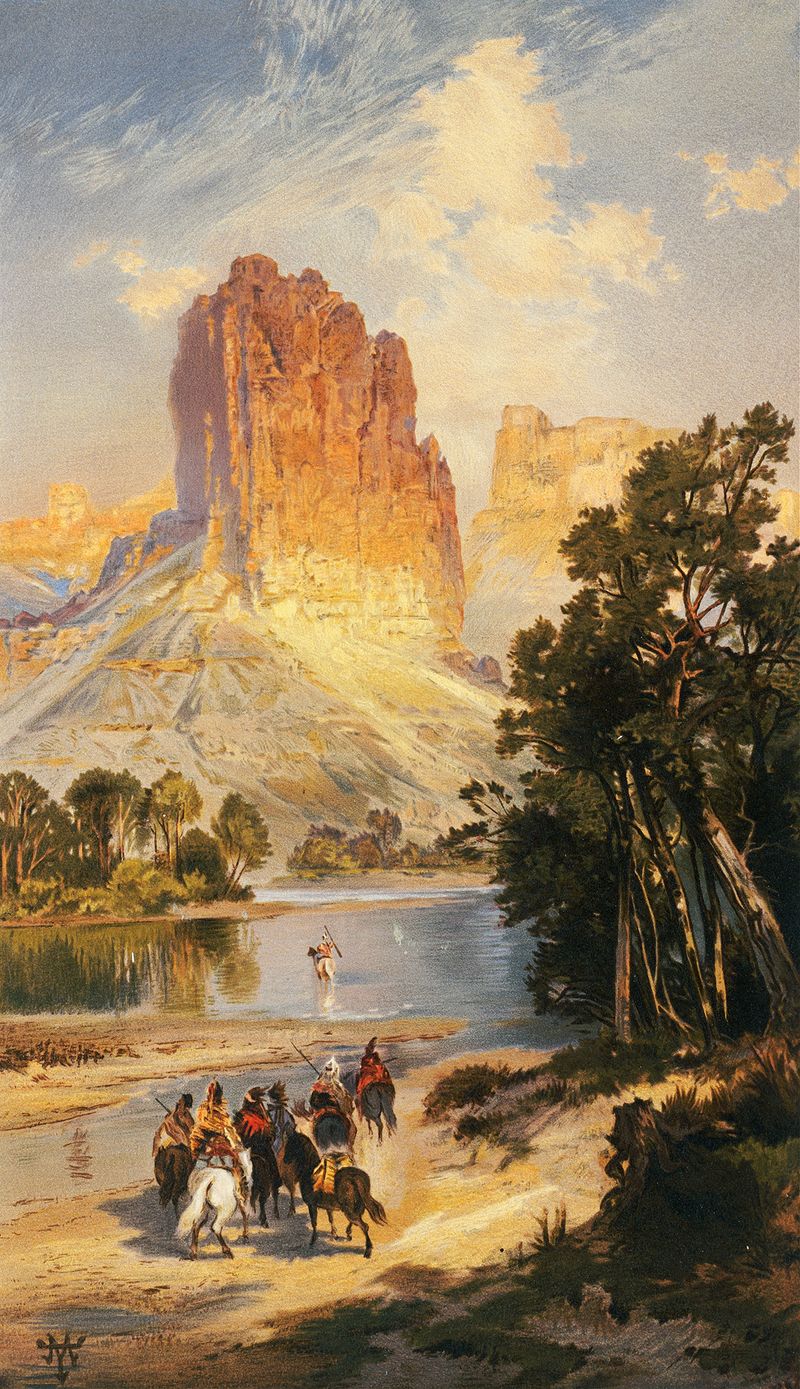
Cliffs of the Upper Colorado River, Wyoming Territory
Thomas Moran

Mammoth Hot Springs, Yellowstone
Thomas Moran
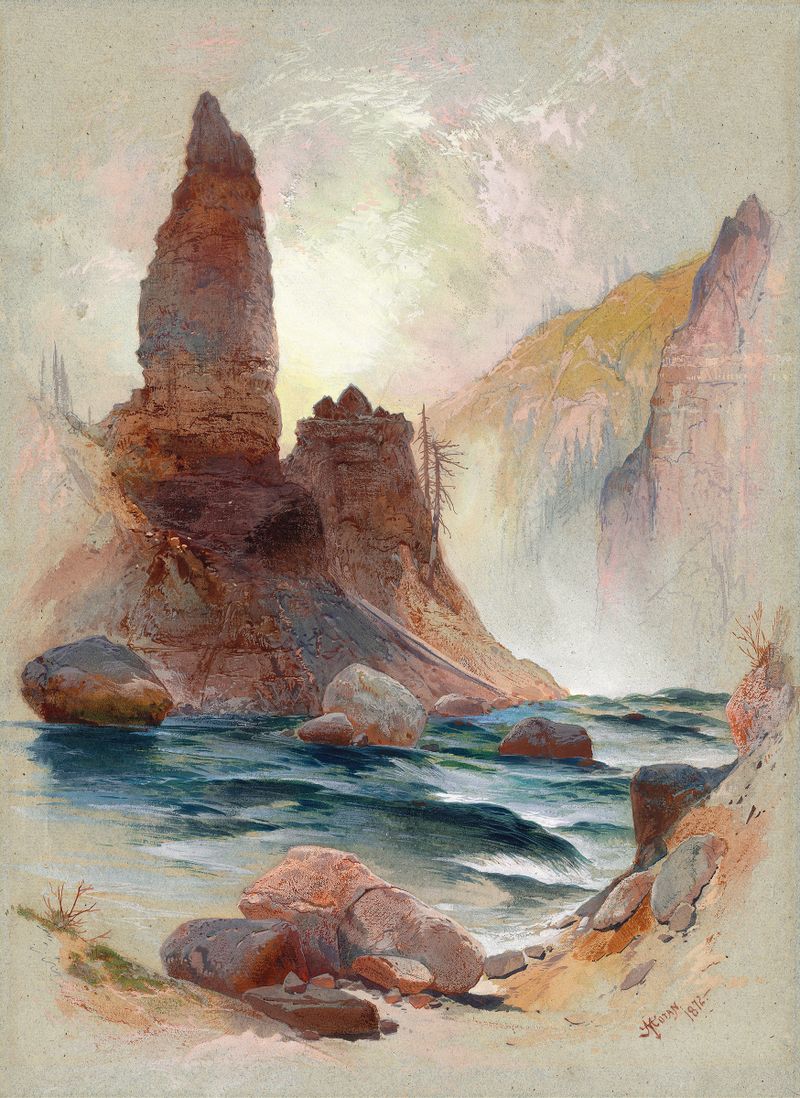
Tower at Tower Falls, Yellowstone
Thomas Moran





