Graz mit Schlossberg — History & Facts
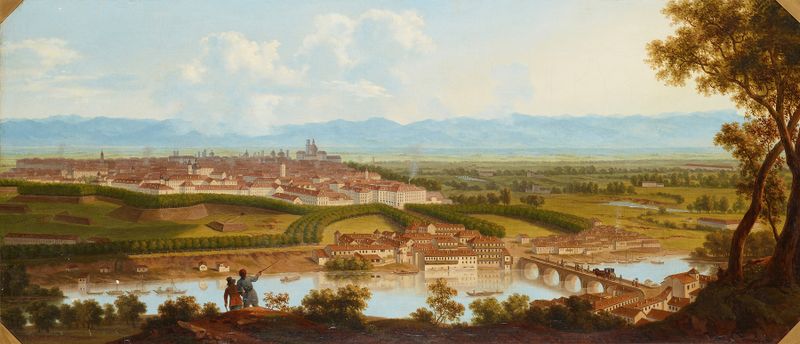
Who listens when art speaks of silence? In Graz mit Schlossberg, the stillness of the Austrian landscape resonates with a truth that invites intimate reflection. Look to the left at the gentle contours of the hills, where the Schlossberg stands majestically, its fortress-like structure contrasting with the soft, muted tones of the surrounding countryside. The artist employs a delicate palette of greens and browns, with dappled sunlight filtering through clouds, illuminating patches of land in a whisper of warmth. The careful brushwork captures the serenity of an afternoon, suggesting both the grandeur of nature and the quiet life of the town below. Hidden within this tranquil scene are layers of emotional tension—a juxtaposition of human presence and the grandeur of nature.
The light, while soft, underscores the solitude felt in the absence of figures; one can almost sense the echo of a past bustling life now rendered still. The viewer is invited to contemplate the relationship between human beings and their environment, questioning what it means to coexist with such silent majesty. Alois von Saar painted Graz mit Schlossberg in 1829, during a time when Romanticism was influencing many artists in Europe, encouraging them to explore themes of nature and emotion. Saar, living in Vienna, was immersed in a world where the industrial revolution began to reshape landscapes and lives.
This work reflects his keen observation of the natural world, urging viewers to recognize the beauty and truth that lies in stillness.