
Grenoble — History & Facts
What secret hides in the quiet of the canvas? Grenoble invites viewers to peel back layers of tranquility to uncover a world steeped in ecstasy. Look to the horizon, where the soft blues and golds of the sky blend seamlessly with the peaks of the mountains. The brushwork dances lightly, revealing wisps of clouds lazily drifting overhead. Notice how the gentle illumination caresses each stroke, creating a dreamlike quality that pulls you deeper into the landscape.
The foreground teems with life, infused with earthy tones and a subtle play of light upon the water's surface, suggesting movement and stillness intertwined. Yet, beneath its serene exterior lies a tension between nature's majesty and the fleeting moment of human perception. The delicate balance between the robust mountains and the fragile reflections in the water hints at the transient nature of beauty itself. Those subtle, almost imperceptible shifts in color illustrate the artist's fascination with the interplay of light, evoking a sense of exhilaration and serenity that is both thrilling and contemplative. In 1883, while residing in France, Jongkind painted this work during a time of burgeoning Impressionism.
His connection to the landscape and mastery of color were pivotal in shaping his artistic voice. As he captured the essence of the natural world, he found himself at the intersection of tradition and innovation, influencing future generations of artists who sought to encapsulate the ephemeral beauty surrounding them.
More Artworks by Johan Barthold Jongkind
Browse all →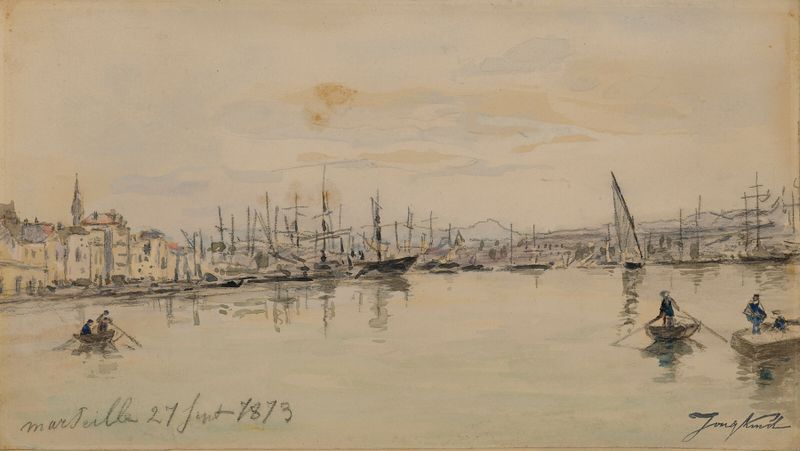
Le Port de Marseille
Johan Barthold Jongkind

Canal Saint-Martin
Johan Barthold Jongkind

Countryside near Brezins, between Grenoble and Vienne
Johan Barthold Jongkind

Notre-Dame vue du quai de la Tournelle
Johan Barthold Jongkind

Environs de Grenoble
Johan Barthold Jongkind

Clair de lune à Overschie (environs de Rotterdam)
Johan Barthold Jongkind

Port de Honfleur
Johan Barthold Jongkind
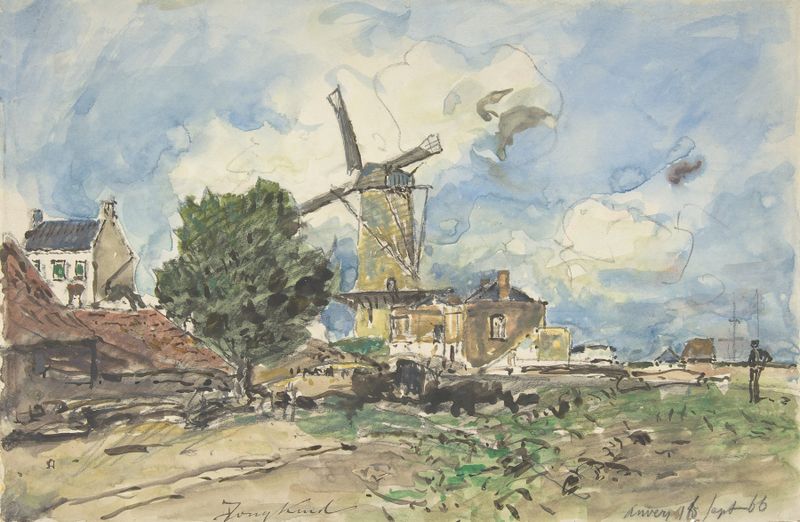
Wind Mill at Antwerp
Johan Barthold Jongkind

Le Havre
Johan Barthold Jongkind

The Church of Overschie
Johan Barthold Jongkind





