Grotesken en saterkoppen — History & Facts
The canvas doesn’t lie — it simply waits. It holds a mirror to the forms of beauty and chaos, inviting us to explore the tension between the grotesque and the sublime. Look to the left at the whimsical figures that twist and bend, their exaggerated features bursting forth with vibrant hues. Deep reds and lush greens intermingle with the pale skin of the satyrs, drawing your gaze across the canvas.
Notice how the artist’s delicate brushstrokes animate the scene, infusing it with an energy that feels both jubilant and uncanny. The interplay of light and shadow creates a three-dimensional effect, allowing the figures to emerge from the background, almost as if they might leap off into our world. As you delve deeper, consider the juxtaposition of merriment and menace present in the figures’ expressions. The jester-like grins contrast sharply with their grotesque physicality, suggesting an underlying commentary on the nature of beauty itself.
One can sense a playful yet critical reflection on societal norms, where the alluring facade of beauty hides disquieting truths. This duality reveals an emotional tension that resonates, forcing us to confront our own perceptions of attractiveness and revulsion. Giovanni Domenico Tiepolo painted this work between 1772 and 1774 in Venice, a city steeped in artistic innovation and tradition. At this time, he was grappling with the legacy of his father while seeking to establish his unique voice in a rapidly changing artistic landscape.
The Rococo style was on the decline, giving way to new movements, yet Tiepolo’s playful exploration in Grotesken en saterkoppen captures the essence of an era that celebrated both the whimsical and the grotesque.
More Artworks by Giovanni Domenico Tiepolo
Browse all →
Engel met scapulier
Giovanni Domenico Tiepolo
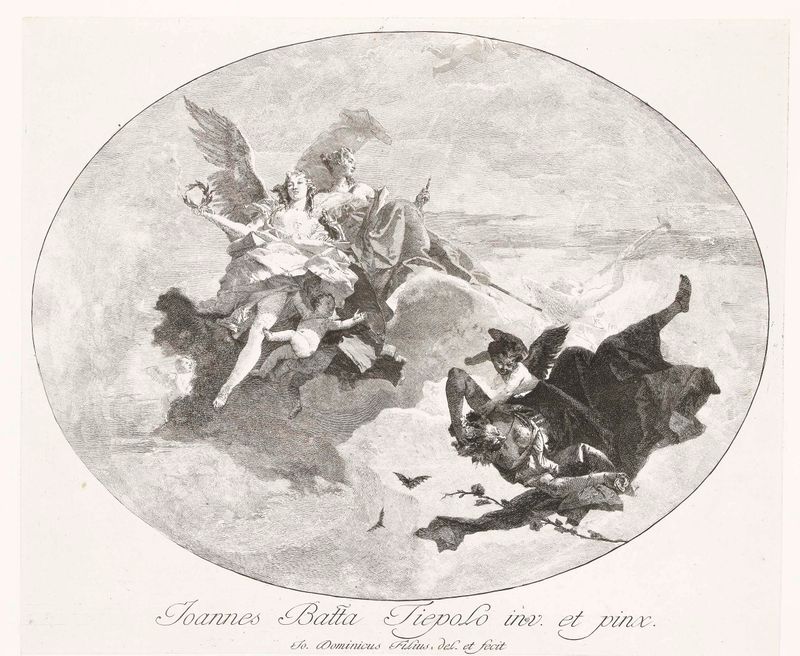
Deugd en Faam verjagen Gierigheid
Giovanni Domenico Tiepolo
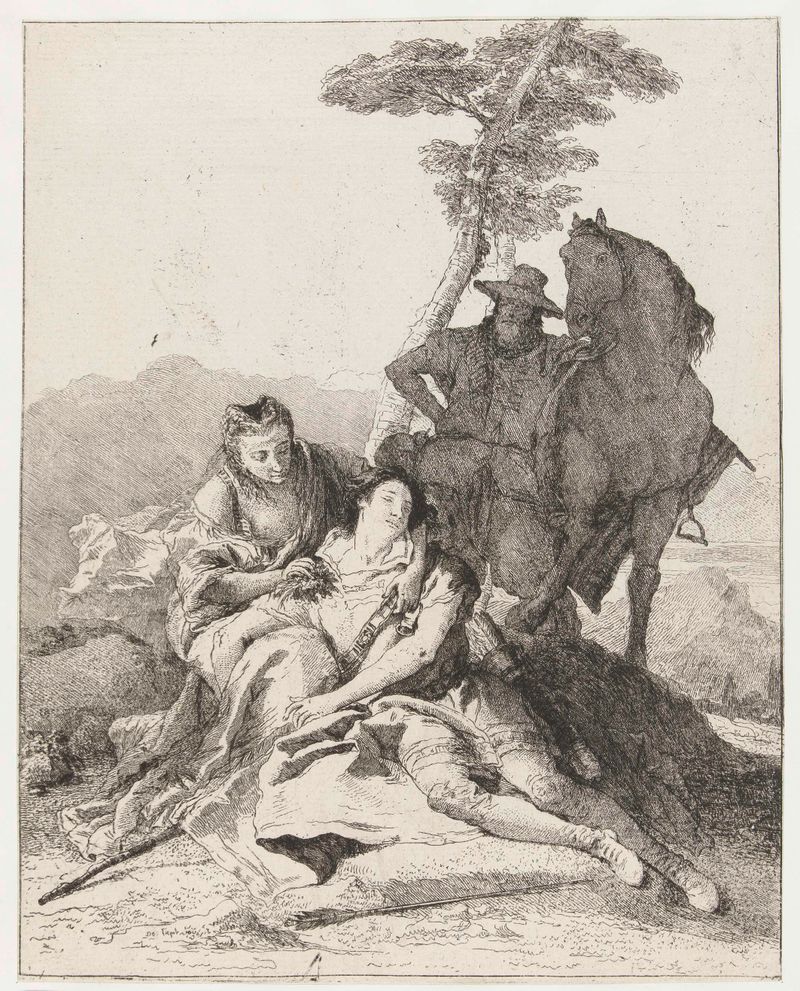
Angelica geneest de wond van Medoro
Giovanni Domenico Tiepolo
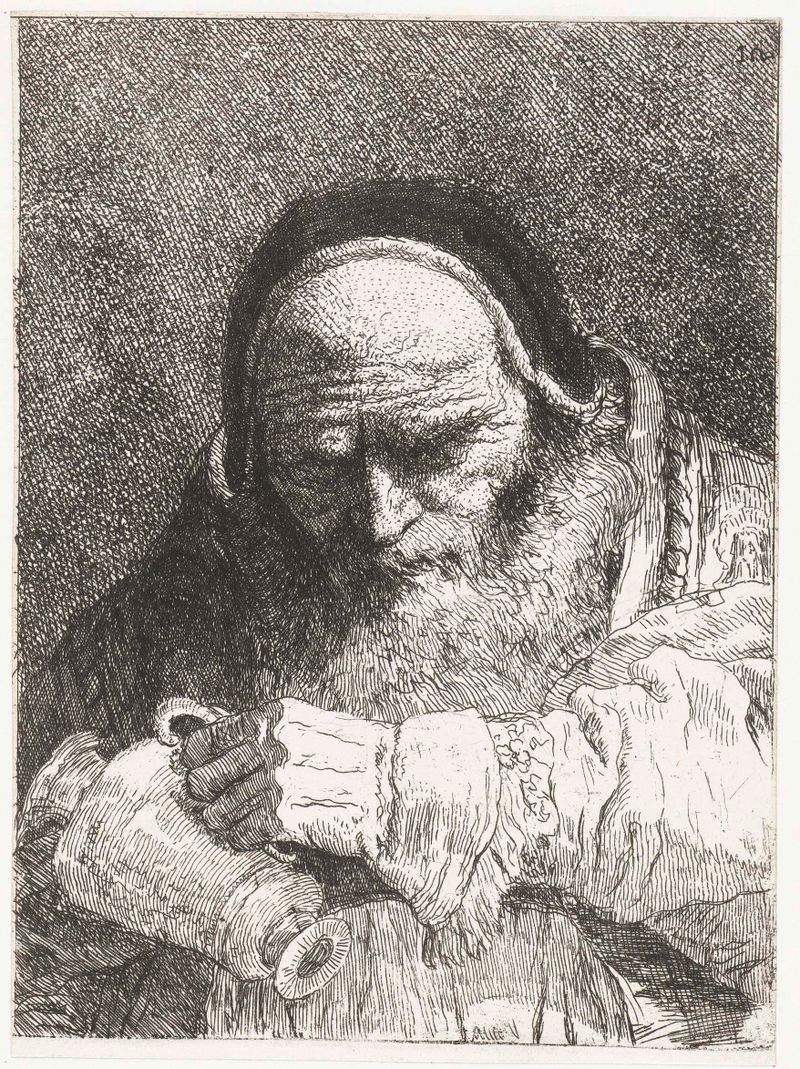
Paus met schenkkan
Giovanni Domenico Tiepolo

Heilige familie vertrekt door een stadspoort
Giovanni Domenico Tiepolo
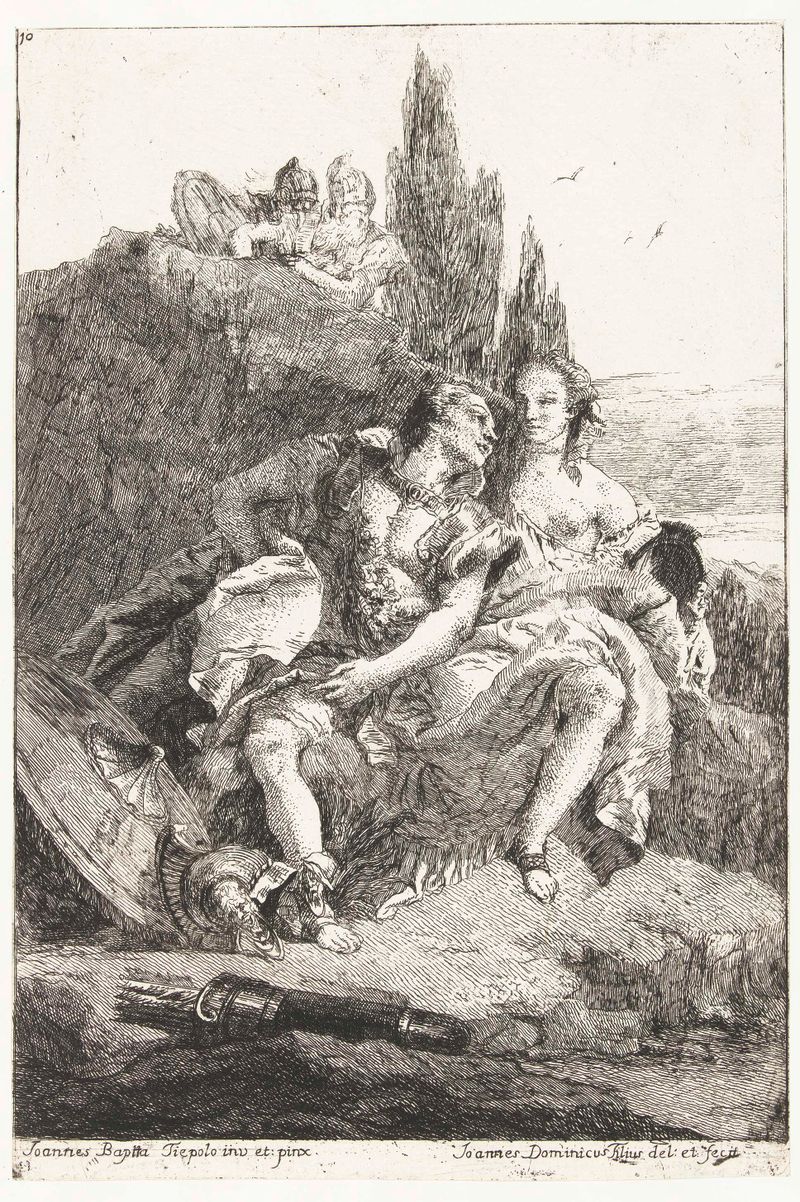
Rinaldo en Armida als liefdespaar aangetroffen bij een meer door twee ridders
Giovanni Domenico Tiepolo
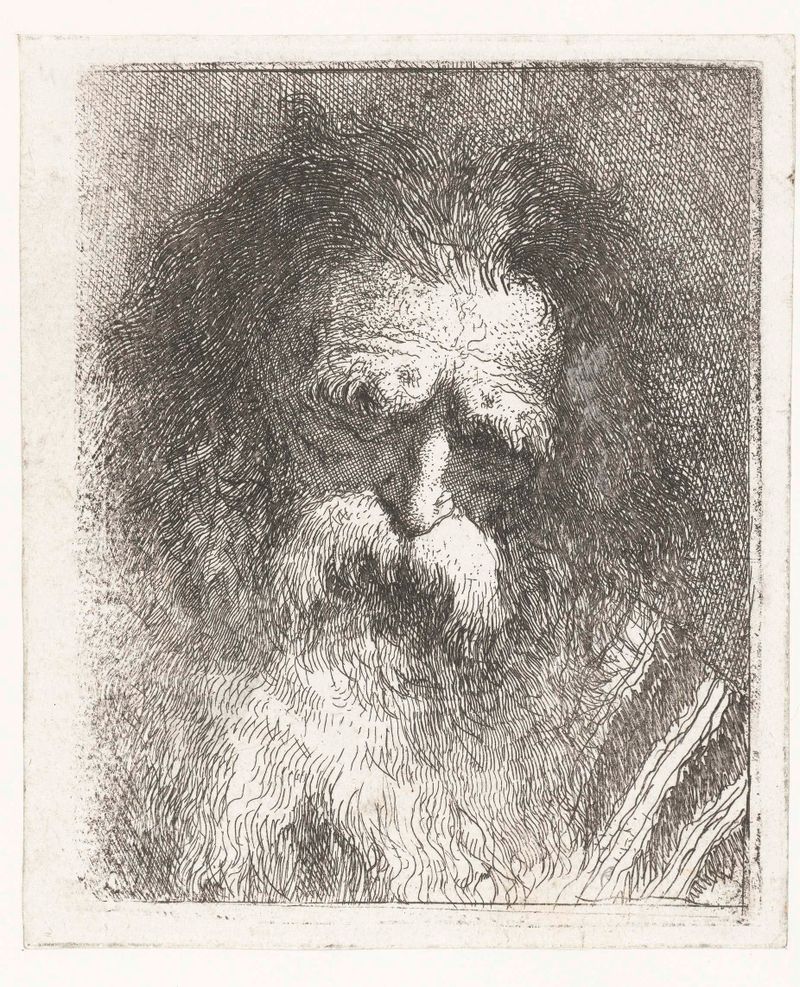
Oude man met borstelige wenkbrauwen en baard
Giovanni Domenico Tiepolo

Man met zwaard
Giovanni Domenico Tiepolo

Man met lange haren en zonder hoofddeksel
Giovanni Domenico Tiepolo

Man met ontblote schouder
Giovanni Domenico Tiepolo