
Gypsy Camp II — History & Facts
Could beauty survive in a century of chaos? In Gypsy Camp II, the question lingers like the last note of a haunting melody, inviting us into a world where dreams and reality intertwine. Look to the vibrant hues of the canvas, where the warm earth tones contrast with the cooler shades of the twilight sky. The camp, draped in fabric and shadow, emerges from a blend of impressionistic strokes that evoke both movement and stillness. Notice how the light dances across the figures, illuminating their faces with a gentle glow, as if whispering secrets of untold stories.
Each brushstroke carries an ethereal quality, inviting the viewer to step closer and become part of this fleeting moment. Within this serene gathering, layers of emotional tension can be found. The juxtaposition of the carefree lifestyles of the gypsies against the encroaching darkness of 19th-century Europe creates a poignant contrast. The figures exude a sense of intimacy and joy, yet they exist within a transient space that hints at greater struggles.
Their expressions carry a weight of longing, suggesting dreams both realized and deferred, as the backdrop of the landscape looms with uncertainty. In 1867, while creating this work, Gierymski was deeply influenced by the shifting currents of European art and society. Finding inspiration on his travels through Poland, he was captivated by the vibrant cultures he encountered. During this time, the art world was moving toward realism and impressionism, and his unique blending of these styles reflects his desire to capture raw beauty amidst societal upheavals.
This piece stands as a testament to his artistic vision during a transformative era.
More Artworks by Maksymilian Gierymski
Browse all →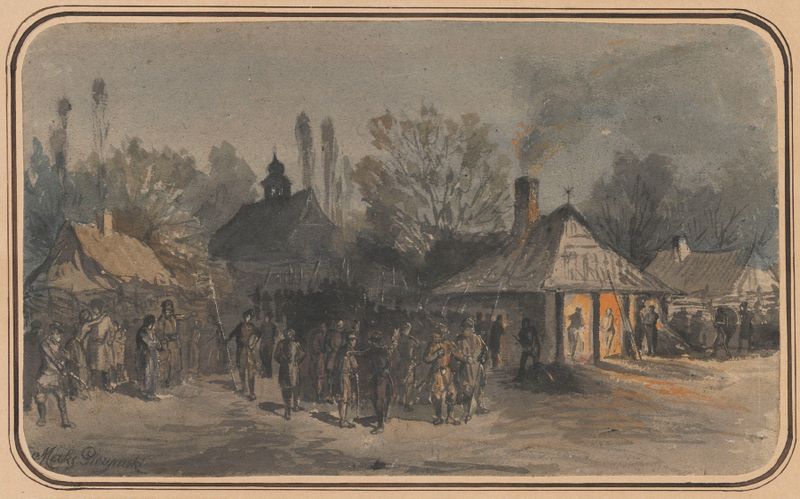
Wymarsz powstańców ze wsi w 1863 roku
Maksymilian Gierymski

Insurgents at night
Maksymilian Gierymski
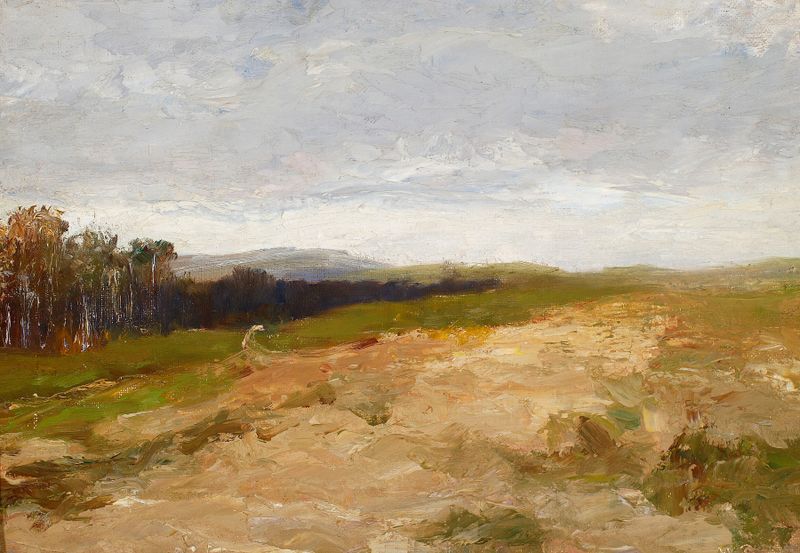
Landscape with a birch grove
Maksymilian Gierymski

Powiśle in Warsaw
Maksymilian Gierymski
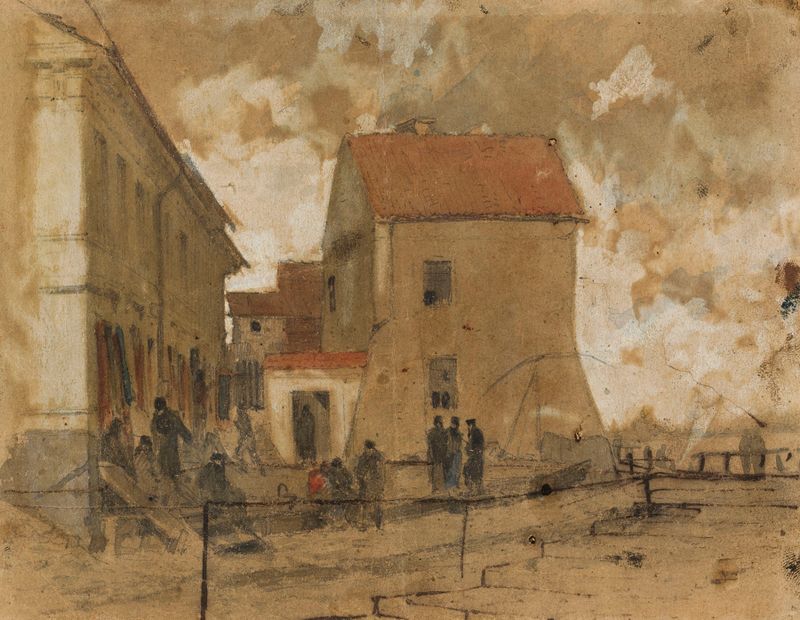
View of Solec
Maksymilian Gierymski

Winter in a small town, sketch I
Maksymilian Gierymski

View of marshes at sunset
Maksymilian Gierymski
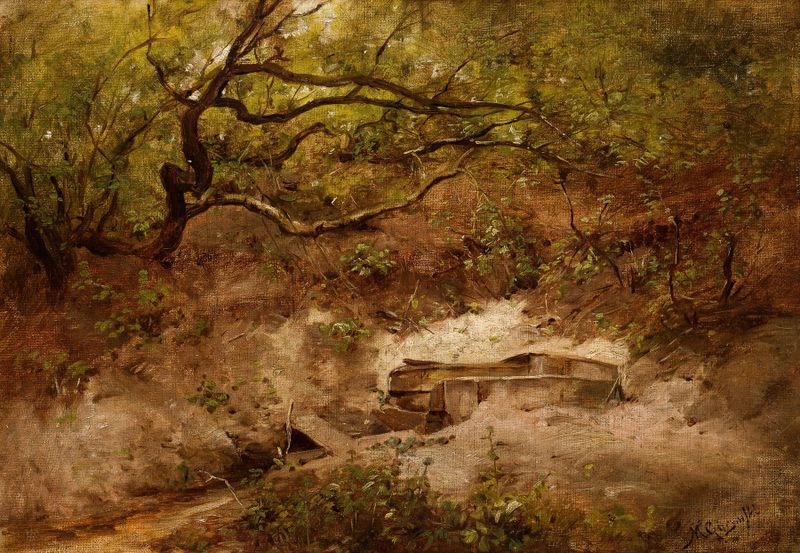
An Apple Tree at a Stream
Maksymilian Gierymski
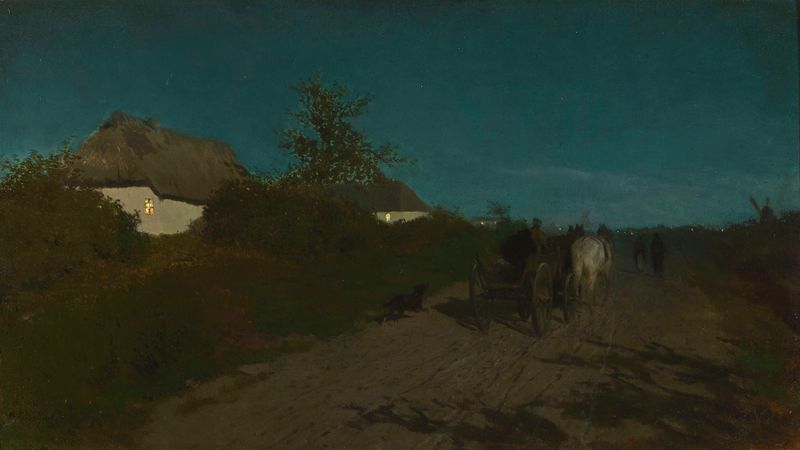
Night
Maksymilian Gierymski
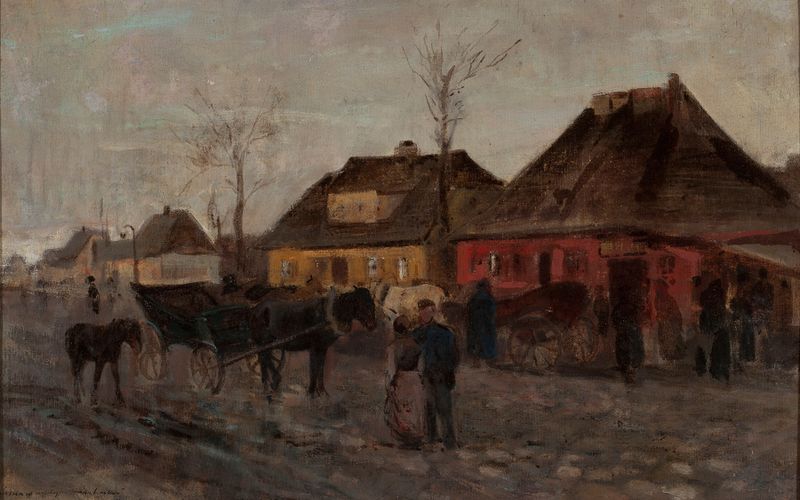
Springtime in a small town, sketch
Maksymilian Gierymski





