
Hamas before Ahasver — History & Facts
What grips the viewer first in Hamas before Ahasver is the hush that hangs between the three figures, as if the very air is thick with unspoken words. The woman at the center, her face composed yet unreadable, holds a letter or decree—its crumpled edge a silent witness to tension. The man to her right, crowned with a grand turban and draped in heavy robes, leans back with a guarded, almost regal composure, his hand resting near his chest as if weighing a decision.
Across from them, a third figure leans in from the shadows, his features half-lit, hands gesturing in earnest appeal. Light falls most clearly on the woman, making her the axis around which the drama turns, while the darkness at the edges swallows the rest of the world. Painted between 1665 and 1699, this work by Aert de Gelder belongs to a world where biblical and historical scenes were a favored stage for exploring the complexities of power, justice, and fate. Dutch artists of the late seventeenth century, heirs to the legacy of Rembrandt, often filled their canvases with rich costumes, theatrical lighting, and psychological nuance, inviting viewers to read faces as much as gestures.
While little is recorded about the journey of this specific painting before it entered the Deutsches Historisches Museum, its subject and style place it firmly within a tradition where such works were commissioned for private contemplation or display, prized as much for their storytelling as for their painterly skill. The questions left hanging in the gaze of each figure are the same ones that keep us looking—what is being asked, and what will be decided?
More Artworks by Aert de Gelder

Portrait of a Young Woman
Aert de Gelder

Hermanus Boerhaave (1668-1738), Professor of Medicine at the University of Leiden, with his Wife Maria Drolenvaux (1686-1746) and their Daughter Johanna Maria (1712-91)
Aert de Gelder
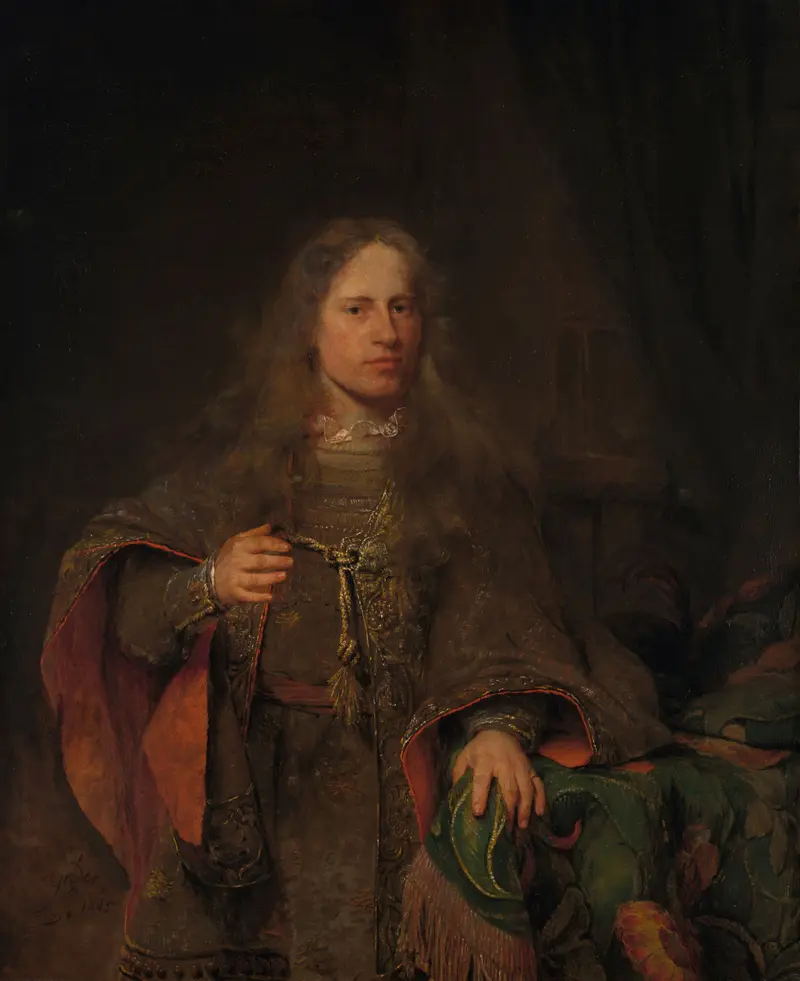
Portrait of Ernest de Beveren, Lord of West-IJsselmonde and De Lindt
Aert de Gelder
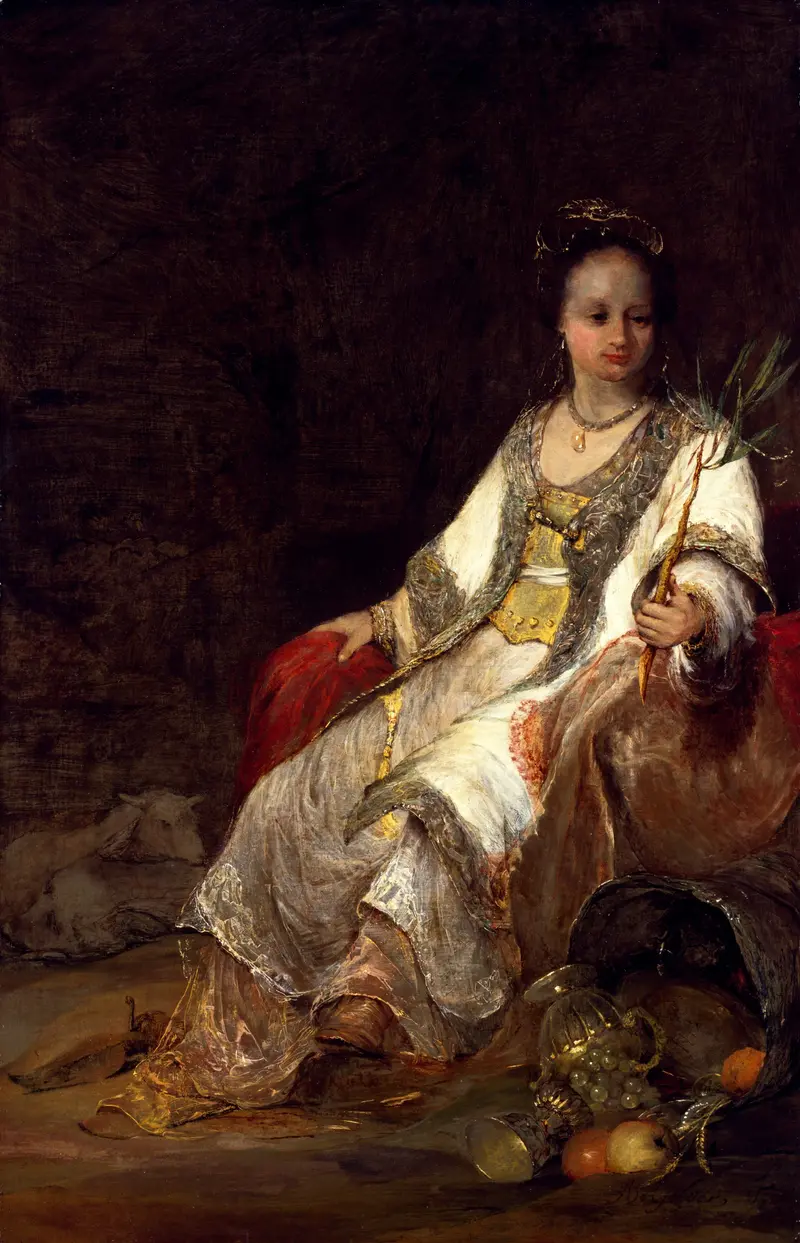
Allegory on Peace
Aert de Gelder
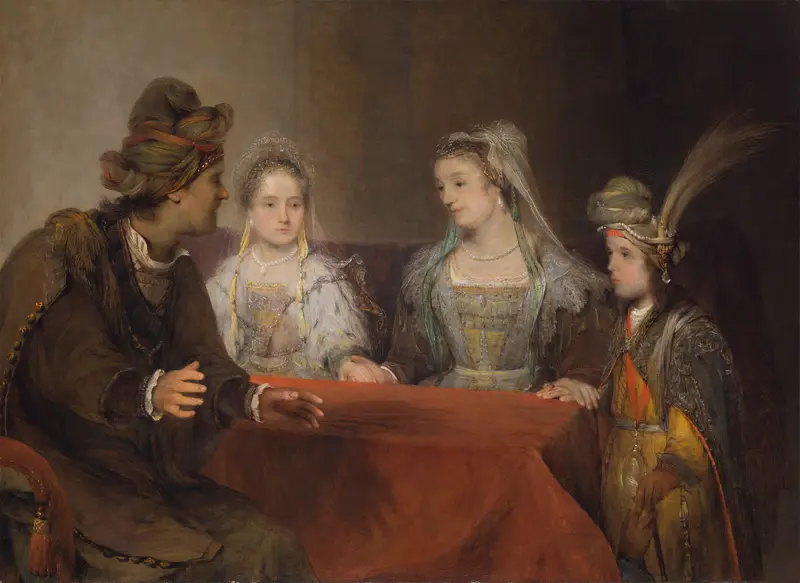
Edna Entrusting Tobias with Sarah
Aert de Gelder
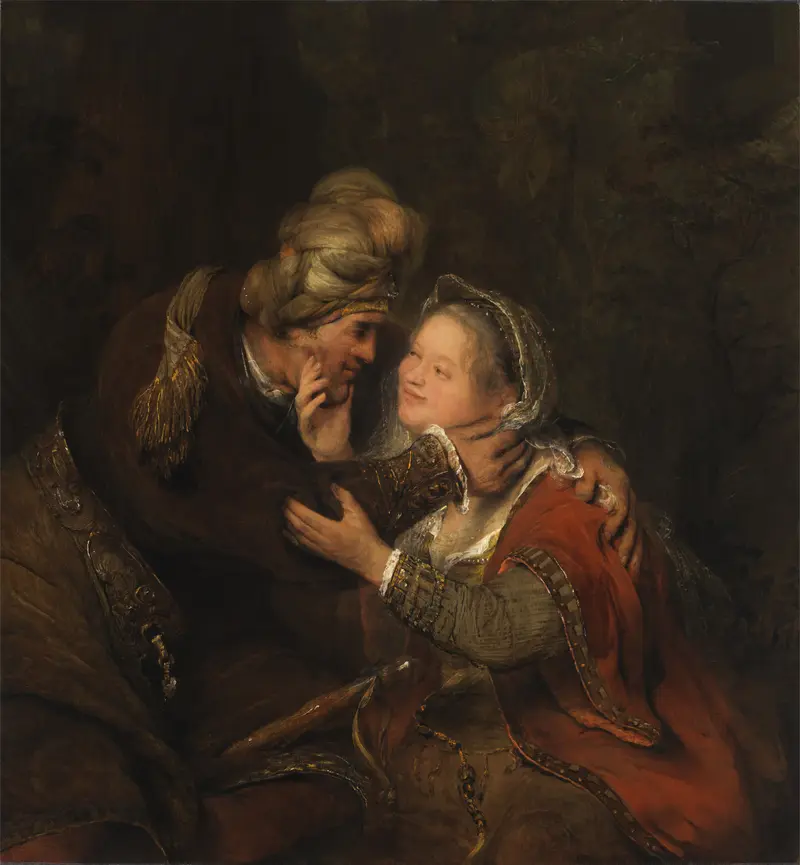
Judah and Tamar
Aert de Gelder
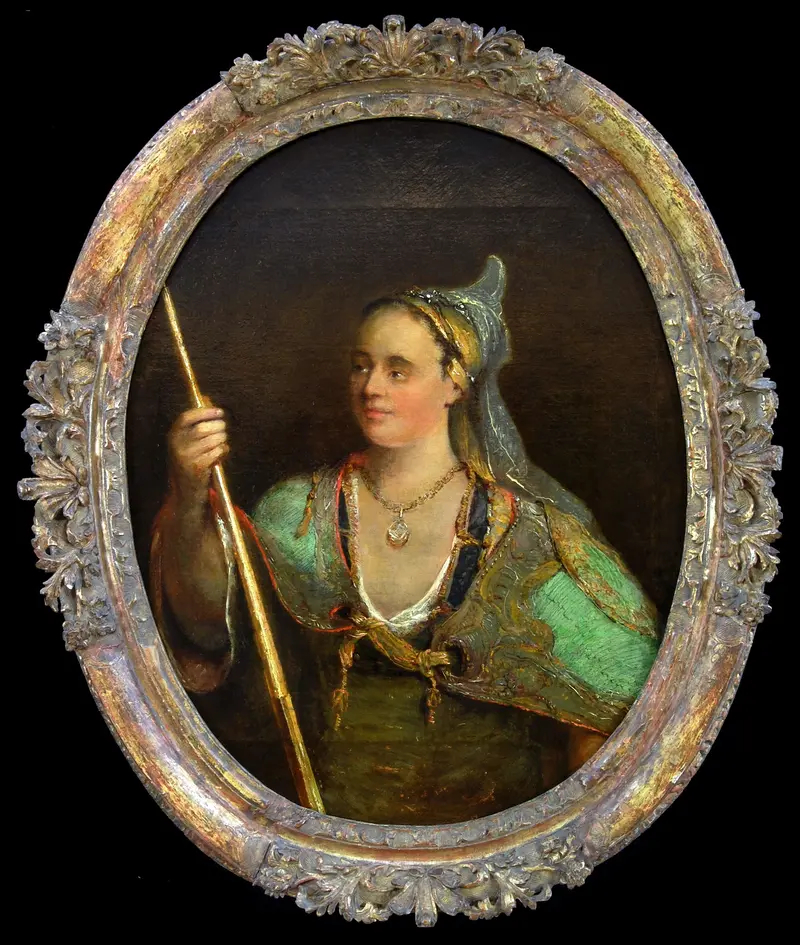
A female allegorical figure
Aert de Gelder
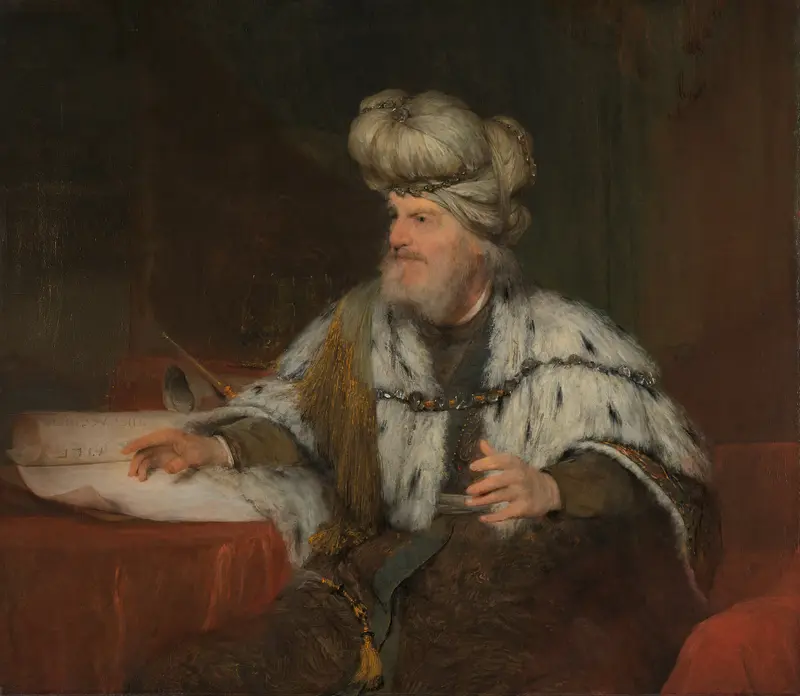
King David
Aert de Gelder
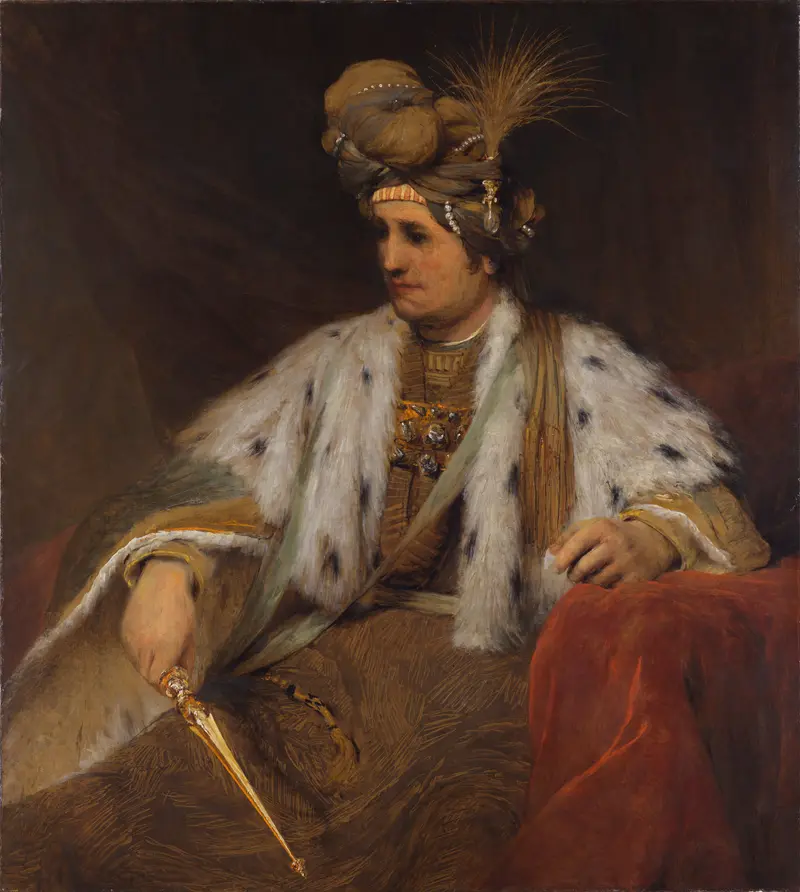
Old Testament Figure, Probably King Solomon
Aert de Gelder
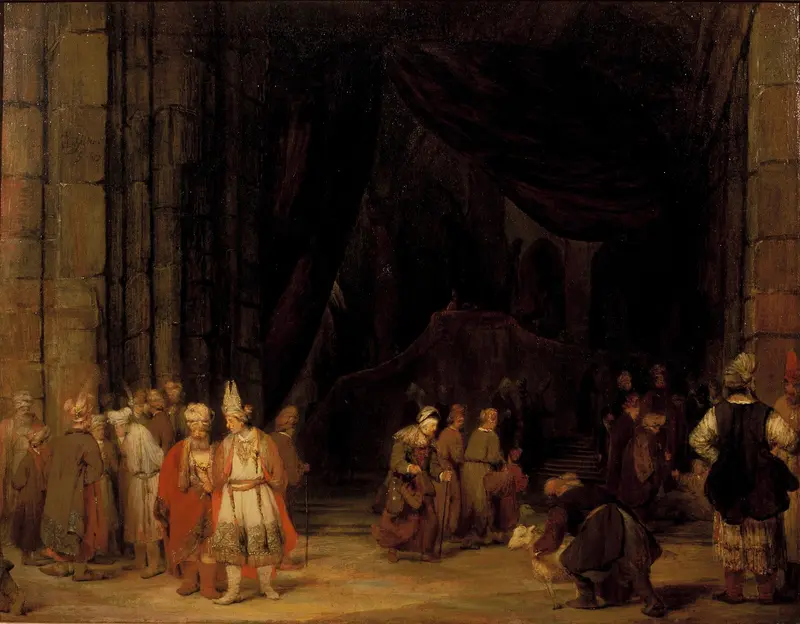
Courtyard of a temple
Aert de Gelder





