
Hampton Court Palace — History & Facts
What if beauty was never meant to be finished? In the fleeting moment captured by the artist, shadows dance between the lines of grandeur and decay, inviting us to contemplate the ephemeral nature of existence. Look to the left at the majestic architecture of Hampton Court Palace, its elaborate forms rising against a backdrop of golden light. The delicate brushwork captures the intricate details of the stone facades and the lush greenery, evoking a sense of tranquility. Notice how the shadows creep along the surfaces, suggesting the passage of time, while vibrant hues of blue and gold reveal Turner’s masterful command of color and light. The contrast between light and shadow in this piece speaks to the duality of beauty and impermanence.
The soft glow illuminating the palace signifies its historical significance, yet the encroaching shadows hint at the inevitability of change. This tension invites viewers to reflect on the fleeting moments in life, where beauty exists in the balance of light and obscurity, suggesting that every grandeur has its shadow. Turner created this piece in the late 18th or early 19th century, a time of radical transformation in both the art world and society. As an influential figure in the Romantic movement, he sought to break away from the constraints of traditional painting, embracing a more expressive and atmospheric style.
This work exemplifies his growing fascination with light and its potential to evoke emotion, as well as reflecting the cultural shifts occurring around him, where nature and manmade structures coexisted in complex harmony.
More Artworks by Joseph Mallord William Turner
Browse all →
Dort or Dordrecht- The Dort Packet-Boat from Rotterdam Becalmed
Joseph Mallord William Turner
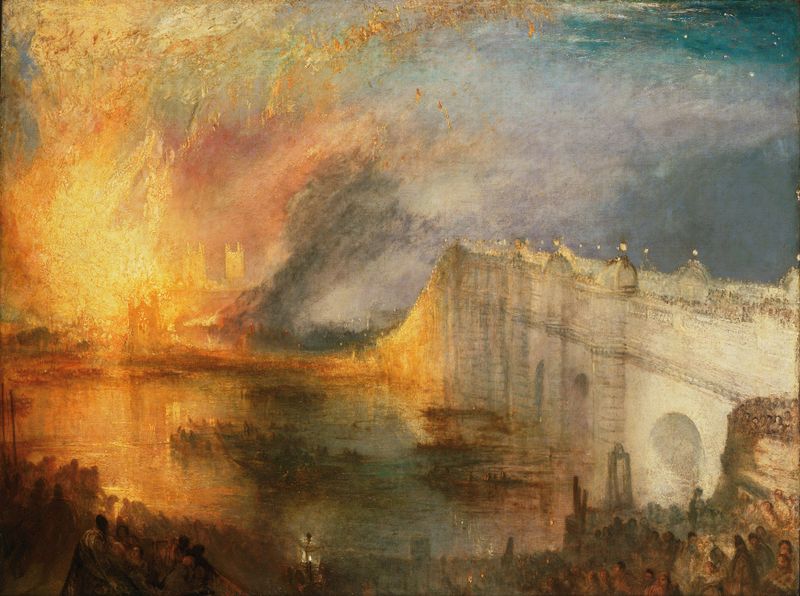
The Burning of the Houses of Lords and Commons, October 16, 1834
Joseph Mallord William Turner
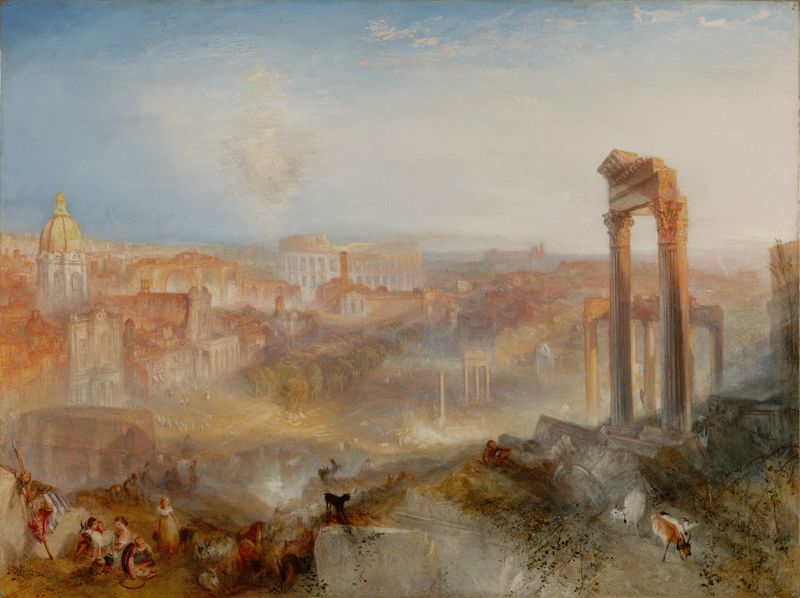
Modern Rome – Campo Vaccino
Joseph Mallord William Turner
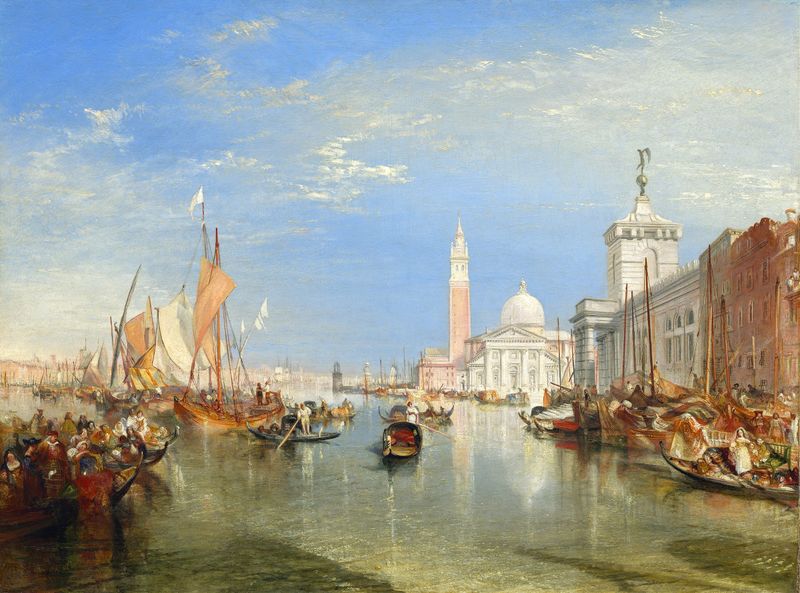
Venice – The Dogana and San Giorgio Maggiore
Joseph Mallord William Turner

The Burning of the Houses of Lords and Commons, 16 October 1834
Joseph Mallord William Turner
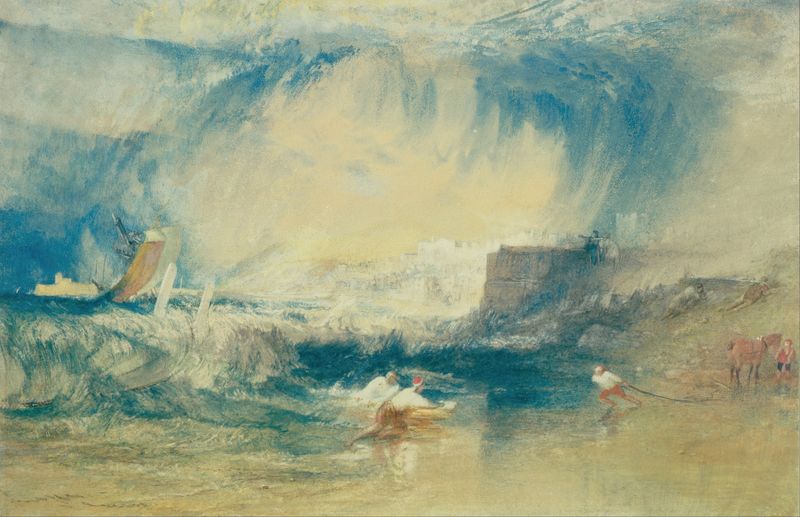
Lyme Regis, Dorsetshire, England
Joseph Mallord William Turner
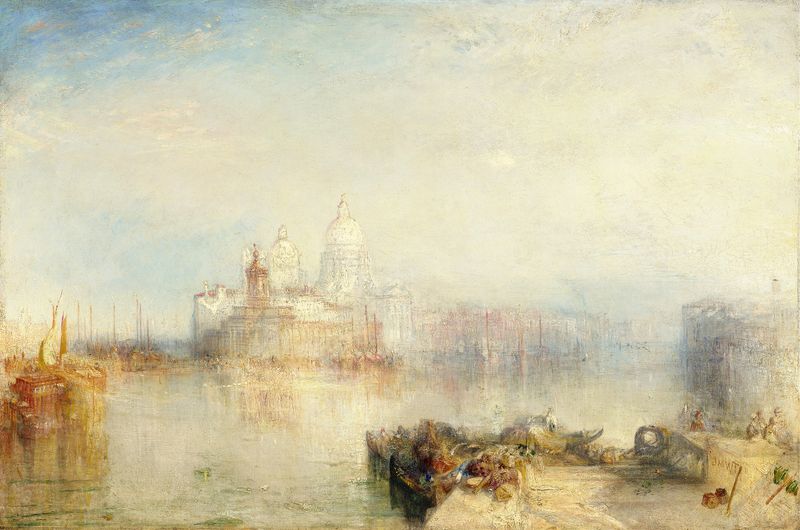
The Dogana and Santa Maria della Salute, Venice
Joseph Mallord William Turner
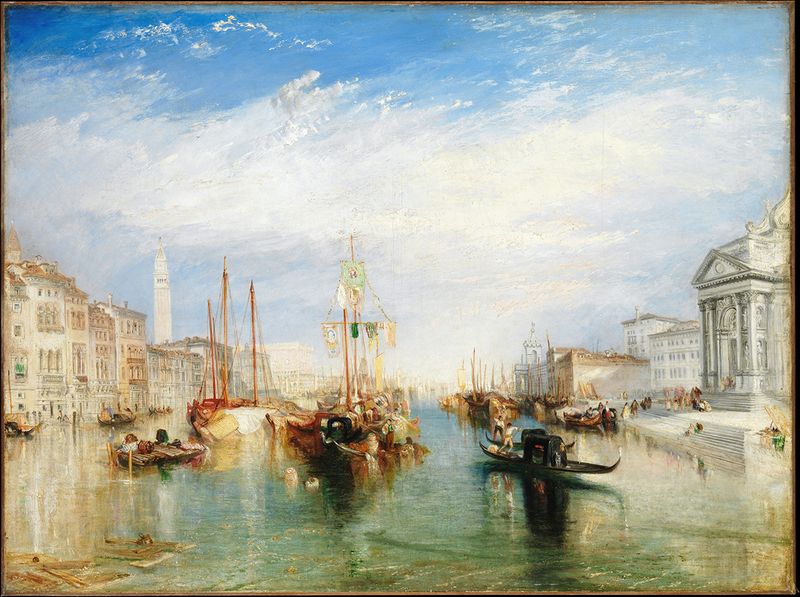
Venice, from the Porch of Madonna della Salute
Joseph Mallord William Turner
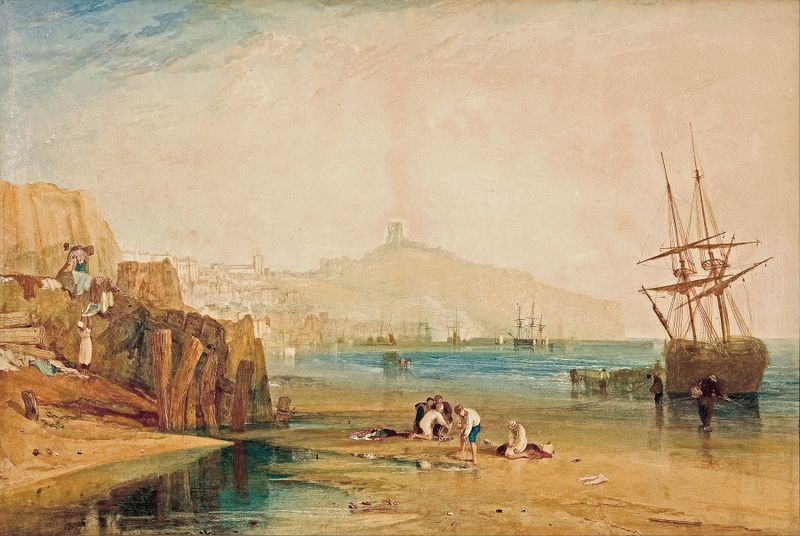
Scarborough town and castle; morning; boys catching crabs
Joseph Mallord William Turner
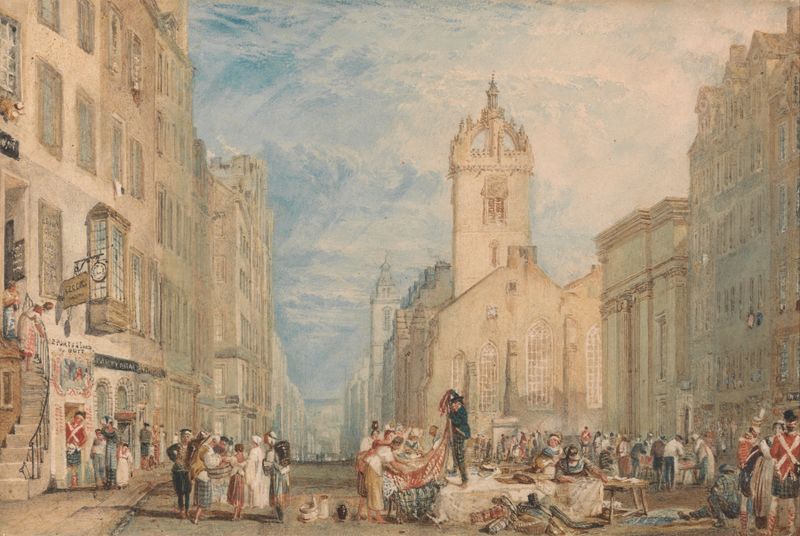
High Street, Edinburgh
Joseph Mallord William Turner
More Architecture Art
Browse all →
The statue of Liberty
Frédéric Auguste Bartholdi

View of Houses in Delft, Known as ‘The Little Street’
Johannes Vermeer

View of Houses in Delft, Known as ‘The Little Street’
Johannes Vermeer

The Cathedral in Rouen. The portal, Grey Weather
Claude Monet

The yellow house
Vincent van Gogh

The Church in Auvers-sur-Oise, View from the Chevet
Vincent van Gogh