
Headlands — History & Facts
Who listens when art speaks of silence? In the hushed embrace of Headlands, the emptiness of the landscape invites a profound contemplation of solitude. Look to the left at the soft, rolling hills, their muted greens and browns merging with the pale sky. The gentle brushstrokes create a textured surface, while the dappled light dances across the scene, illuminating the contours of the terrain. Notice how the horizon stretches languidly, pulling the eye toward the distant cliffs, suggesting a world beyond reach yet imbued with a sense of peaceful detachment.
The color palette evokes both tranquility and a hint of melancholy, a masterful blend that defines the essence of the painting. Delve deeper into the emotional landscape of the piece: the solitary figure stands small against the vastness, almost swallowed by its enormity. This contrast between man and nature speaks to existential themes of isolation and belonging. The stillness of the scene amplifies the very absence of sound, creating an atmosphere that resonates with quiet introspection.
The emptiness here is not merely void; it is a space ripe with unspoken thoughts and the weight of existence. Created in 1908, during a pivotal time in American art, the artist painted Headlands amidst the burgeoning Impressionist movement in the United States. Settled in New England, he was deeply influenced by the play of light and color in natural landscapes. The early 20th century was marked by a transition toward modernism, yet here, the artist captures a timeless moment, reflecting both personal and societal contemplations on nature and existence.
More Artworks by Childe Hassam
Browse all →
Beach at Newport
Childe Hassam

Washington Arch, Spring
Childe Hassam

Thaxter’s Garden
Childe Hassam

New England Headlands
Childe Hassam

Rocks At Appledore, Morning
Childe Hassam
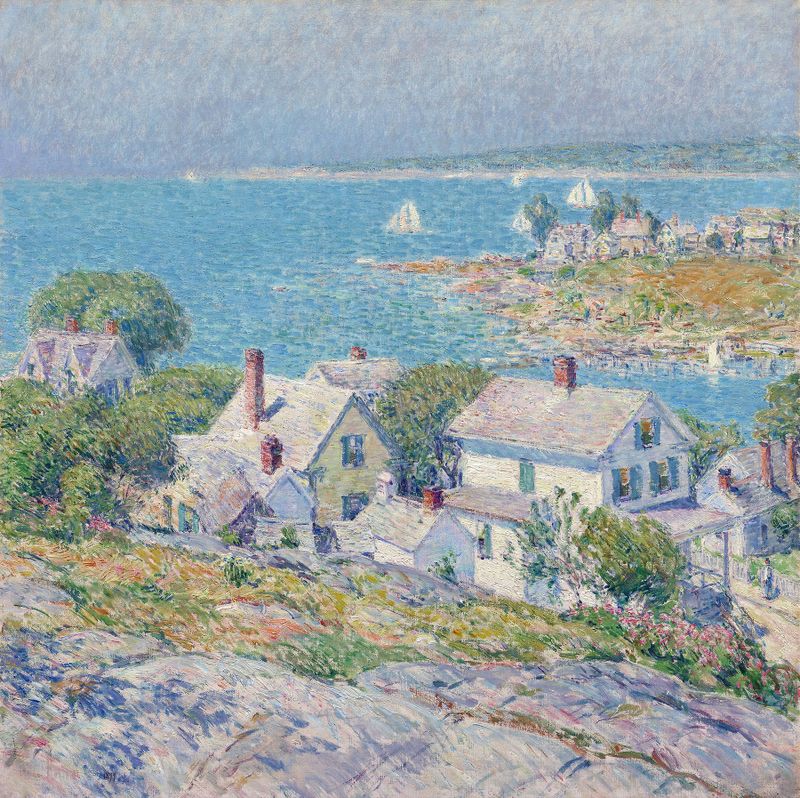
New England Headlands
Childe Hassam
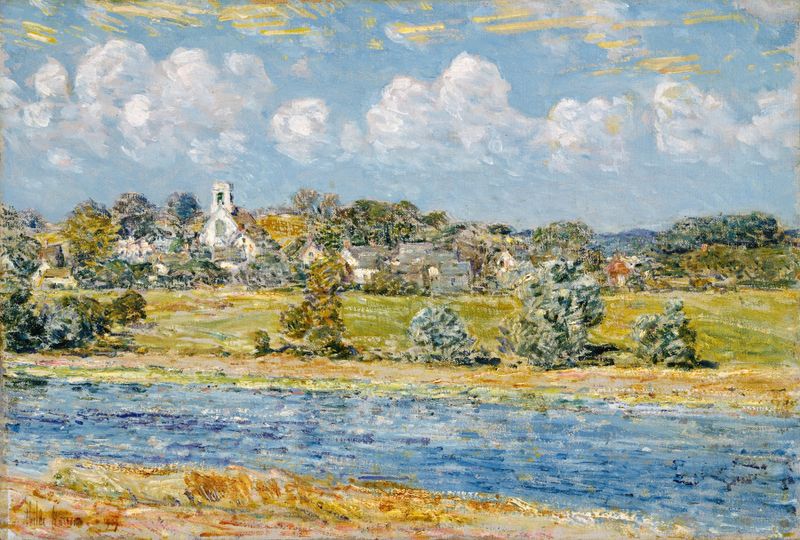
Landscape at Newfields, New Hampshire
Childe Hassam

Piazza di Spagna, Rome
Childe Hassam

The Harbor
Childe Hassam

Late Afternoon, New York, Winter
Childe Hassam





