
Heilige Arnulf — History & Facts
When did color learn to lie? In a world where hues mingle and dance, the essence of truth often becomes obscured by the brilliance of pigment. Albrecht Dürer’s Heilige Arnulf offers a moment of rebirth, inviting viewers to confront the intricate layers of faith, identity, and the divine. Look to the left at the figure of Arnulf, standing resolutely in a rich cloak of crimson, its opulence drawing the eye immediately. Notice how the artist masterfully employs chiaroscuro; the interplay of light and shadow creates a pulsating depth that animates his features.
The delicate brushwork captures the texture of his skin, the softness of his attire, and the flicker of light that highlights the gold embroidery, illustrating the reverence in his presence. The background fades into a muted green, allowing Arnulf to stand out as a beacon of grace amidst the somber tones. Yet, beneath this striking exterior lies a complex narrative. The saint’s gesture, poised yet tranquil, suggests a quiet urgency, as if he is about to impart wisdom.
The richness of the colors contrasts with the stark simplicity of his halo, hinting at the duality of earthly struggles and celestial aspirations. Each detail, from the folds of his robe to the richness of the background, speaks to a journey of faith — a rebirth of spirit amidst the trials of existence. Dürer painted this work during the early 16th century, a time marked by significant transformation in the art world and Europe at large. Living in Nuremberg, he was deeply influenced by the shifting currents of the Reformation and advancements in printmaking.
This period of personal and professional growth shaped his approach to portraying sacred figures, capturing both their physical presence and the intangible essence of their divine missions.
More Artworks by Albrecht Dürer
Browse all →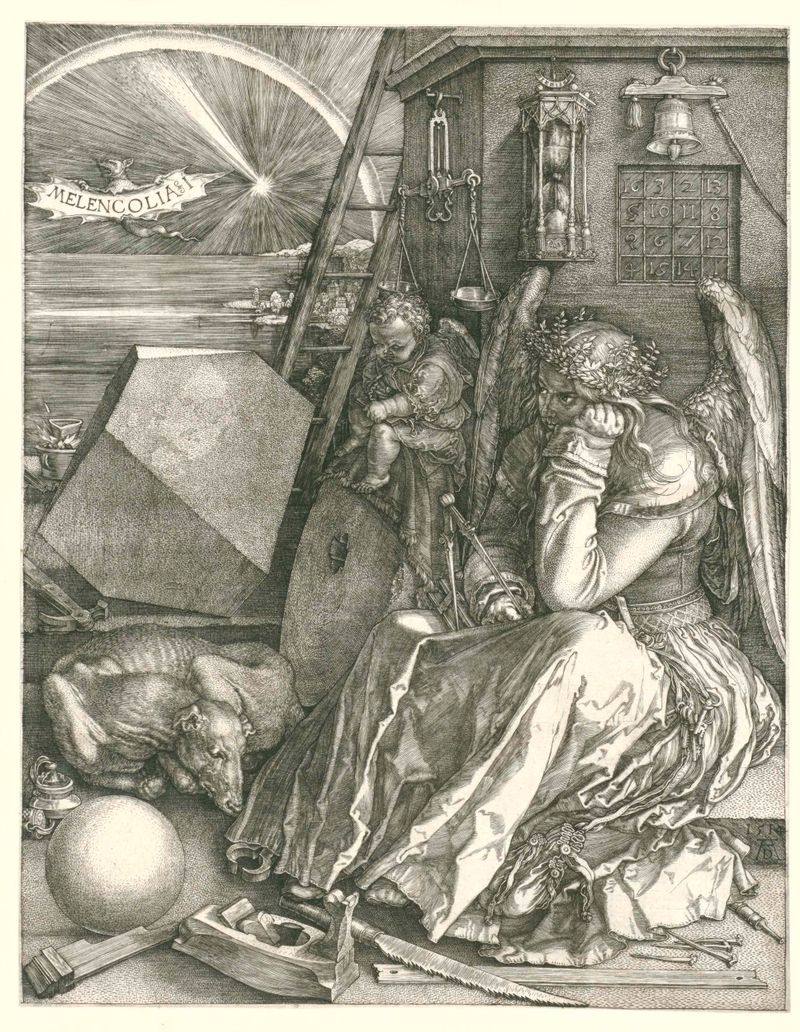
Melancholia
Albrecht Dürer
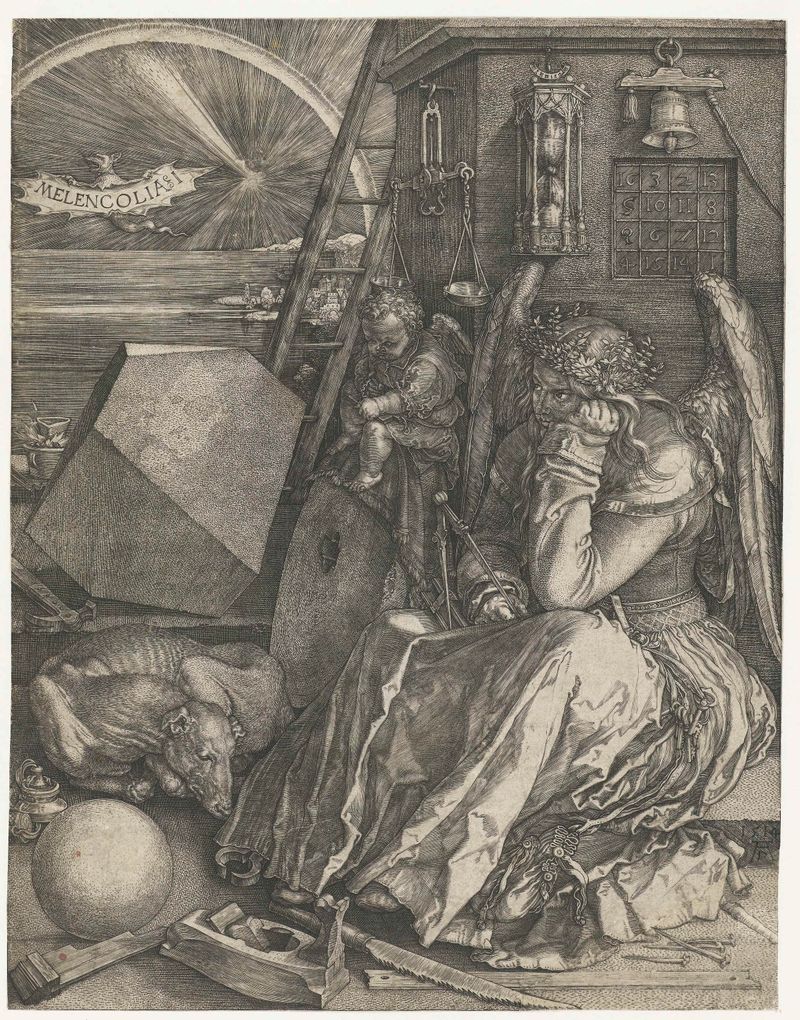
Melancholie
Albrecht Dürer
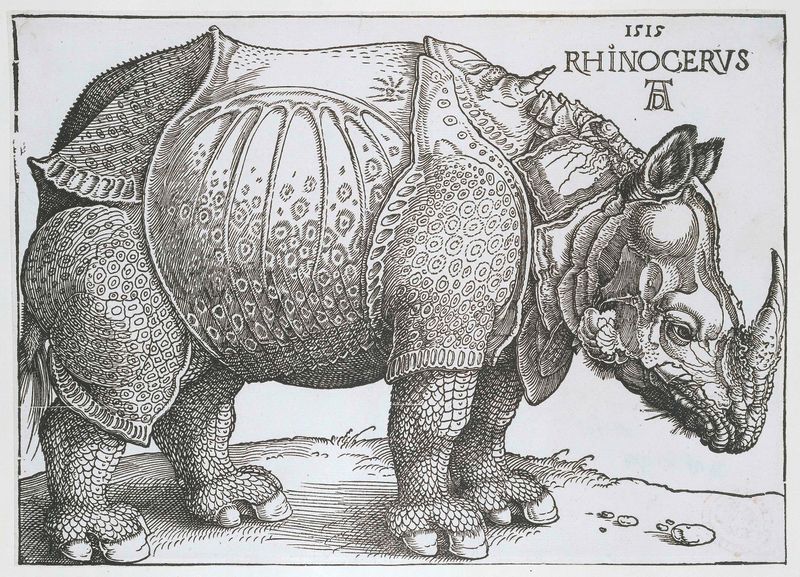
Neushoorn
Albrecht Dürer
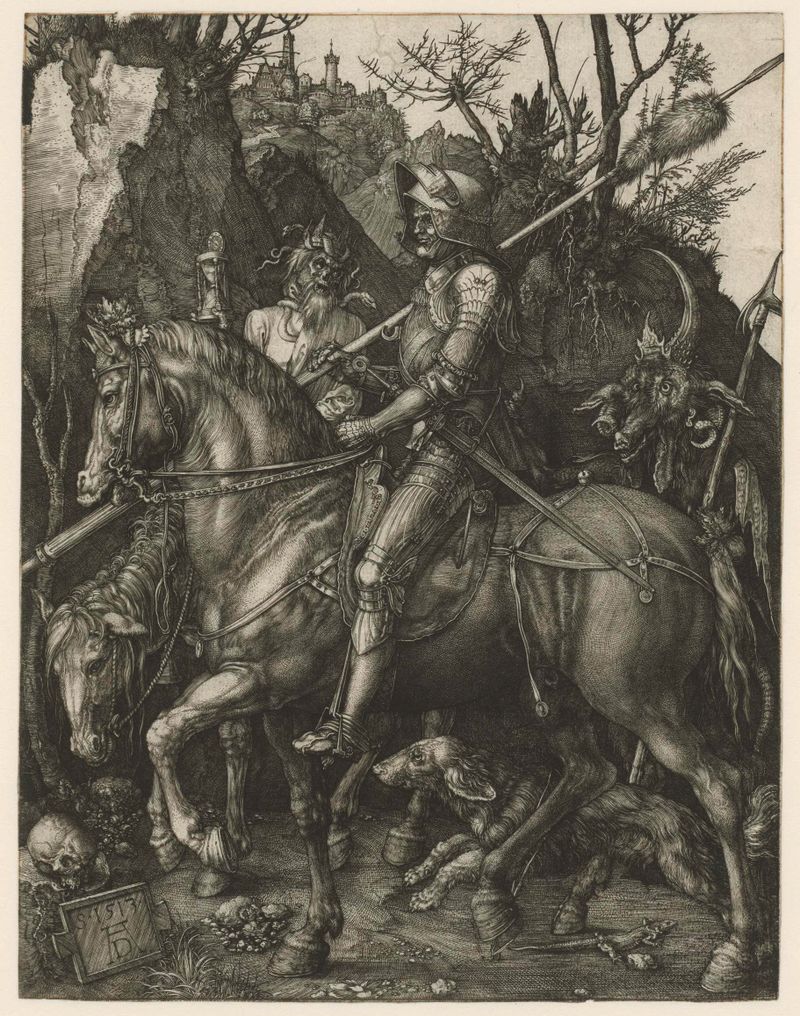
Knight, Death, and the Devil
Albrecht Dürer

De vier ruiters van de apocalyps
Albrecht Dürer

De vier ruiters van de apocalyps
Albrecht Dürer
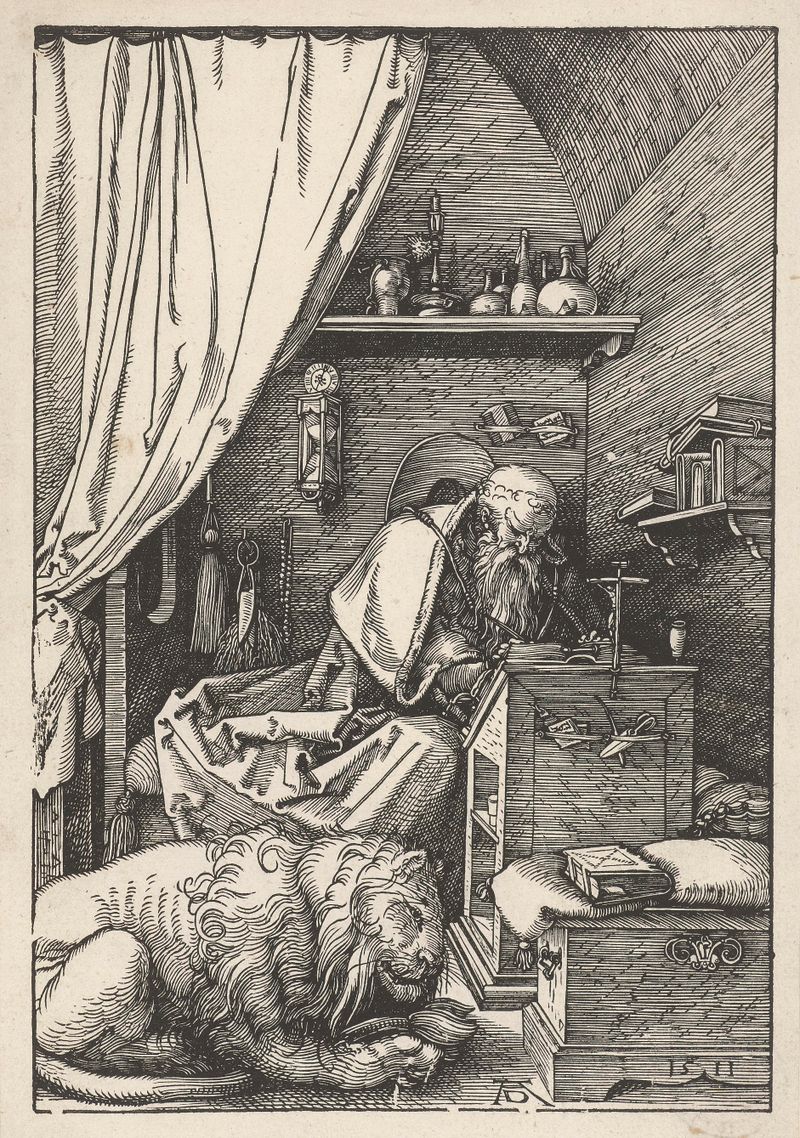
De Heilige Hiëronymus in zijn studeervertrek
Albrecht Dürer
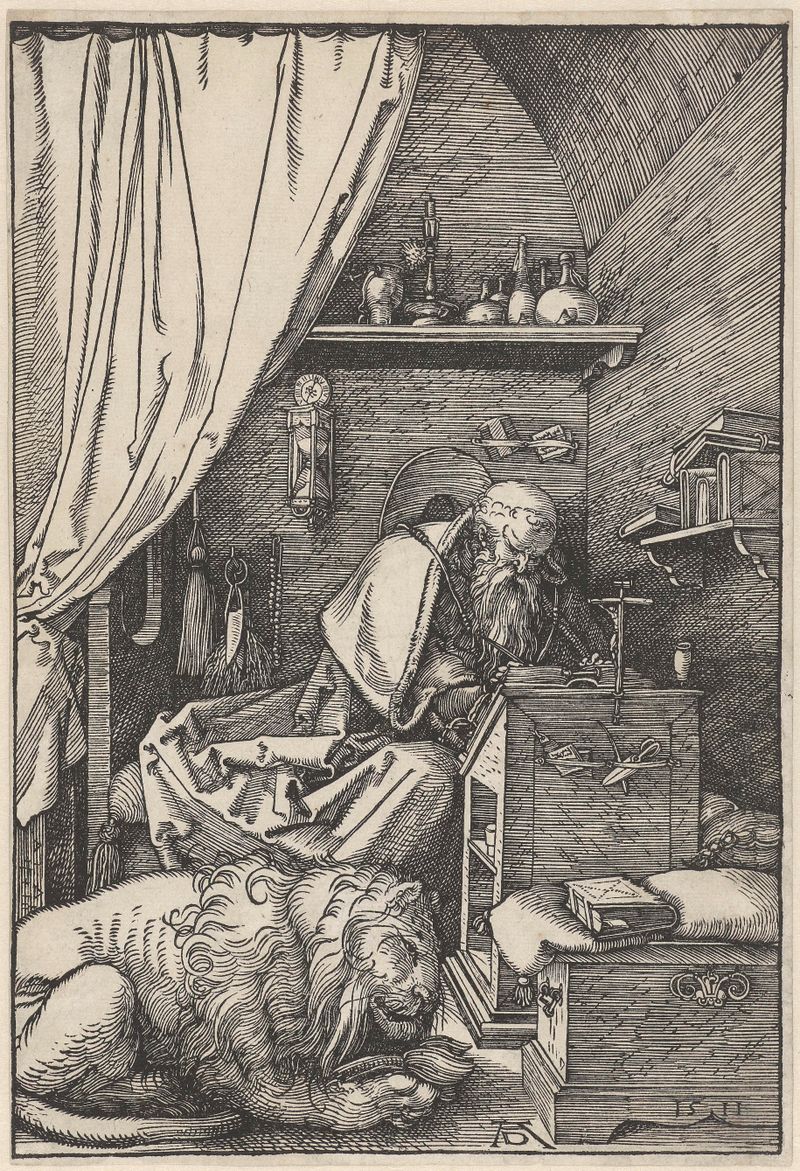
De Heilige Hiëronymus in zijn studeervertrek
Albrecht Dürer
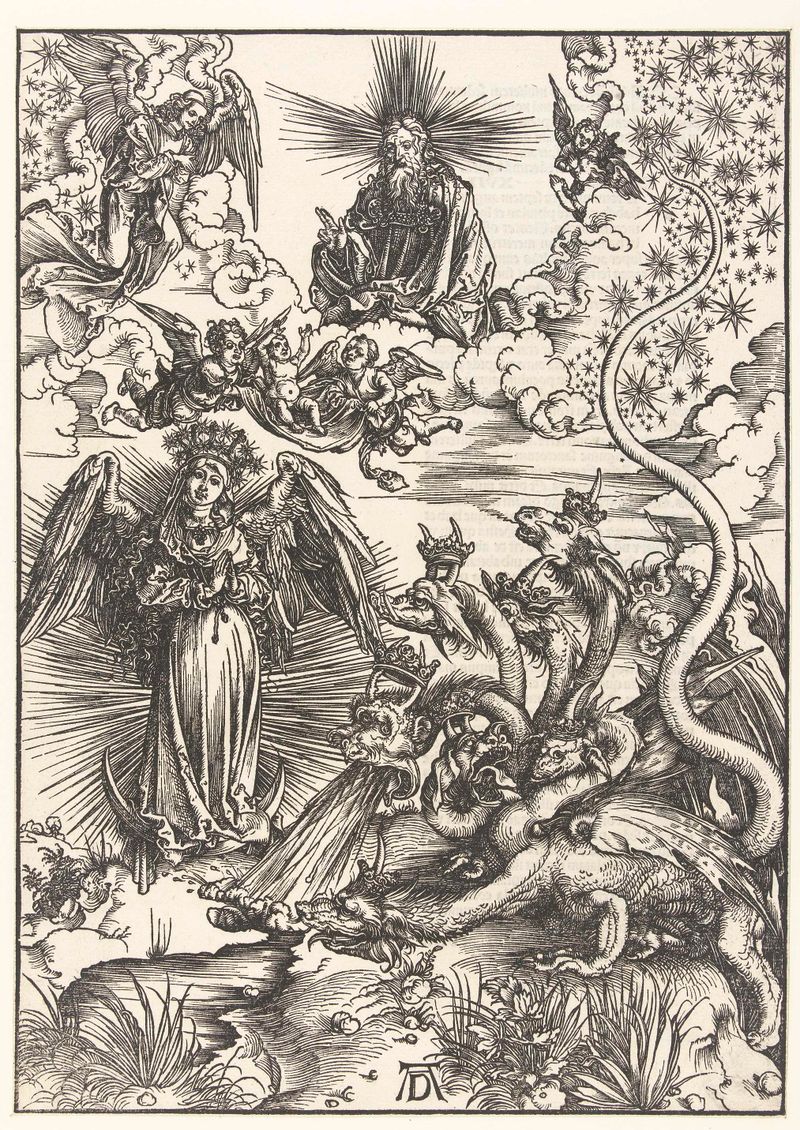
De apocalyptische vrouw en de zevenkoppige draak
Albrecht Dürer
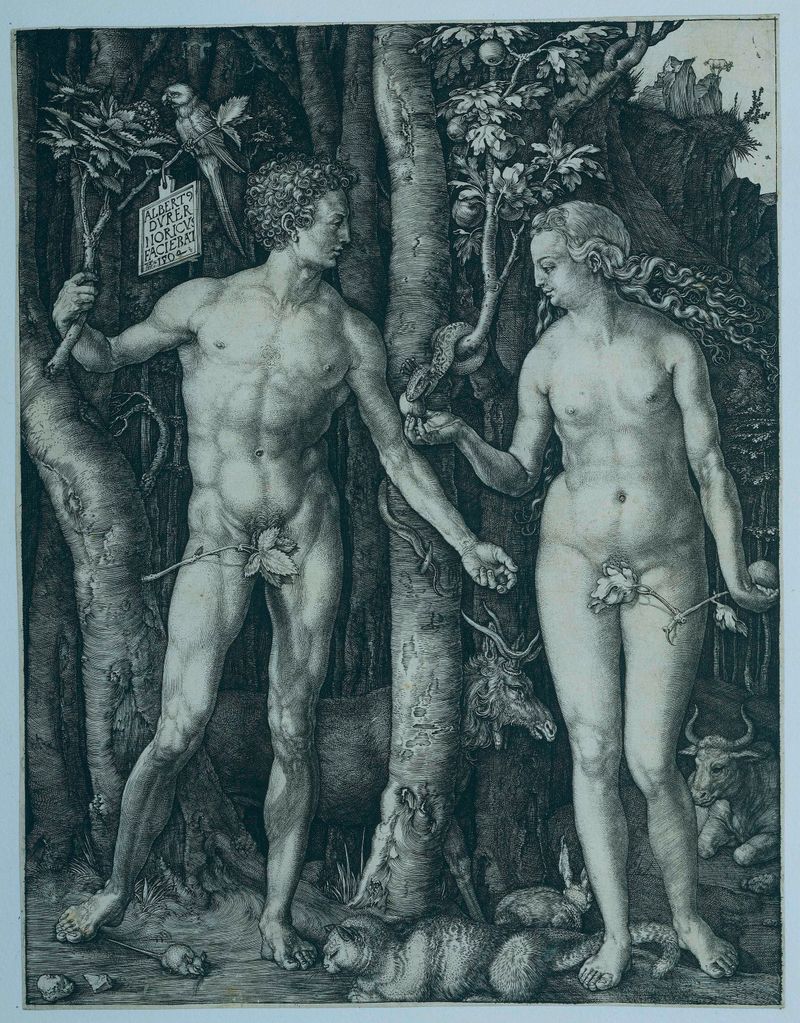
Adam en Eva
Albrecht Dürer
More Religious Art
Browse all →
The Return of the Prodigal Son
Rembrandt van Rijn

The Garden of Earthly Delights
El Bosco

Count Orgaz’ funeral
El Greco

The Hundred Guilder Print: the central piece with Christ preaching, the plate arched
Rembrandt van Rijn

The Descent from the Cross
Rogier van der Weyden

The return of the prodigal son
Rembrandt van Rijn