
Hemelvaart en kroning van Maria — History & Facts
What if beauty was never meant to be finished? In Albrecht Dürer's Hemelvaart en kroning van Maria, the viewer is confronted with a striking juxtaposition of divine grace and deep-seated anxiety, inviting a contemplation that lingers long after the gaze has shifted away. Look to the center of the composition where the Virgin Mary, resplendent in her blue robe, catches the light, drawing the eye immediately. Notice how the delicate balance of colors creates an ethereal quality, with the rich blues and soft golds intertwining. The surrounding angels, rendered with meticulous detail, encircle her, their expressions a blend of reverence and urgency, while the intricate floral patterns below ground her in earthly beauty yet hint at transience. Delve deeper into the expressions of the figures; a subtle tension brews among the serene faces, as if the ethereal moment of coronation carries both triumph and trepidation.
The vivid contrasts between light and shadow evoke a sense of duality—joy intertwined with the looming fear of loss. Each element—the ornate crown, the open heavens—whispers of a fleeting beauty that both uplifts and unsettles, mirroring the fragility of divine intervention in human life. Dürer painted this work in 1510, during a time of profound personal and artistic evolution. The artist was navigating the complexities of the Northern Renaissance, where emerging humanistic ideals coexisted with traditional religious themes.
The interplay of innovation and established norms in his life and work reflects the broader tension within art, as artists began exploring new ways to express both the beauty and the underlying fears of the human experience.
More Artworks by Albrecht Dürer
Browse all →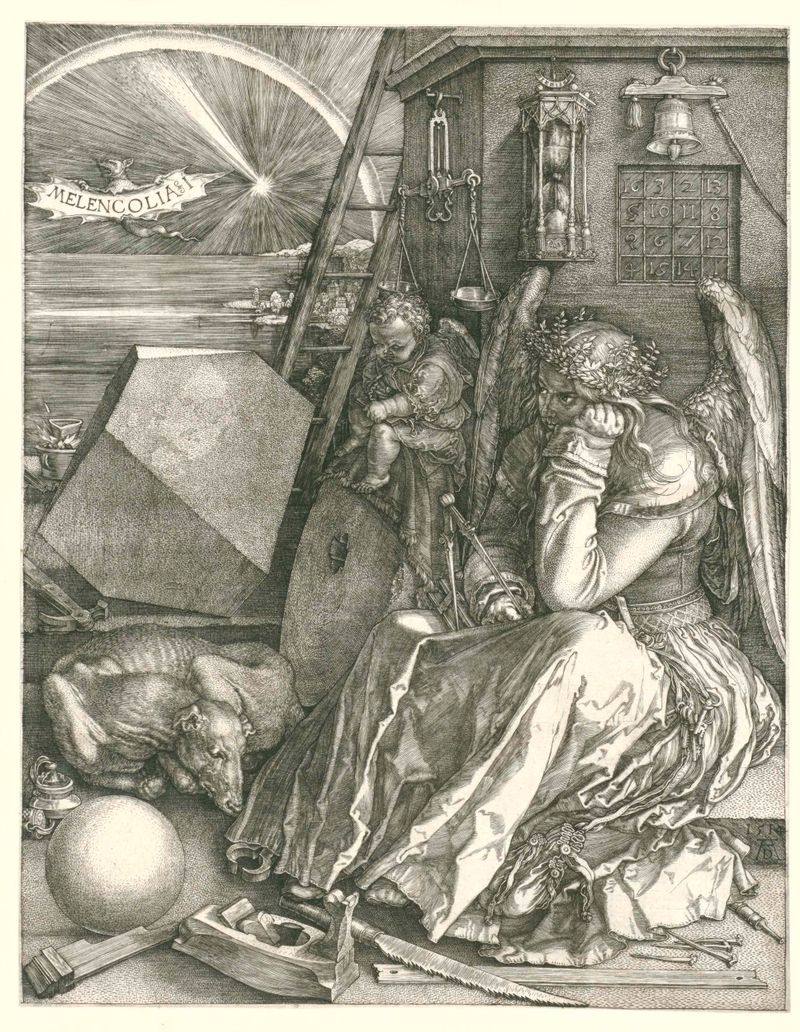
Melancholia
Albrecht Dürer
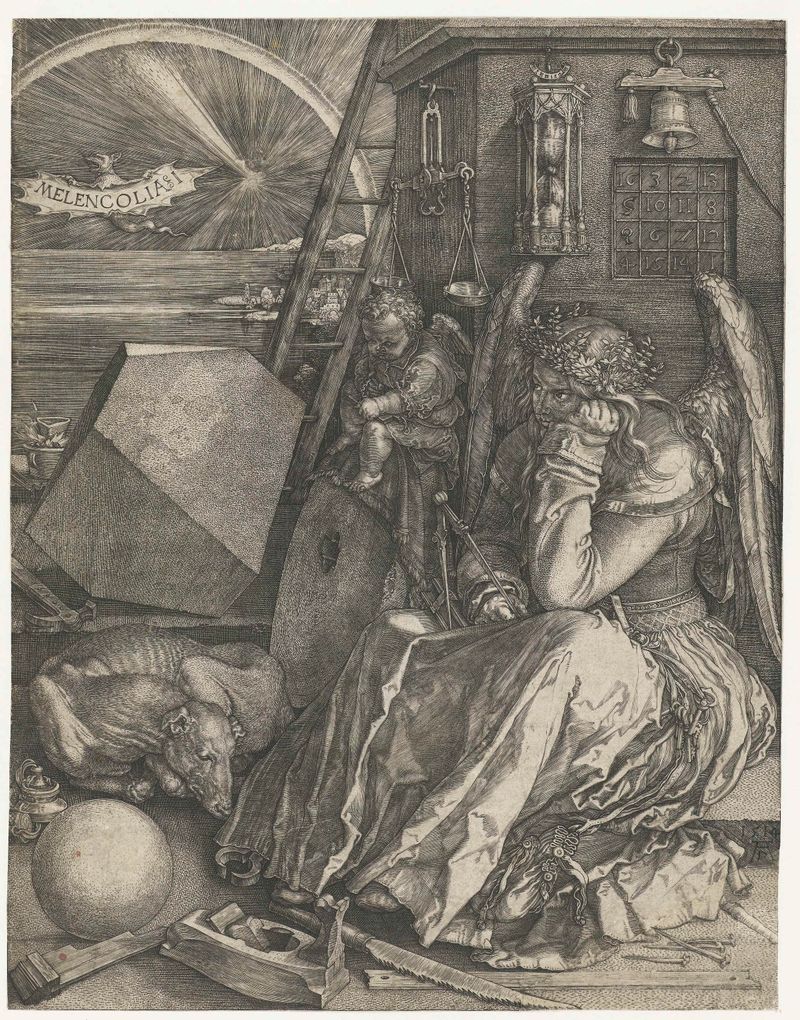
Melancholie
Albrecht Dürer
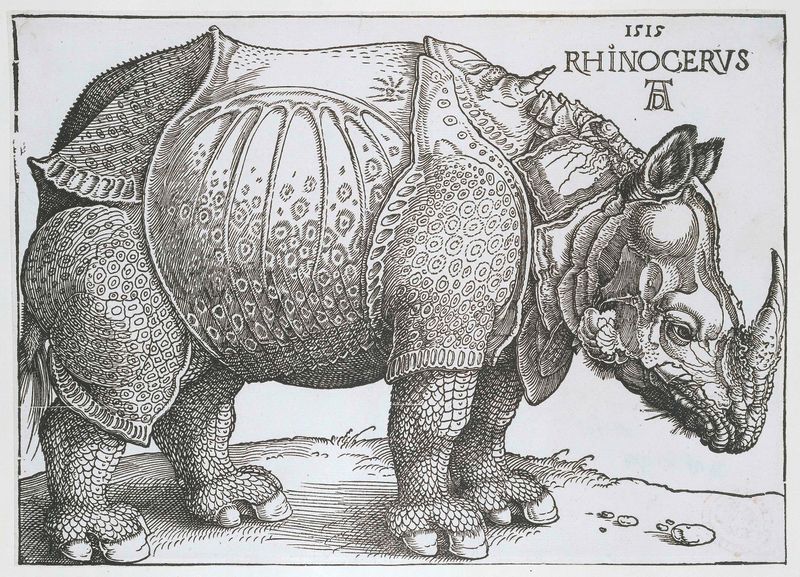
Neushoorn
Albrecht Dürer
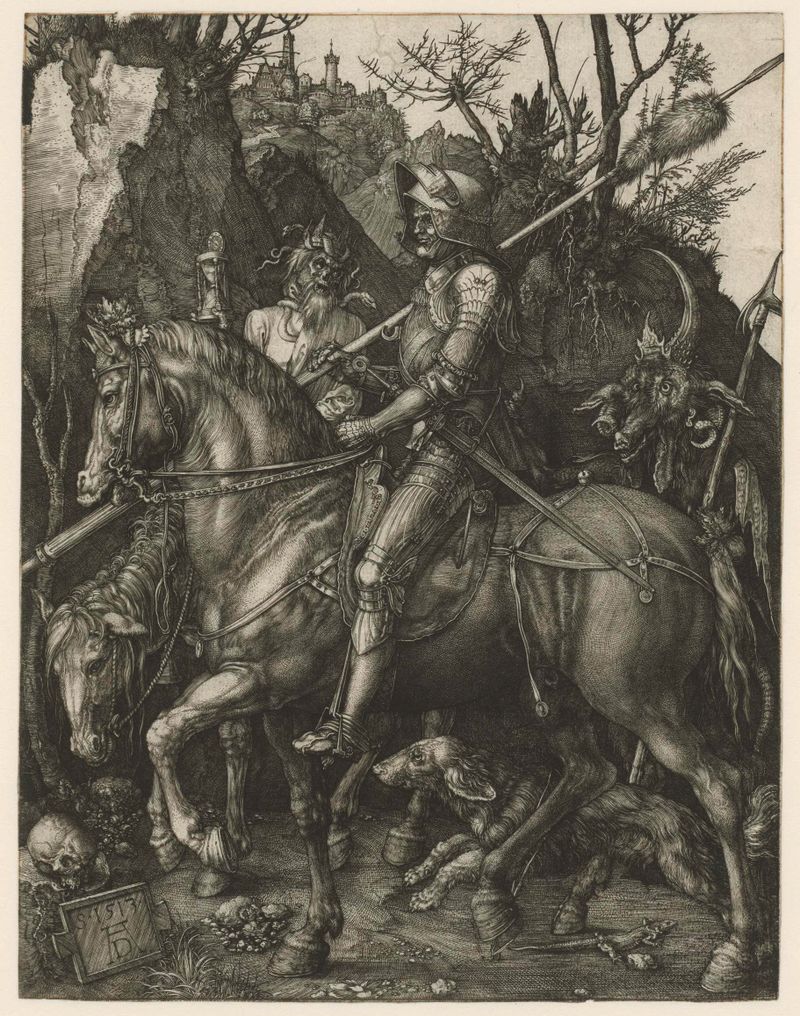
Knight, Death, and the Devil
Albrecht Dürer

De vier ruiters van de apocalyps
Albrecht Dürer

De vier ruiters van de apocalyps
Albrecht Dürer
De Heilige Hiëronymus in zijn studeervertrek
Albrecht Dürer
De Heilige Hiëronymus in zijn studeervertrek
Albrecht Dürer
De apocalyptische vrouw en de zevenkoppige draak
Albrecht Dürer
Adam en Eva
Albrecht Dürer
More Religious Art
Browse all →
The Return of the Prodigal Son
Rembrandt van Rijn

The Garden of Earthly Delights
El Bosco

Count Orgaz’ funeral
El Greco

The Hundred Guilder Print: the central piece with Christ preaching, the plate arched
Rembrandt van Rijn

The Descent from the Cross
Rogier van der Weyden

The return of the prodigal son
Rembrandt van Rijn