
Hemingford on the Ouse — History & Facts
Can beauty exist without sorrow? In the quiet embrace of nature, the answer lies patiently waiting amid the gentle ripples of the water, whispering tales of loss and memory. Look to the foreground where the riverbanks unfurl gracefully. The soft, verdant greens of the grass are interrupted by dappled light, casting playful shadows that dance atop the surface of the water. Notice how the delicate brushwork captures the shimmering reflections, creating a dialogue between reality and the ephemeral.
The muted sky above cradles the landscape in a tranquil blue, inviting a sense of introspection, while the subtle gradients lend a softness that feels both inviting and melancholic. In this scene, the interplay of light and shadow evokes the duality of existence—love and loss, joy and grief. The solitary figure by the water's edge suggests a moment of contemplation, where the serene beauty of the landscape contrasts with the unspoken echoes of sorrow that linger. The stillness of the scene speaks to the fragility of joy, encapsulating the profound truth that our most beautiful moments often carry the weight of what we have lost. During the time this work was created, Glendening was immersed in the English pastoral tradition, focusing on the interplay of light in nature.
Working in the late 19th to early 20th century, he painted from memory, reflecting a longing for the idyllic countryside that was rapidly changing. His art emerged amidst a growing appreciation for Impressionism, yet he maintained a distinctive style that celebrated the emotional resonance of the British landscape.
More Artworks by Alfred Augustus Glendening
Browse all →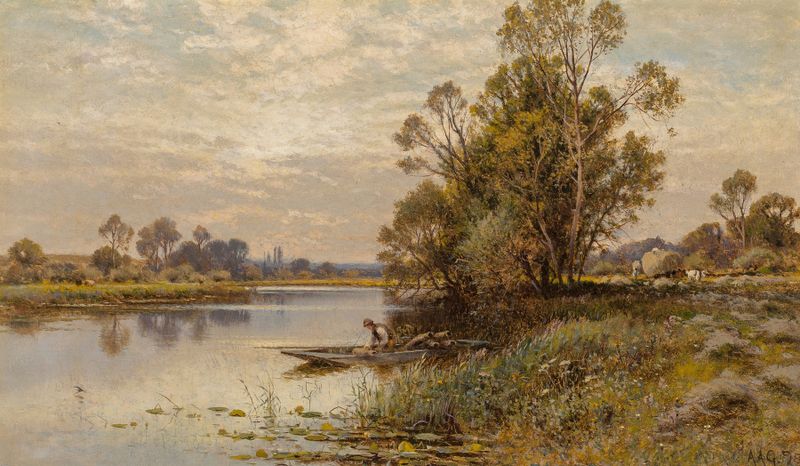
The Thames above Sunbury
Alfred Augustus Glendening

Grasmere, Cumberland
Alfred Augustus Glendening
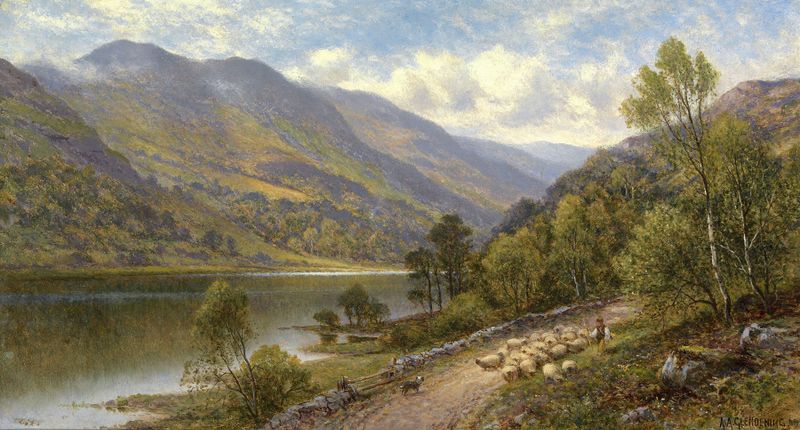
Lyn Gwynant
Alfred Augustus Glendening

On Wilmington Common, Kent
Alfred Augustus Glendening
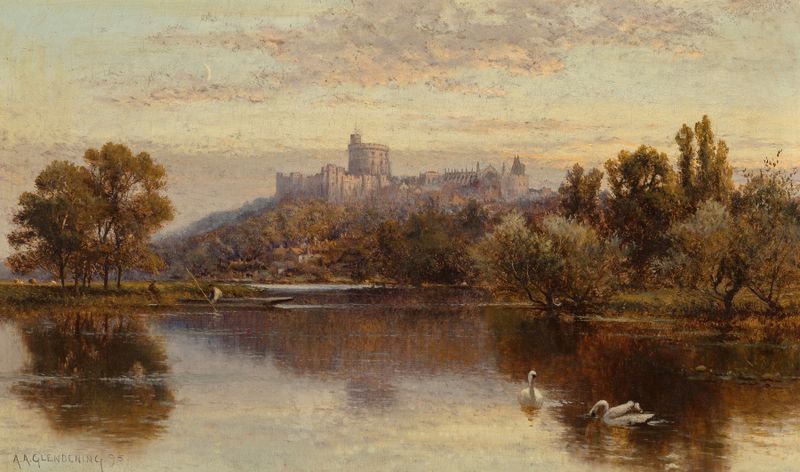
A view of Windsor Castle
Alfred Augustus Glendening

River Scene with Swans
Alfred Augustus Glendening

Belaugh on the Bure, Norfolk
Alfred Augustus Glendening

Autumn Landscape With Pond And Castle Tower
Alfred Augustus Glendening
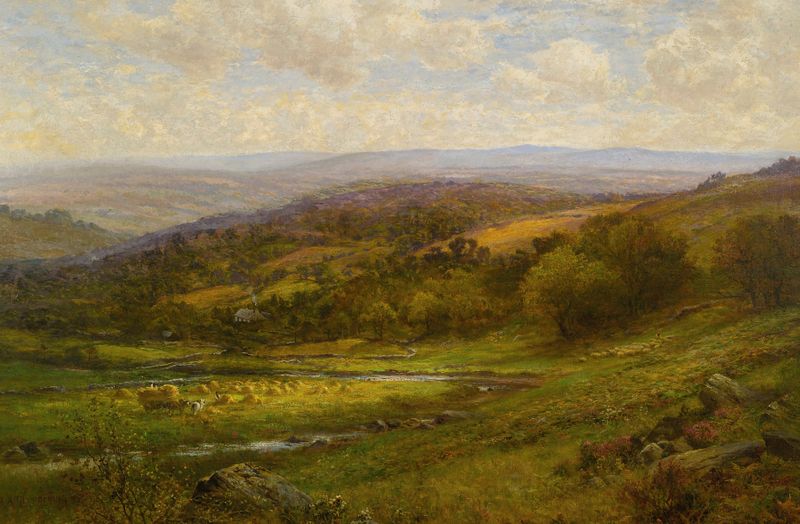
Landscape With Cattle And Haystacks
Alfred Augustus Glendening
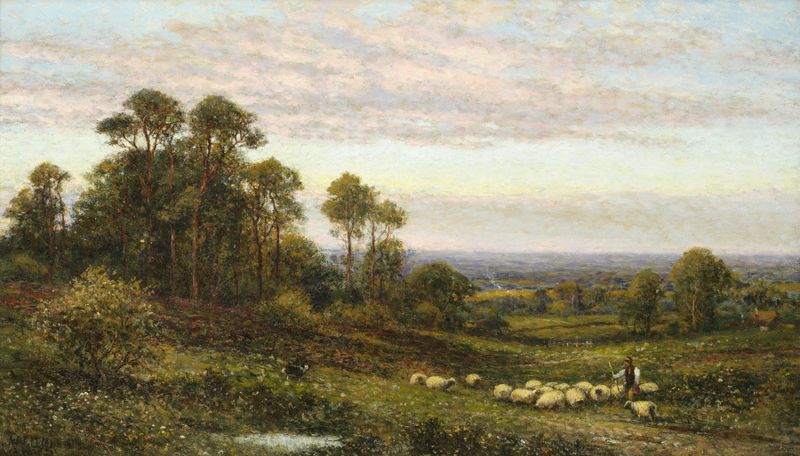
Shepherd and his flock
Alfred Augustus Glendening





