
On Wilmington Common, Kent — History & Facts
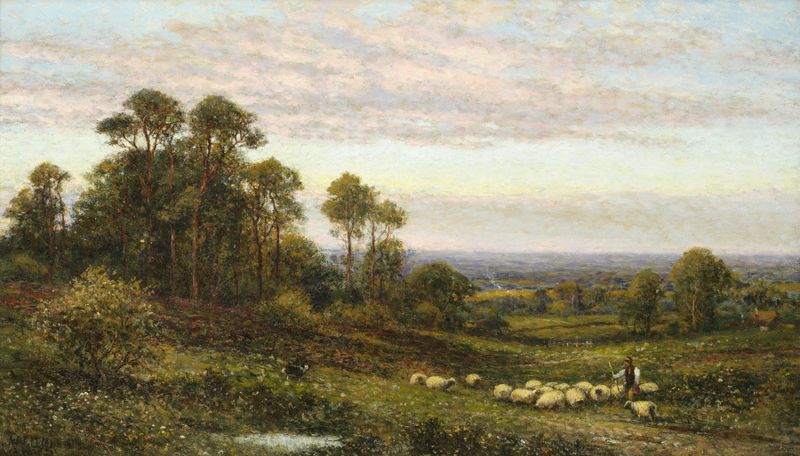
Did the painter know this moment would outlive them? In On Wilmington Common, the fleeting beauty of an ordinary day is captured, forever enshrining hope in a single frame. First, look to the left where a mother and child stroll along a sun-drenched path, their figures bathed in a warm embrace of light. The soft greens of the grass and the delicate blush of blooming flowers draw your eyes toward the heart of the piece. Notice how the brushstrokes convey a gentle breeze, with the trees swaying slightly, as if they too are part of the leisurely journey, inviting you into their serene world. Within this idyllic scene, subtle contrasts arise — the carefree joy of the child against the contemplative nature of the mother.
The vibrancy of the surroundings reflects optimism, yet there’s a hint of solitude in the distance, where figures fade into the horizon. This duality evokes a sense of connection and isolation, suggesting that while life flourishes, moments of introspection are ever-present, urging the viewer to contemplate their path. In 1895, Alfred Augustus Glendening was creating a body of work that celebrated the English countryside, marked by a shift towards capturing everyday life. Living in a rapidly changing world, surrounded by the Industrial Revolution, he chose to highlight the simplicity and beauty of nature.
This deliberate choice spoke to a yearning for peace and authenticity amidst the chaos, making On Wilmington Common not just a painting, but a poignant reminder of resilience and hope.
More Artworks by Alfred Augustus Glendening
Browse all →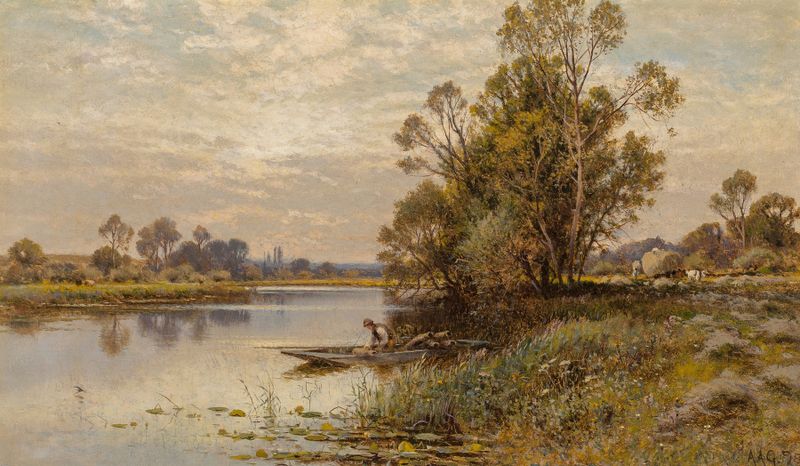
The Thames above Sunbury
Alfred Augustus Glendening

Grasmere, Cumberland
Alfred Augustus Glendening
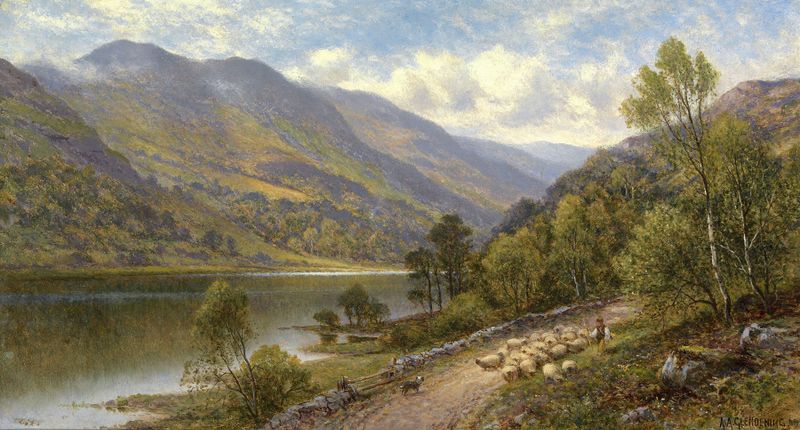
Lyn Gwynant
Alfred Augustus Glendening
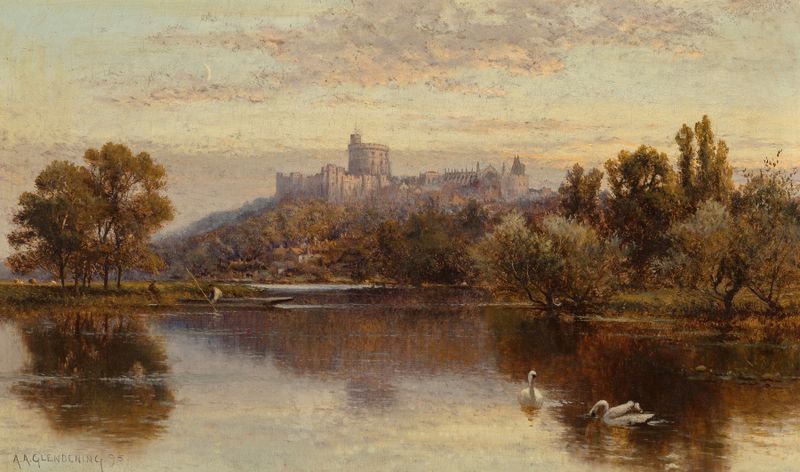
A view of Windsor Castle
Alfred Augustus Glendening

River Scene with Swans
Alfred Augustus Glendening

Hemingford on the Ouse
Alfred Augustus Glendening

Belaugh on the Bure, Norfolk
Alfred Augustus Glendening

Autumn Landscape With Pond And Castle Tower
Alfred Augustus Glendening
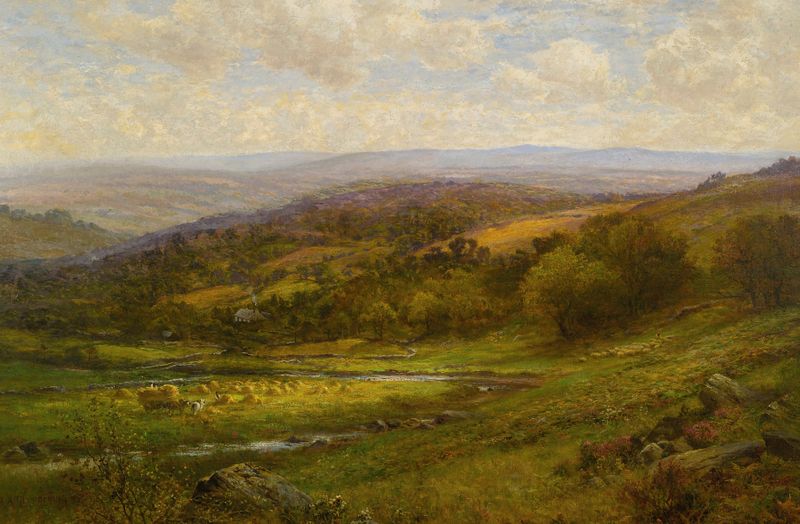
Landscape With Cattle And Haystacks
Alfred Augustus Glendening
Shepherd and his flock
Alfred Augustus Glendening





