
Lyn Gwynant — History & Facts
Did the painter know this moment would outlive them? In Lyn Gwynant, every brushstroke seems to whisper of divinity, capturing nature’s breath in a timeless embrace. Look to the foreground where a tranquil river meanders lazily through a verdant valley, its waters glistening in the dappled sunlight. Notice how the vivid greens of the trees and the delicate blues of the sky enhance the scene, drawing your eye into the harmonious composition. The deft interplay of light and shadow creates a mesmerizing rhythm, guiding you deeper into the lush landscape, where reflections in the water echo the serenity above. Amidst the idyllic beauty lies a subtle tension between the tranquil surface and the wilderness that surrounds it.
The gentle ripples of the river suggest the passage of time, while the towering trees stand as silent sentinels, rooted yet reaching. Here, the artist invites contemplation on the relationship between humanity and nature, hinting at both the fragility and permanence of existence. Each element seems imbued with a sacred quality, as though Glendening sought to immortalize a fleeting moment of grace. In 1909, while Lyn Gwynant was painted, Glendening found himself amidst the changing tides of the British art scene, where the Impressionist movement had begun to flourish.
Working in the picturesque landscapes of Wales, he captured the enchanting interplay of light and texture that characterized the era, reflecting a growing fascination with nature’s beauty and its divine essence.
More Artworks by Alfred Augustus Glendening
Browse all →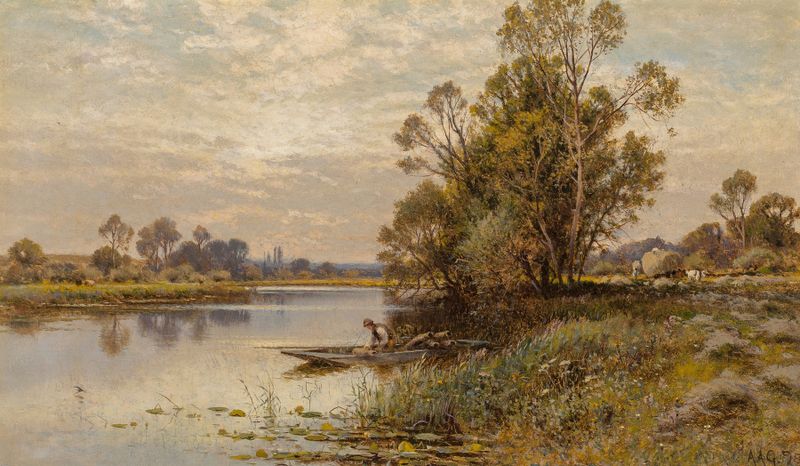
The Thames above Sunbury
Alfred Augustus Glendening

Grasmere, Cumberland
Alfred Augustus Glendening

On Wilmington Common, Kent
Alfred Augustus Glendening
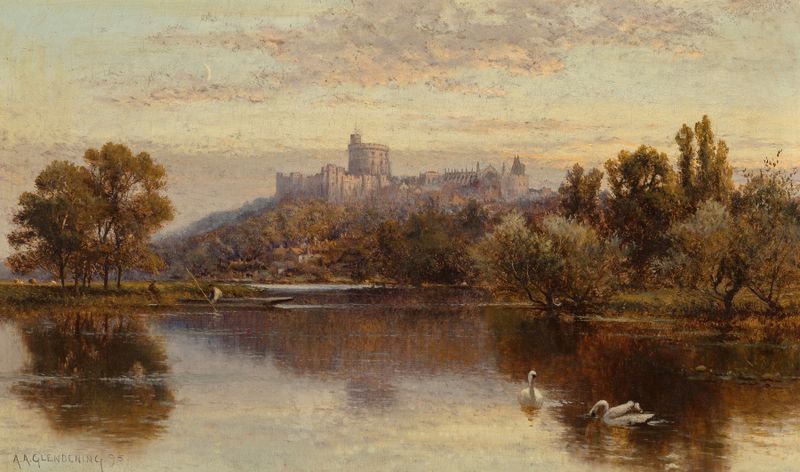
A view of Windsor Castle
Alfred Augustus Glendening

River Scene with Swans
Alfred Augustus Glendening

Hemingford on the Ouse
Alfred Augustus Glendening

Belaugh on the Bure, Norfolk
Alfred Augustus Glendening

Autumn Landscape With Pond And Castle Tower
Alfred Augustus Glendening
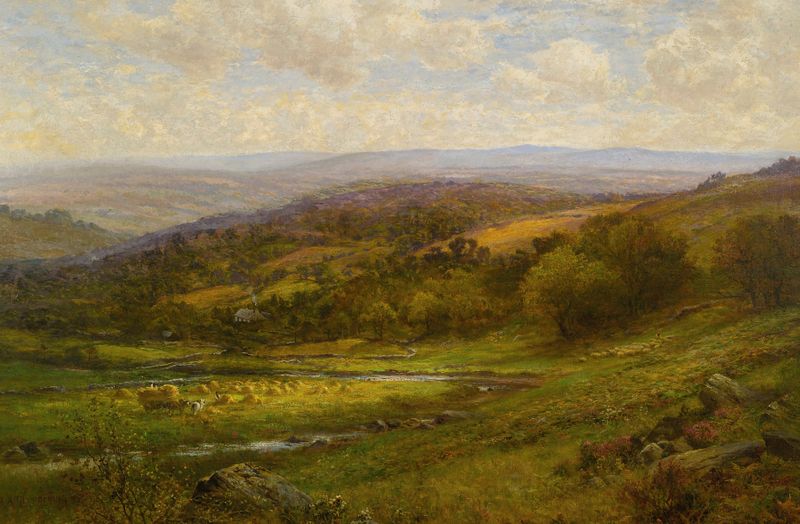
Landscape With Cattle And Haystacks
Alfred Augustus Glendening
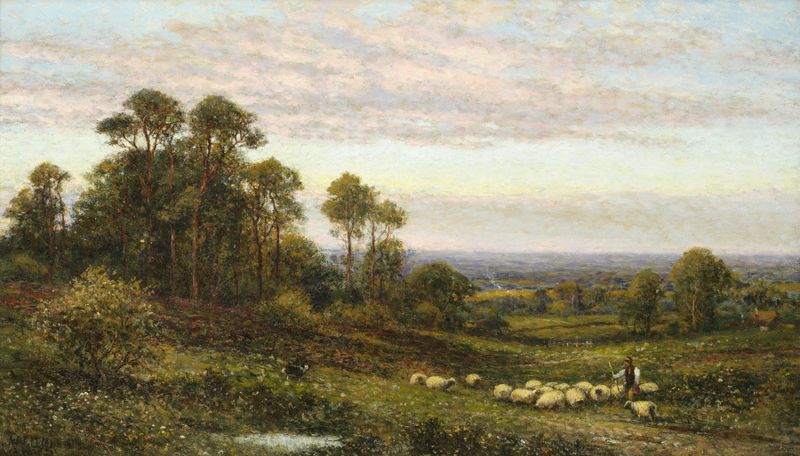
Shepherd and his flock
Alfred Augustus Glendening





