
The Thames above Sunbury — History & Facts
Can paint confess what words never could? In The Thames above Sunbury, the landscape whispers stories of fleeting moments, inviting the viewer to contemplate the beauty of creation itself. Look to the foreground, where a gentle river glides languidly, its surface reflecting the soft hues of twilight. Notice how the artist skillfully captures the interplay of light and shadow; the warm oranges and cool blues merge seamlessly, creating a tranquil atmosphere. The delicate strokes suggest movement in the water, while the lush greenery on the banks provides life and contrast, drawing the eye toward the horizon where the sun dips below the skyline. Beneath its serene façade lies a deeper exploration of tranquility and transience.
The juxtaposition of the still water against the dynamic sky encapsulates the fleeting nature of time, echoing the cyclical rhythms of life. The solitary figure on the riverbank hints at introspection and solitude, inviting viewers to reflect on their own relationship with nature and existence, while evoking an emotional connection that transcends the visual. In 1898, the artist was immersed in the pastoral beauty of England, capturing the idyllic landscapes that were becoming emblematic of the era. Living in a time where impressionism was gaining traction, he sought to portray the essence of scenes with a rich yet nuanced palette.
The work reflects a period of change in art, where the interplay of light and atmosphere became central, allowing Glendening to articulate a profound sense of place and emotion through his brush.
More Artworks by Alfred Augustus Glendening
Browse all →
Grasmere, Cumberland
Alfred Augustus Glendening
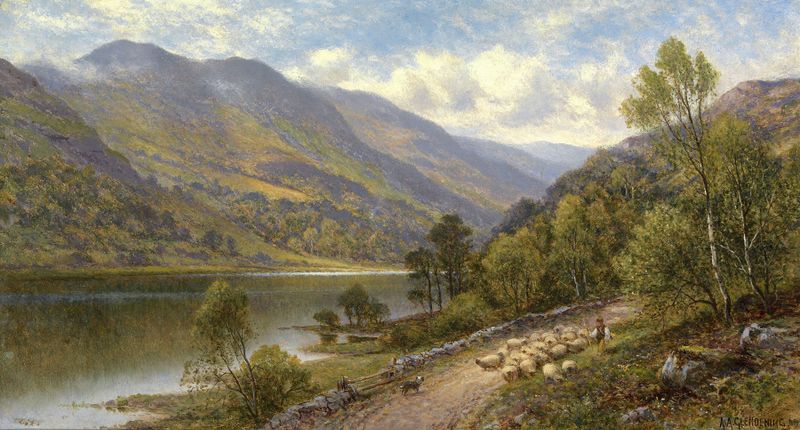
Lyn Gwynant
Alfred Augustus Glendening

On Wilmington Common, Kent
Alfred Augustus Glendening
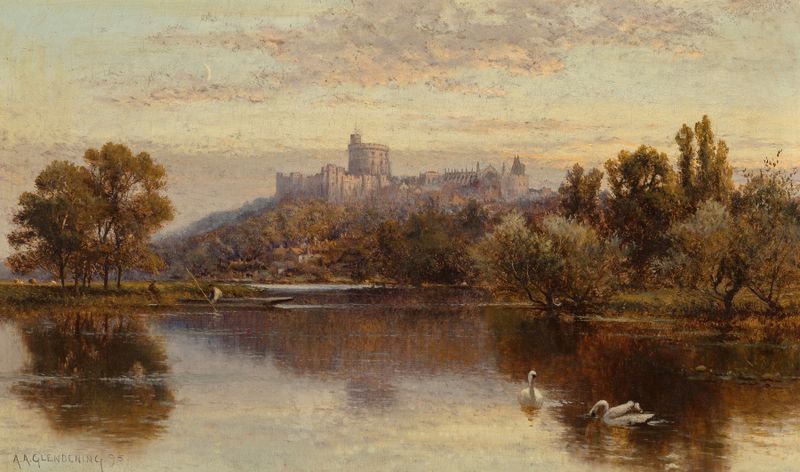
A view of Windsor Castle
Alfred Augustus Glendening

River Scene with Swans
Alfred Augustus Glendening

Hemingford on the Ouse
Alfred Augustus Glendening

Belaugh on the Bure, Norfolk
Alfred Augustus Glendening

Autumn Landscape With Pond And Castle Tower
Alfred Augustus Glendening
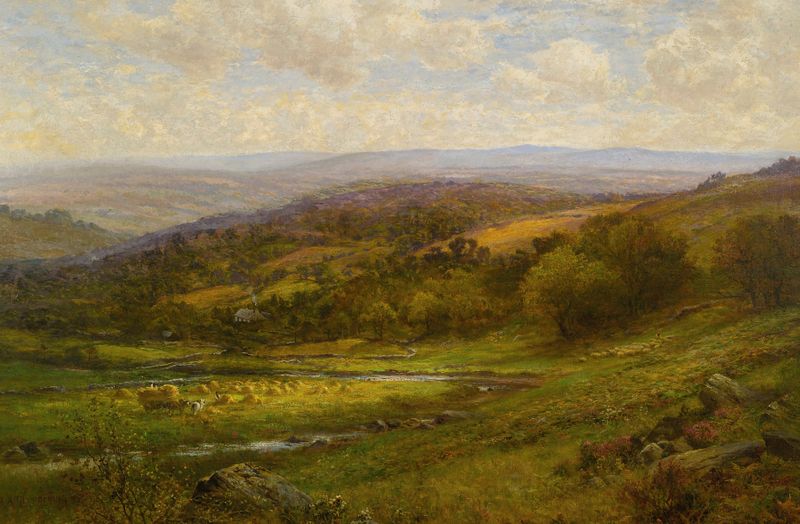
Landscape With Cattle And Haystacks
Alfred Augustus Glendening
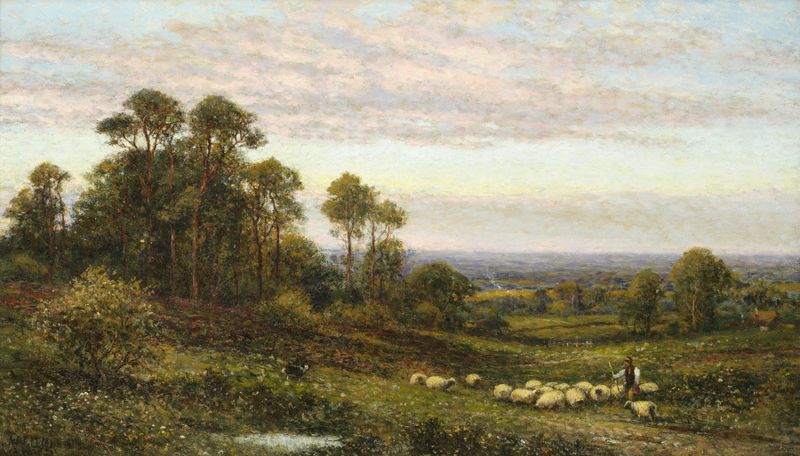
Shepherd and his flock
Alfred Augustus Glendening





