
River Scene with Swans — History & Facts
When did color learn to lie? In the soft hues that dance upon the water's surface, a quiet yet haunting narrative unfolds, whispering of beauty intertwined with decay. Focus first on the serene riverbank where swans glide gracefully, their white feathers stark against the shimmering blue of the water. Notice the gentle ripples that distort their reflections, creating an enchanting play between reality and illusion. The soft, warm light of the late afternoon sun bathes the scene in a golden glow, while the lush greenery of the foliage provides a stark contrast, hinting at life’s transient nature. Yet, beneath this tranquil façade lies a deeper tension.
The vibrant colors, while captivating, serve as a reminder of the imminent decay that shadows every living entity. The swans, in their pristine elegance, embody both grace and fragility, evoking a sense of longing for moments that are forever slipping away. The juxtaposition of life and decay is palpable in the lushness surrounding the water, revealing nature’s duality — the beauty that flourishes, only to fade. In 1904, the artist created this piece during a time of significant change in the art world, transitioning towards modernism.
Living in England, he was influenced by the Impressionist movement, which prioritized capturing light and atmosphere. Glendening's exploration of landscapes reflected not only the changing aesthetics of his time but also his personal desire to convey the bittersweet essence of fleeting beauty.
More Artworks by Alfred Augustus Glendening
Browse all →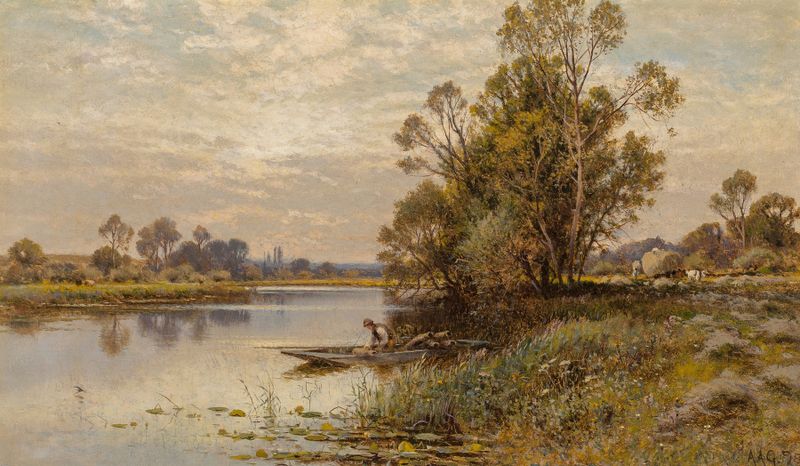
The Thames above Sunbury
Alfred Augustus Glendening

Grasmere, Cumberland
Alfred Augustus Glendening
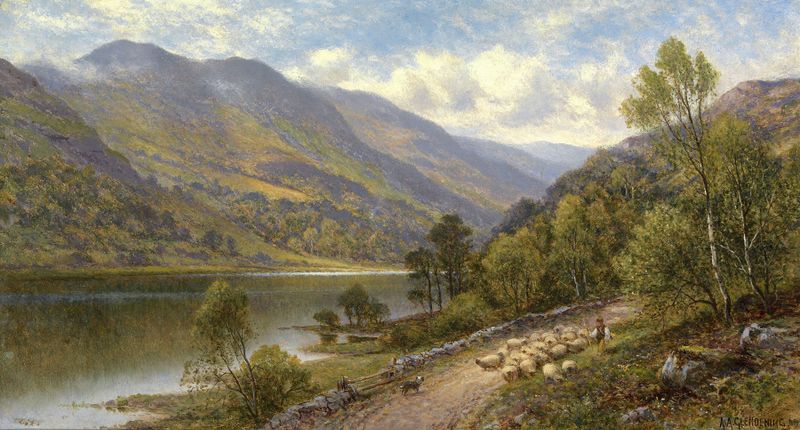
Lyn Gwynant
Alfred Augustus Glendening

On Wilmington Common, Kent
Alfred Augustus Glendening
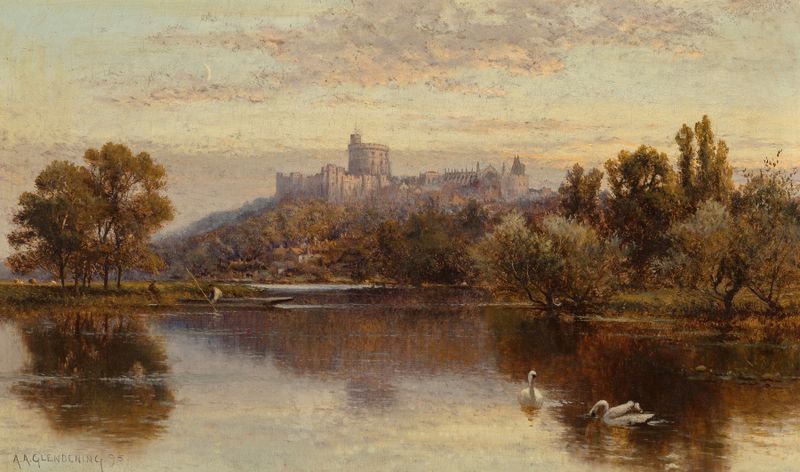
A view of Windsor Castle
Alfred Augustus Glendening

Hemingford on the Ouse
Alfred Augustus Glendening

Belaugh on the Bure, Norfolk
Alfred Augustus Glendening

Autumn Landscape With Pond And Castle Tower
Alfred Augustus Glendening
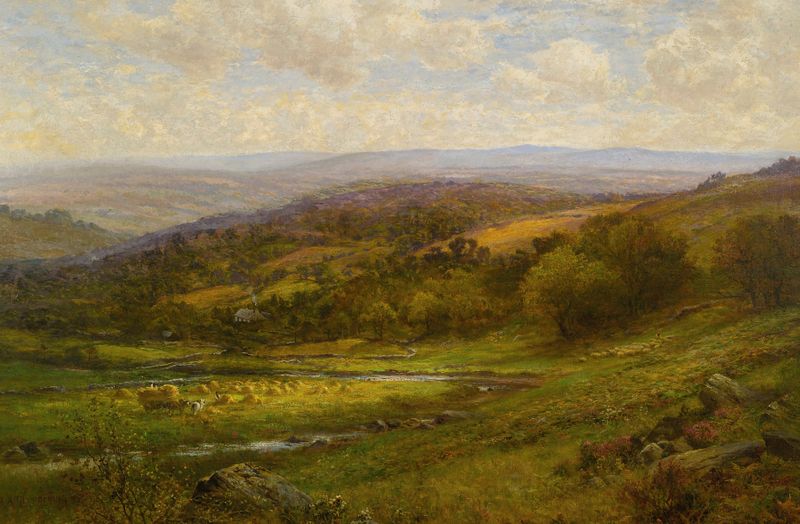
Landscape With Cattle And Haystacks
Alfred Augustus Glendening
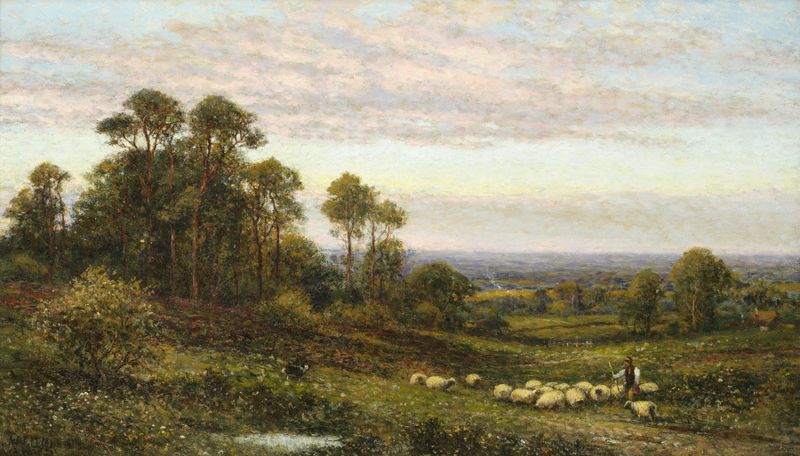
Shepherd and his flock
Alfred Augustus Glendening





