Herberg te Anrath — History & Facts
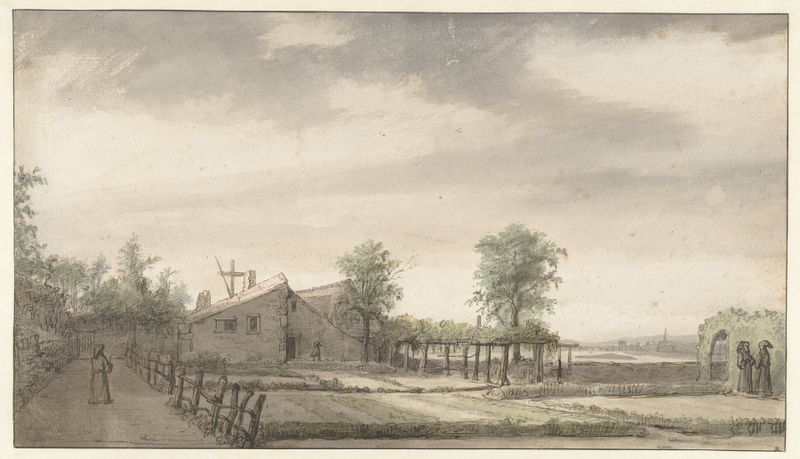
Can beauty exist without sorrow? In the stillness of Herberg te Anrath, the question lingers like an echo, inviting contemplation through its quiet elegance. Look closely at the center, where the inviting entrance of the inn beckons with open doors. Notice the soft, golden glow that spills from within, casting a warm embrace upon the cobblestones. The meticulous details of the thatched roof and the gentle curves of the inn’s facade reveal a harmony between nature and humanity.
Each brushstroke captures not only the architecture but the essence of life itself, filled with the promise of conversation and respite. Yet, hidden within the idyllic scene lies an undercurrent of poignancy. Observe the solitary figure standing just outside the threshold, seemingly untouched by the warmth inside. Their posture suggests a moment of hesitation—perhaps the weight of unspoken words or memories clinging to them like shadows.
The verdant landscape surrounding the inn juxtaposes the lively interior, hinting at the world’s fleeting joys overshadowed by an inevitable sense of longing. Doomer created this work between 1634 and 1700, a period when he was deeply immersed in the Dutch Golden Age. As an artist largely overshadowed by his contemporaries, he explored themes of domestic life and rural charm amidst a backdrop of societal change. During this time, the art world was shifting, and Doomer’s intimate portrayal of everyday moments offered a rare glimpse into the simplicity and complexity of existence, revealing beauty’s duality intertwined with sorrow.