Herbstlicher Viehmarkt — History & Facts
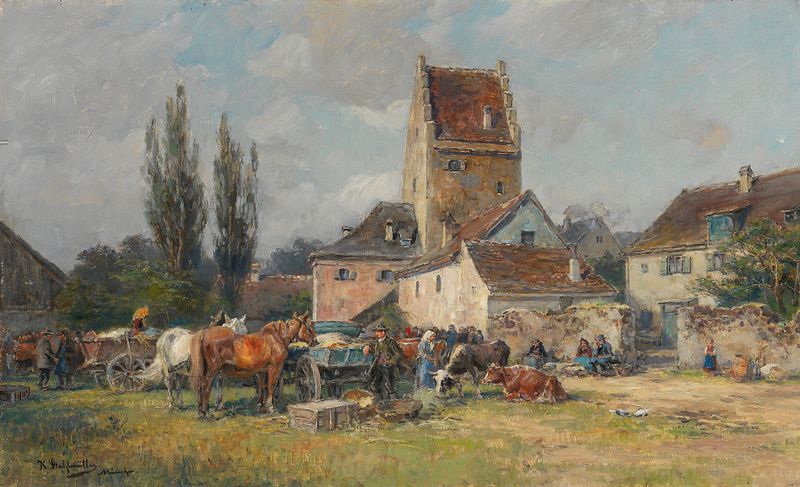
The essence of color captures fleeting moments, reminding us of emotions long past. In the hues of autumn, the vibrancy of life pulsates through the canvas, inviting reflection on both the beauty and transience of existence. Look to the left at the vivid oranges and yellows of the fallen leaves, a striking contrast to the deep greens of the lush grass beneath. The artist's brushwork creates a rich tapestry of textures, drawing your gaze across bustling figures engaged in lively exchanges.
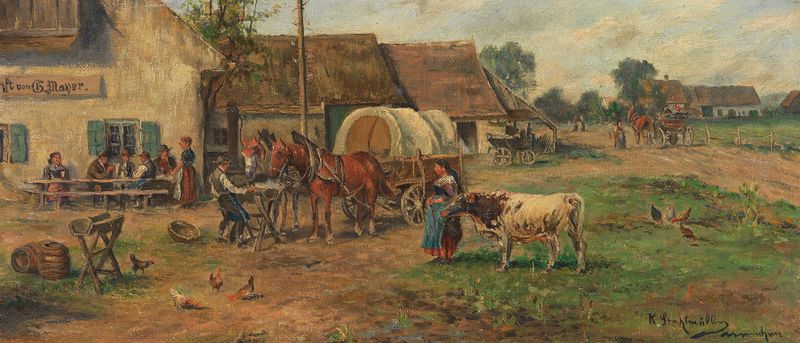
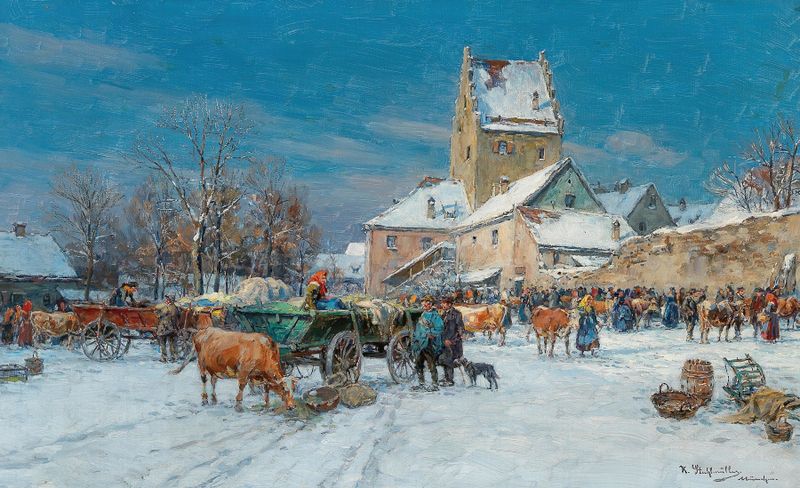
Notice how the light dances across the scene, illuminating faces and garments, each stroke contributing to the lively atmosphere of a harvest market. Delve deeper into the composition, where a fragmented array of colors suggests not just a marketplace, but a celebration of life itself. The expressions on the faces reveal an undercurrent of joy mingled with the weight of labor—the juxtaposition of community and individual stories. The rhythmic patterns of color echo the heartbeat of the season, capturing the duality of abundance and preparation for the coming winter. Created in 1910, this work emerged from Karl Stuhlmüller's studio during a time of dynamic change in the German art scene.
The artist was influenced by the shifting realities of society, with rural traditions facing the pressures of modernization. This piece serves as both a tribute to that fading world and an exploration of the emotional resonance found in nature’s cycles.