A Market Scene in Winter — History & Facts
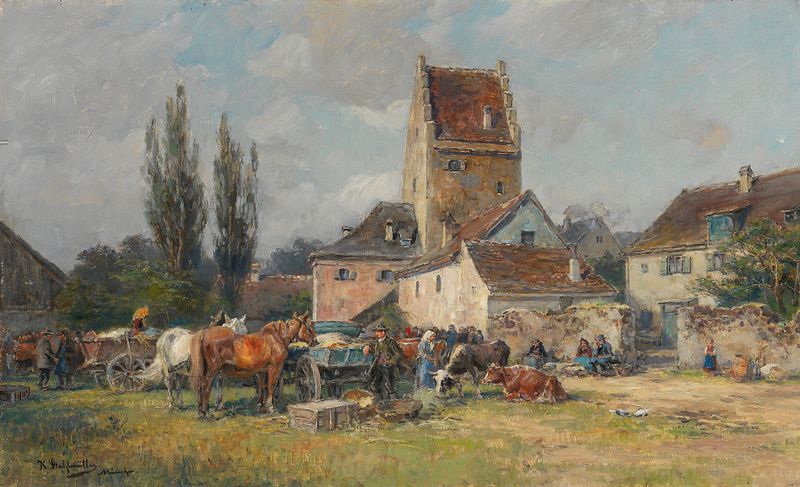
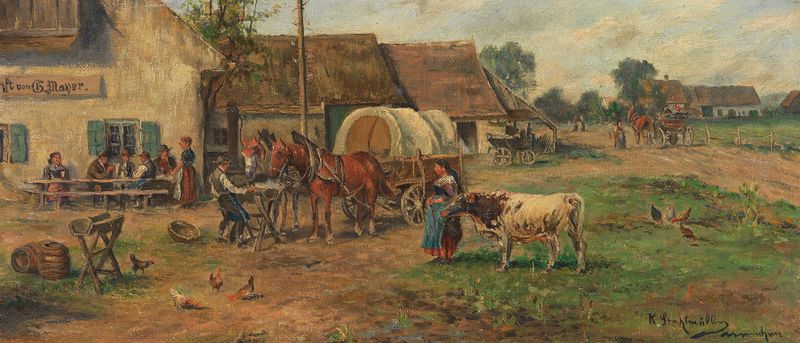
In the quiet ambiance of a winter market, the stark contrast of the season reveals the often-overlooked beauty of human experience. Here, the chill in the air mingles with vibrant splashes of color, beckoning viewers to see beyond the surface. Now, look to the left at the clustered stalls, where deep reds and lush greens emerge against the monochrome backdrop of winter's chill. Notice how the artist employs bold brush strokes to depict the figures huddled together, their faces a blend of warmth and weariness.
The cool blues and grays emphasize the immediate environment, yet the use of warm tones in the characters invites you to linger, beckoning the viewer to explore both the market's vibrancy and the solemnity of the season. The interaction between light and shadow plays a crucial role, amplifying the emotional weight of the scene. The vibrancy of the produce is juxtaposed against the muted cityscape, suggesting a stark contrast between life and routine. The expressions of the market-goers reflect a tapestry of emotions—anticipation, hope, and perhaps an underlying melancholy—as they navigate the complexities of winter's embrace, portraying the resilience of the human spirit amidst seasonal hardships. Created during a period of transformation in the late 19th century, the artist painted this piece while living in Germany, a time when many artists sought to capture the realism of everyday life.
The rise of impressionism was influencing artistic styles, yet A Market Scene in Winter reflects a dedication to blending emotional depth with everyday moments, encapsulating the essence of the human experience in a world increasingly marked by change.