Rast vor dem Gasthof — History & Facts
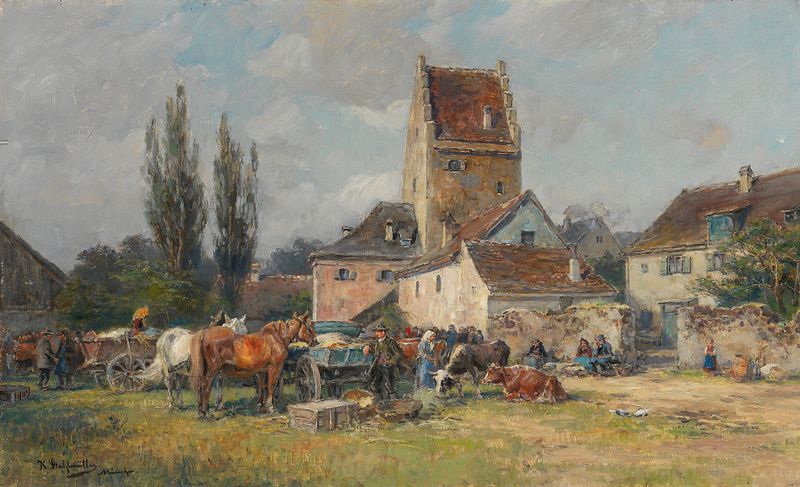
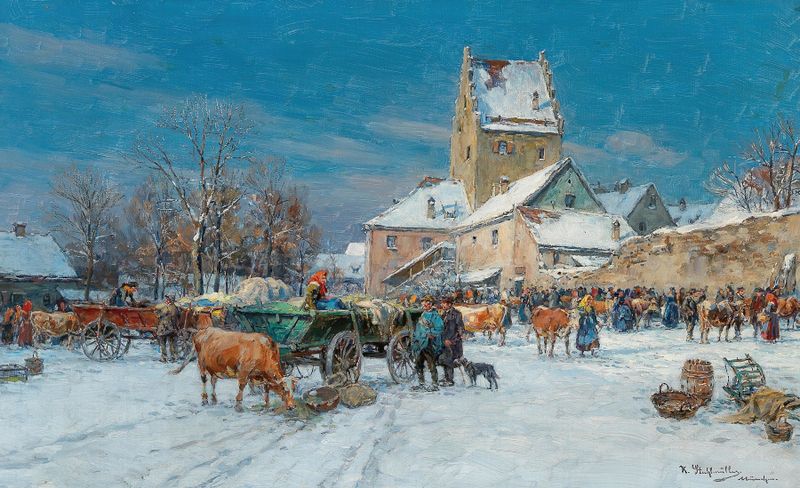
This profound reflection invites us to consider the layers beneath the surface of existence, hinting at the delicate balance between suffering and renewal. Start by looking towards the center, where a weary traveler rests against the warm facade of a tavern. The rich earthy tones contrast sharply with the bright splashes of sunlight that illuminate the scene, drawing our eyes to the figure's relaxed posture. Notice the sturdy bench beneath him, worn yet welcoming, cradling a moment of pause in the bustling rhythm of life.
Stuhlmüller’s brushwork captures both the vibrancy of the surroundings and the weary tranquility of the traveler, creating a narrative filled with unspoken stories. Amidst the warmth, the shadows tell a different tale—suggesting the struggle of the journey just taken. The tension is palpable in the figure’s posture, suggesting a brief respite from the weight of the world. The tavern, a symbol of refuge, stands as a testament to resilience and rebirth, as the traveler contemplates the road ahead.
Every stroke serves to underline the duality of joy and exhaustion, inviting viewers to reflect on their own journeys. Created between 1900 and 1920, this work emerges from a period marked by transformation in Europe, where art began to reflect the complexities of modern life. Stuhlmüller, a prominent figure in the early 20th-century art scene, captured the essence of human experience just as societal upheavals opened new avenues for artistic expression. This painting not only reflects his personal evolution but also resonates with a broader cultural rebirth, mirroring the struggles and hopes of a generation.