Sommerlicher Markttag — History & Facts
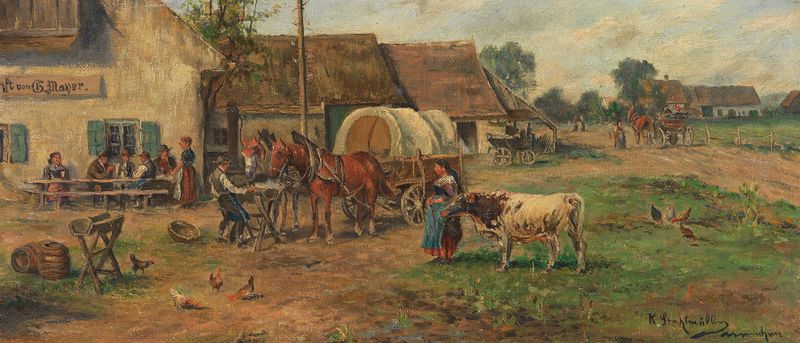
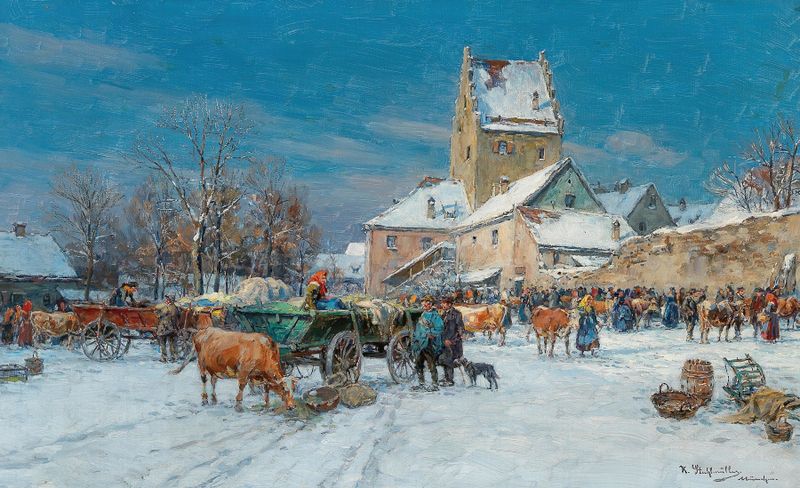
Could beauty survive in a century of chaos? In a world marked by uncertainty and upheaval, moments of ecstasy can bloom like wildflowers amidst the rubble. Sommerlicher Markttag embodies this paradox, capturing the joy and vitality of life that endures despite the storm. Look to the left at the vibrant market stalls, overflowing with fruits and flowers, where splashes of yellows and reds seem to dance in unison. Notice how the sunlight bathes the scene, casting gentle shadows that enhance the texture of the fabrics draped across each stand.
The composition draws your eye to the animated figures—a mélange of shoppers, vendors, and children—each gesture alive with purpose and communal spirit. The warm palette invites a sense of comfort, a picturesque escape into everyday life that is both inviting and reminiscent of simpler times. Yet, beneath the surface of this idyllic market scene lies a tension between the joy of the moment and the realities of the time. The ecstatic expressions of the market-goers contrast sharply with the looming shadows of conflict that awaited Europe in the coming decade.
The bustling activity hints at a fragile normalcy, suggesting that such moments of beauty are fleeting, always at risk of being overshadowed. The intricate details, from the expressions on the faces to the meticulous arrangement of goods, echo a longing for connection amid uncertainty. During the years Sommerlicher Markttag was created, Karl Stuhlmüller was deeply engaged in the artistic dialogue of early 20th-century Germany. This was a period marked by burgeoning modernism and the early echoes of the Great War.
Stuhlmüller, influenced by the vibrant energy of the time, sought to portray the essence of life and community, capturing fleeting moments that would soon be disrupted by the world outside his canvas.