Hercule Farnèse — History & Facts
Could beauty survive in a century of chaos? The answer unfolds in the permanence of a solitary figure amid the ruins of grandeur. Look to the right at Hercule Farnèse, where the muscular form stands resolute against a backdrop of crumbling marble and shattered columns. The light cascades over the figure, illuminating his sinewy physique while casting elongated shadows that hint at forgotten glory. The soft hues of ochre and muted greens evoke a sense of nostalgia, inviting the viewer to contemplate both the vibrancy of the past and the desolation of the present. Beneath the surface, this work reflects the tension between civilization and decay.
The figure, though strong and heroic, is enveloped in emptiness—a reminder of the transience of beauty and power. Surrounding him, the fragmented ruins suggest a world in decline, whispering of lost ideals and dreams. The juxtaposition of the corporeal and the ethereal speaks to the complexity of humanity’s relationship with both its triumphs and failures. In 1790, Hubert Robert created this piece during a tumultuous period in French history, marked by the impending Revolution.
Living in Paris, he was deeply influenced by the changing tides of society and art, transitioning from the grandeur of the Old Regime to a new era. This painting captures his reflections on beauty amidst upheaval, perfectly encapsulating an era searching for meaning in both the ruins of the past and the uncertainties of the future.
More Artworks by Hubert Robert
Browse all →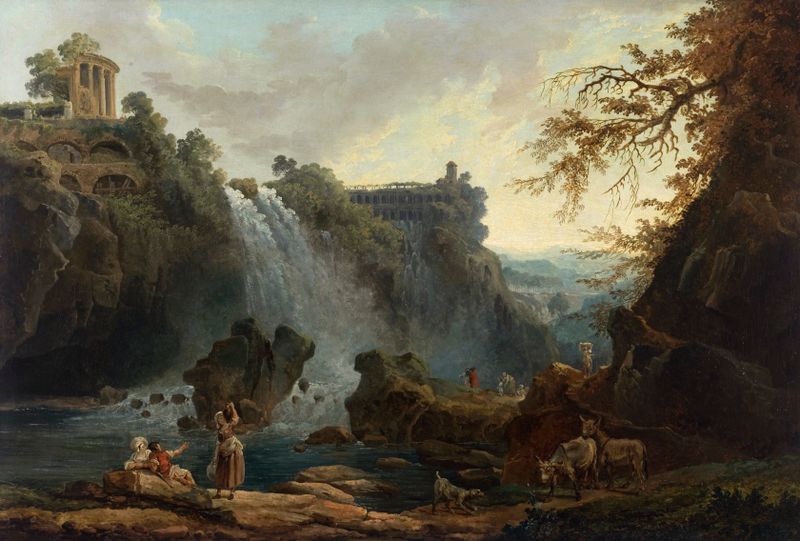
Les Cascatelles de Tivoli
Hubert Robert
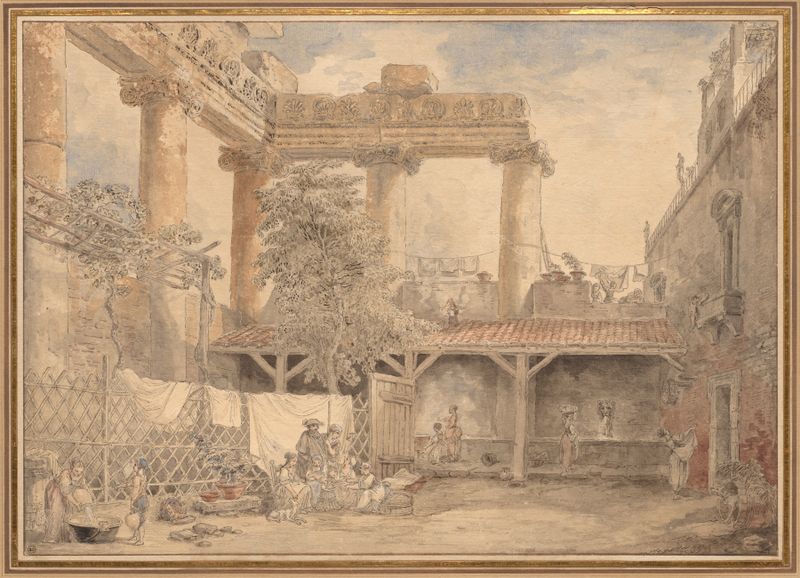
Roman Ruins, Villa Pamfili
Hubert Robert

The Rustic Bridge, Château de Méréville, France
Hubert Robert

The Portico of a Country Mansion
Hubert Robert

Architectural Capriccio
Hubert Robert

The Obelisk
Hubert Robert
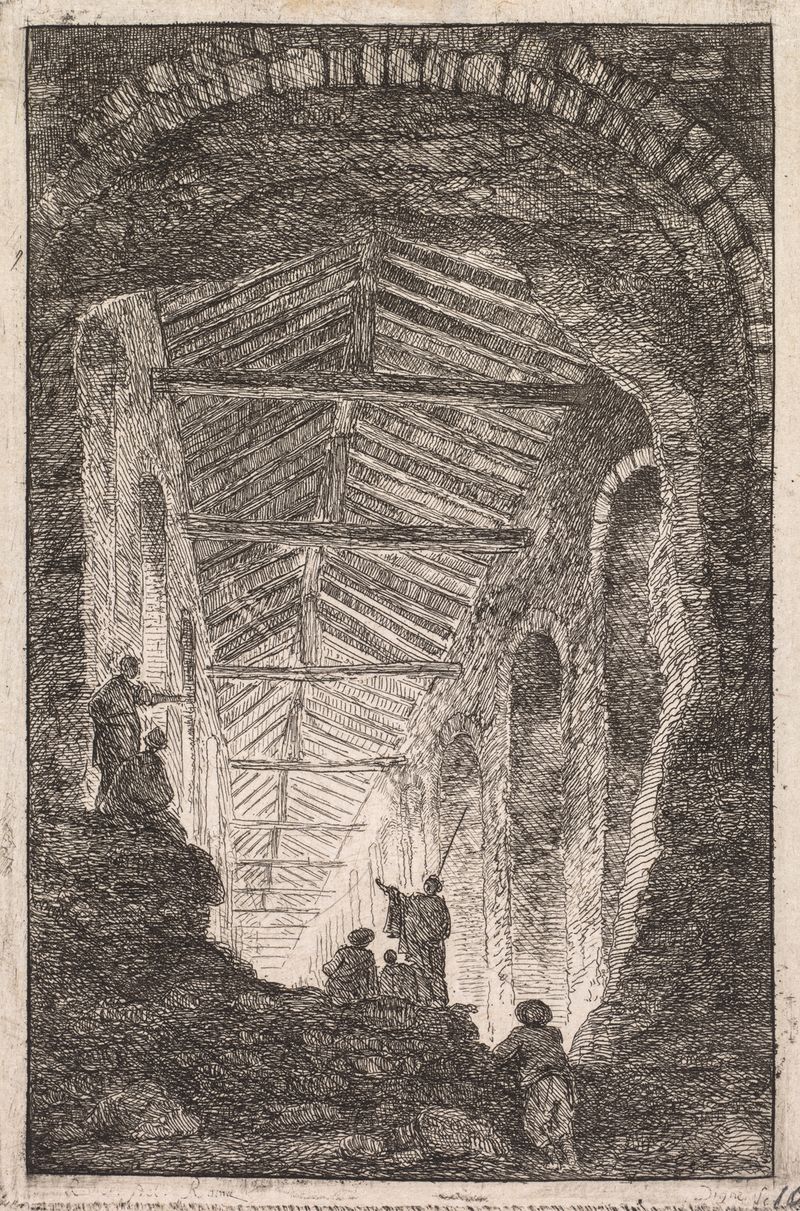
The Antique Gallery
Hubert Robert

L’incendie de l’Opéra, vu des jardins du Palais-Royal, le 8 juin 1781
Hubert Robert
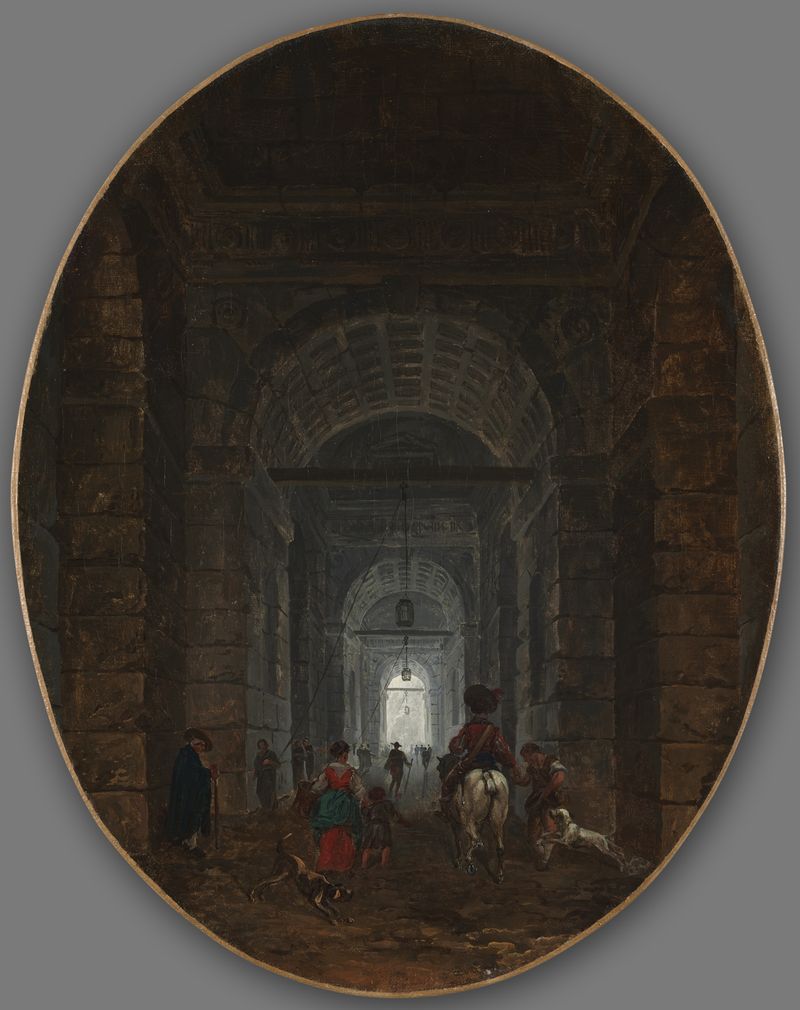
The Grotto of Posillipo
Hubert Robert

Architectural Capriccio with ruins of the Temple of Saturn and the Colosseum in the background
Hubert Robert