
Herder met rustende kudde — History & Facts
In its stillness lies the fragility of life, captured eternally in a moment that whispers of gentle resilience. This serene depiction of a shepherd and his resting flock evokes a sense of peace, inviting contemplation of the delicate balance between humanity and nature. Look to the left at the shepherd, his body relaxed yet alert, draped in a cloak that harmonizes with the earth tones of the landscape. Notice how the light bathes the sheep in soft golden hues, illuminating their woolly forms against the muted greens and browns of the countryside.
The composition draws the eye gently across the canvas, emphasizing the unity of man and nature, while the use of soft brush strokes creates a tactile quality that makes the scene feel almost tangible. Within this tranquil tableau, the interplay of light and shadow tells a deeper story. The gentle curve of the hills suggests a nurturing embrace, while the distant horizon hints at the unknown, a reminder of life’s ceaseless journey. Each sheep, a symbol of fragility, represents the fleeting moments of peace that can easily be disrupted, urging the viewer to reflect on their own transience in the world. Painted between 1652 and 1655, this work emerged during a period when Berchem was deeply engaged with pastoral scenes, reflecting the Dutch Golden Age's fascination with rural life.
Living in Amsterdam, he was influenced by the burgeoning interest in landscapes infused with light and harmony, illustrating a world where humanity coexists gracefully with nature. The tranquility of the painting stands as a testament to Berchem's skill in capturing both the beauty and vulnerability of life.
More Artworks by Nicolaes Pietersz Berchem
Browse all →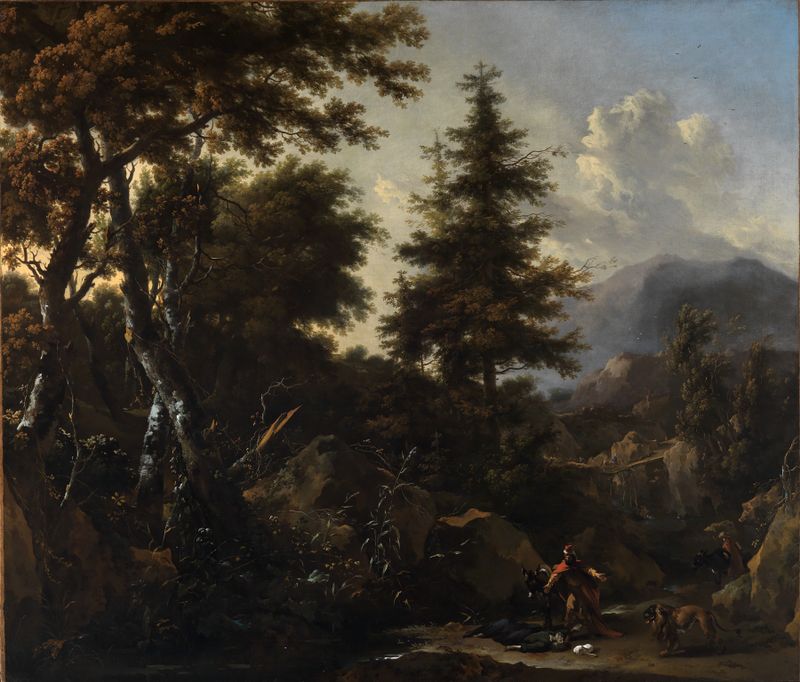
Schlucht im Bergwald mit alttestamentlicher Staffage
Nicolaes Pietersz Berchem
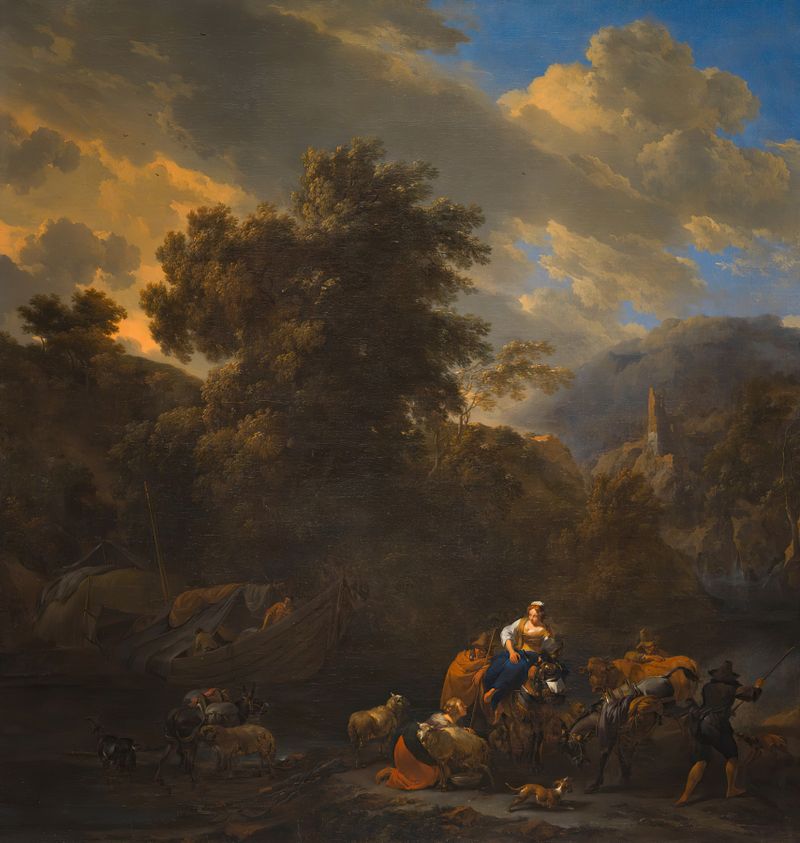
Italianate Landscape with Figures and Pack Animals on the Banks of a River
Nicolaes Pietersz Berchem
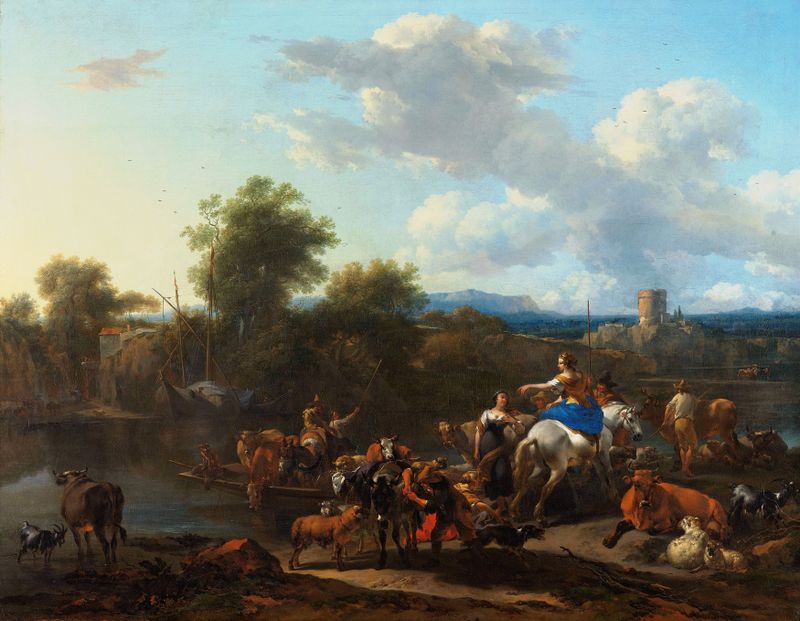
The Cattle Ferry
Nicolaes Pietersz Berchem
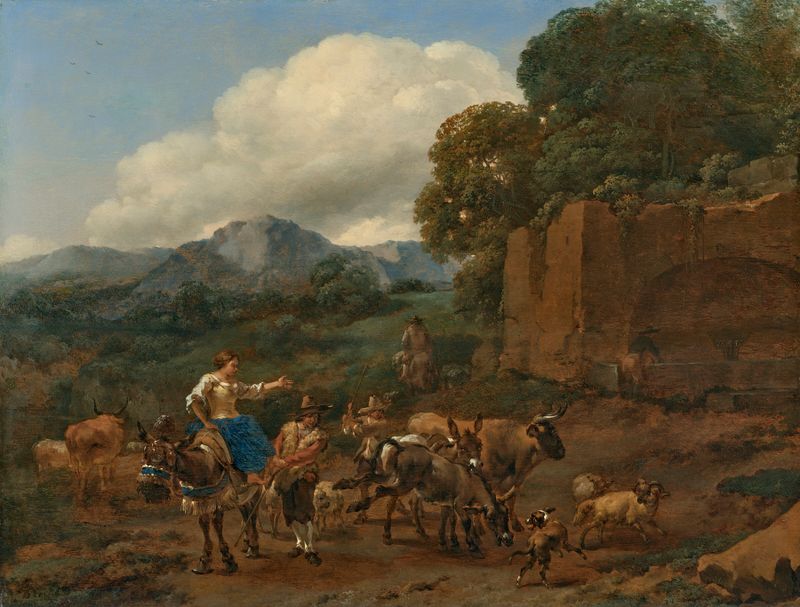
An Italianate landscape with a shepherdess on a mule and a shepherd, herding cattle, sheep, donkeys and dogs on a mountain track next to ruins
Nicolaes Pietersz Berchem
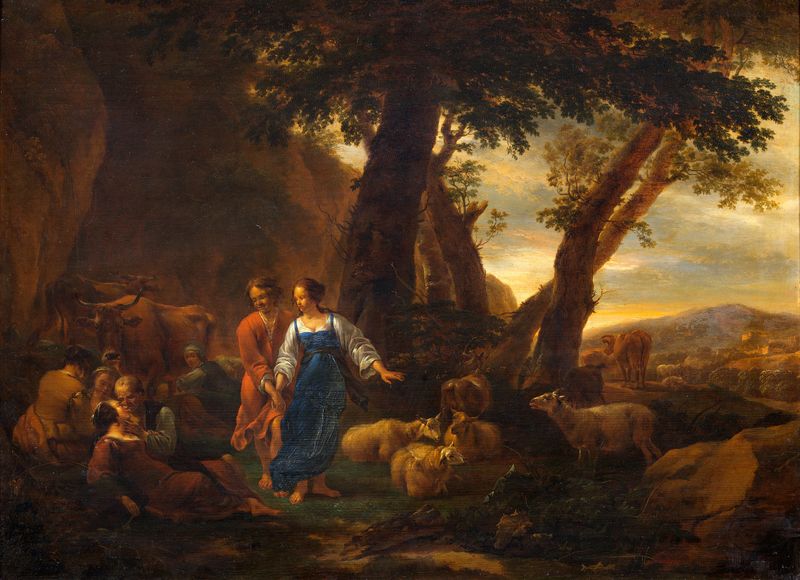
Landscape with Peasants and Cattle
Nicolaes Pietersz Berchem
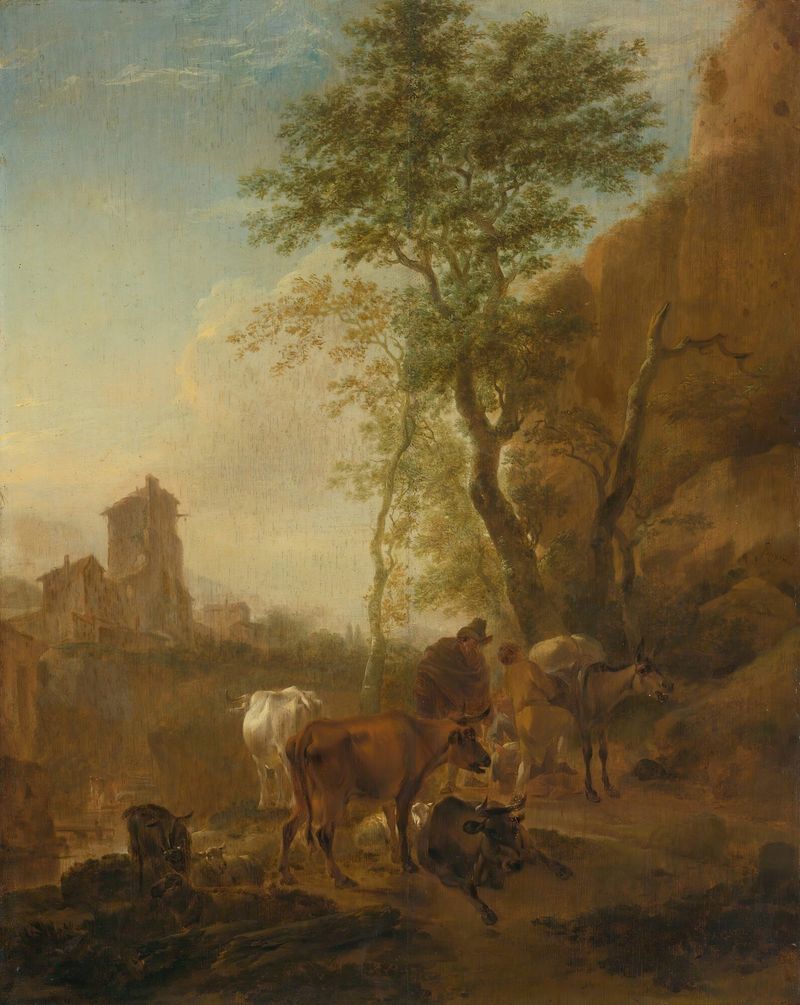
Italianate Landscape With Cows
Nicolaes Pietersz Berchem
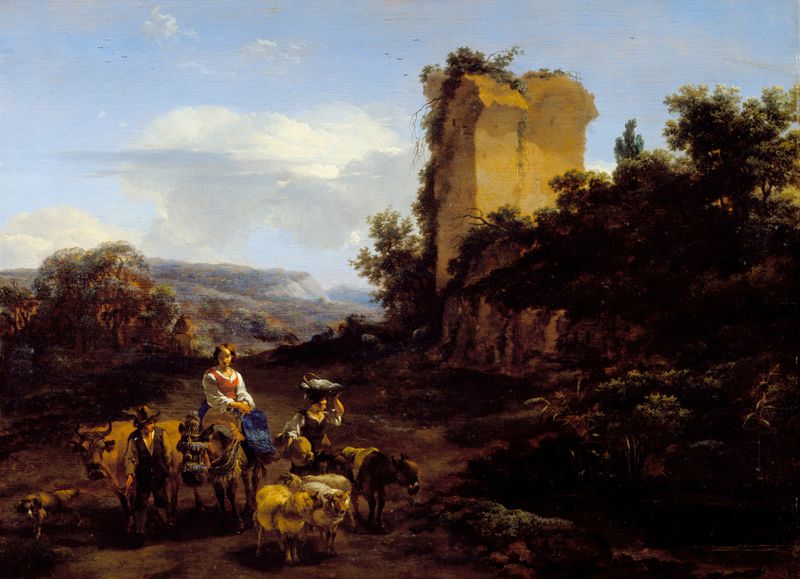
Landscape with Ruins and Travelers
Nicolaes Pietersz Berchem
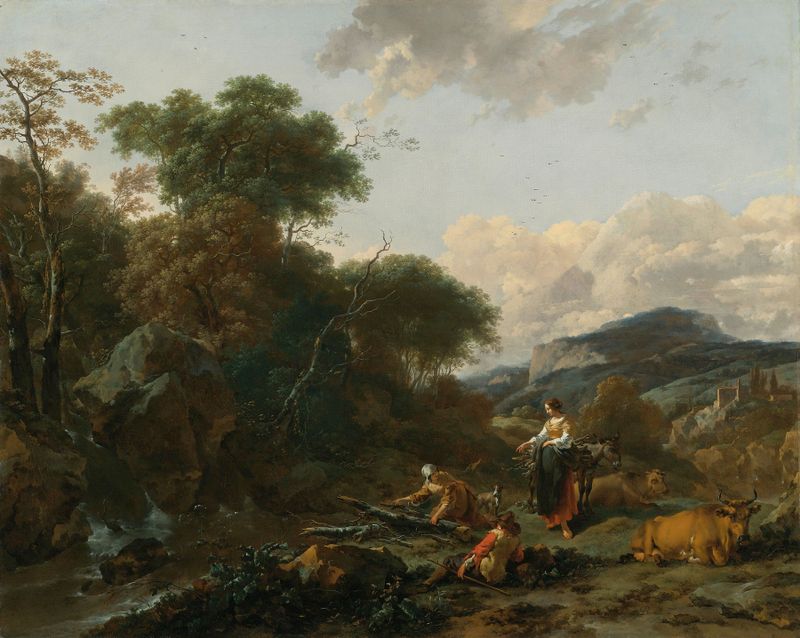
A Landscape With Figures
Nicolaes Pietersz Berchem
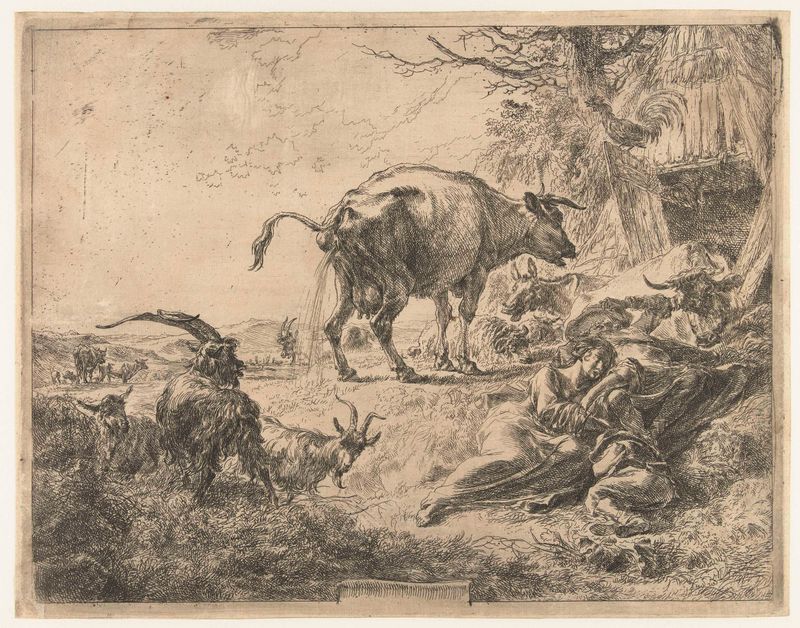
Slapende herdersfamilie en rustend vee
Nicolaes Pietersz Berchem
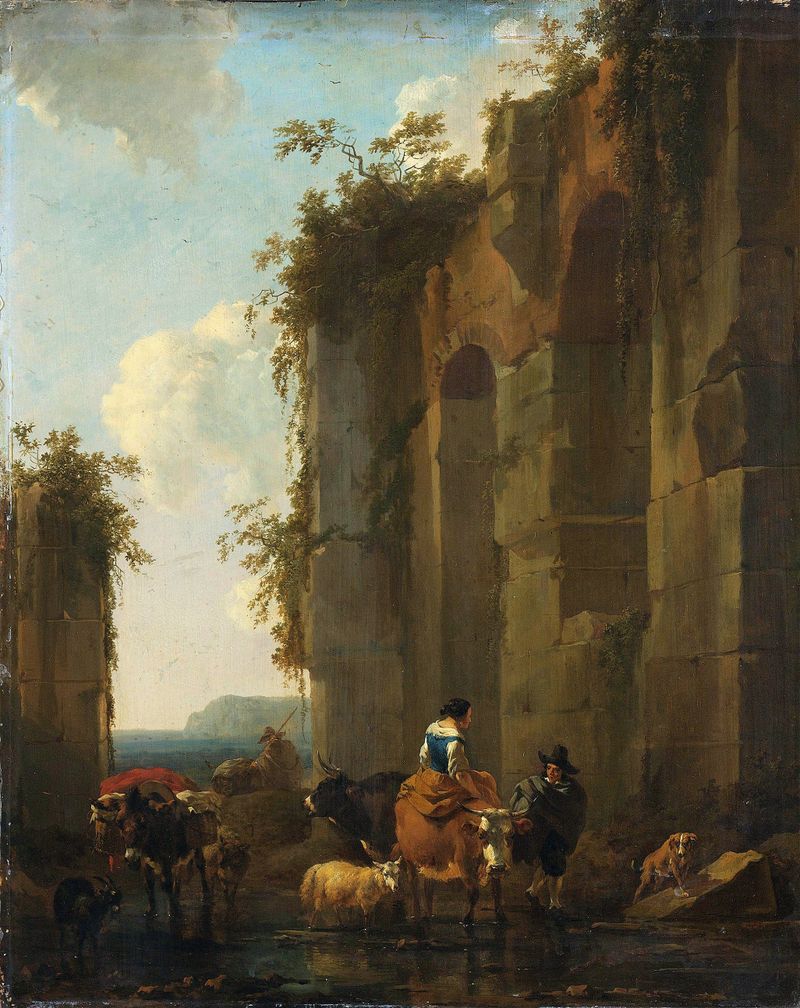
Ruins in Italy
Nicolaes Pietersz Berchem





