
Het huis genaamd ‘De Preekstoel’ te Oostende — History & Facts
In the vibrant strokes of this piece, the yearning for a world once felt lingers in the air, reaching out to us like a whisper from the past. Look to the center, where the majestic edifice stands firmly against a backdrop of rolling waves and shifting skies. The interplay of bright hues—turquoise and gold—captures the ethereal quality of light reflecting off the water, beckoning the viewer to step closer. Notice how the surrounding clouds swirl in vibrant blues and yellows, creating a sense of movement that contrasts with the solid, stoic structure.
This masterful use of color and texture reveals both a nostalgic reverence for the subject and an underlying tension between permanence and impermanence. Delve deeper into the details, where figures emerge—faint silhouettes against the robust architecture—imbuing a sense of longing. These figures, though small, are laden with stories, representing the fleeting nature of human experience amidst the enduring beauty of the building. The contrasting elements of the serene landscape and the haunting presence of the past evoke a poignant melancholy, as if the artist is grappling with his own memories and the relentless passage of time. In 1911, while working on this piece, Ensor resided in Ostend, Belgium, a coastal town that greatly inspired his work.
This period marked a significant transition in his artistic style, as he began to explore more introspective themes, moving beyond the vibrant masks and grotesques of his earlier years. The world was in upheaval, with the looming shadows of war, and in this moment, the artist sought to connect the ephemeral with the eternal through his brush, revealing the layers of memory that reside within us all.
More Artworks by James Ensor
Browse all →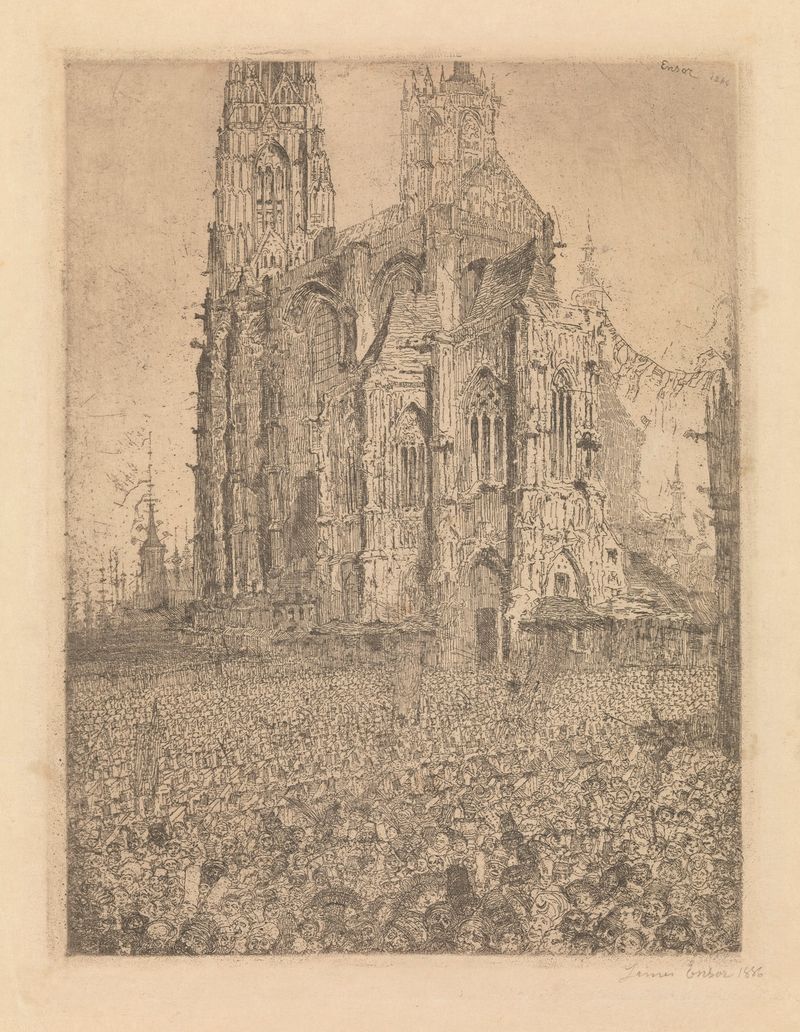
The Cathedral
James Ensor
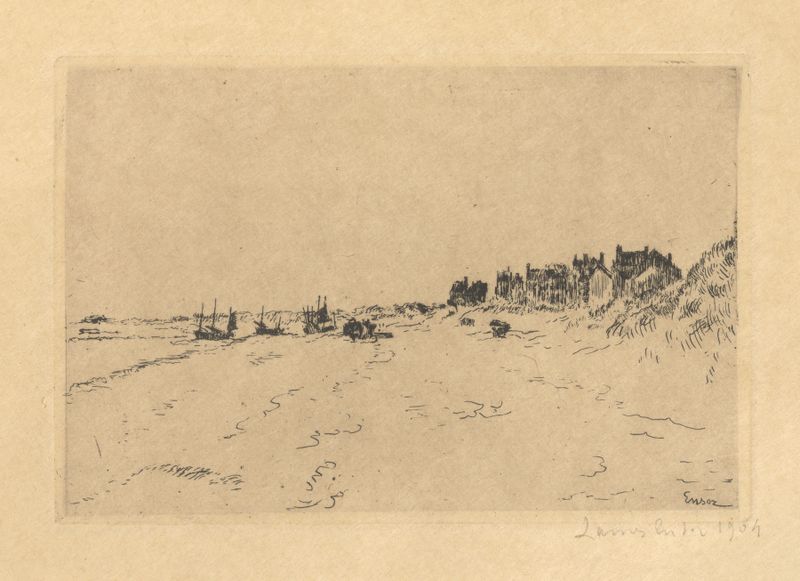
Het strand van De Panne
James Ensor
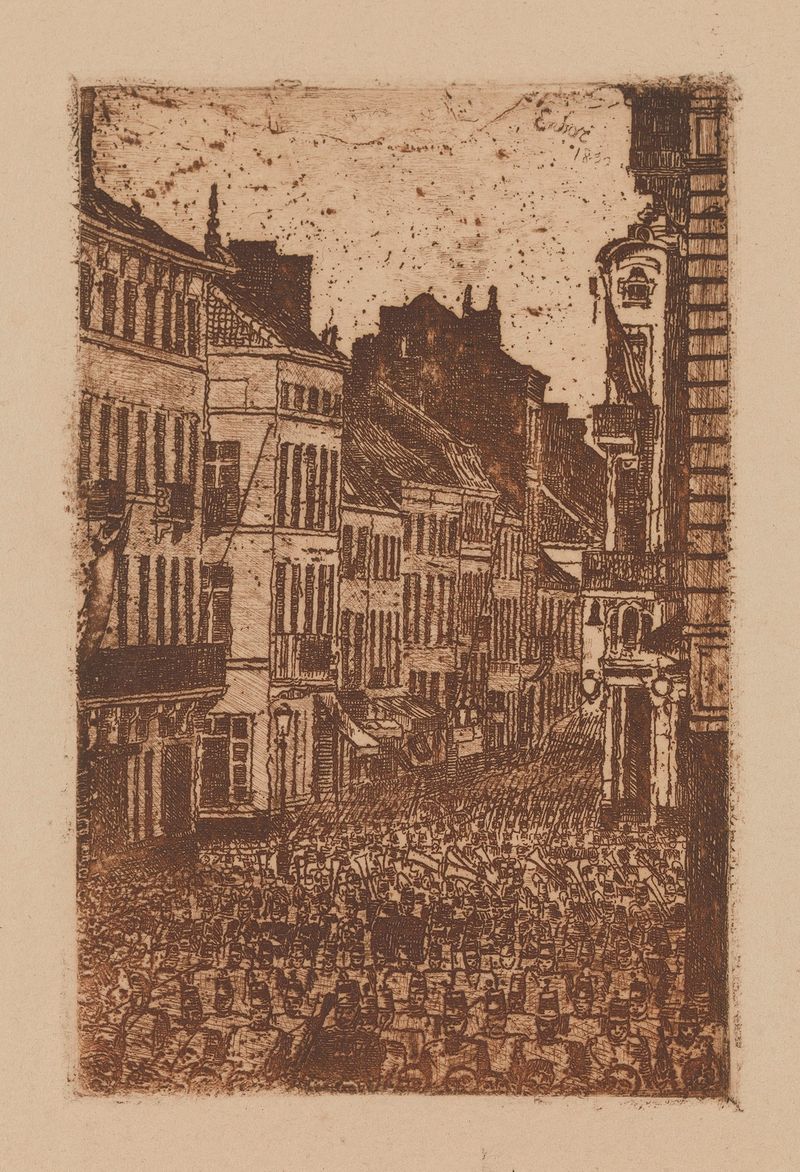
The Music in the rue de Flandre, Ostend
James Ensor
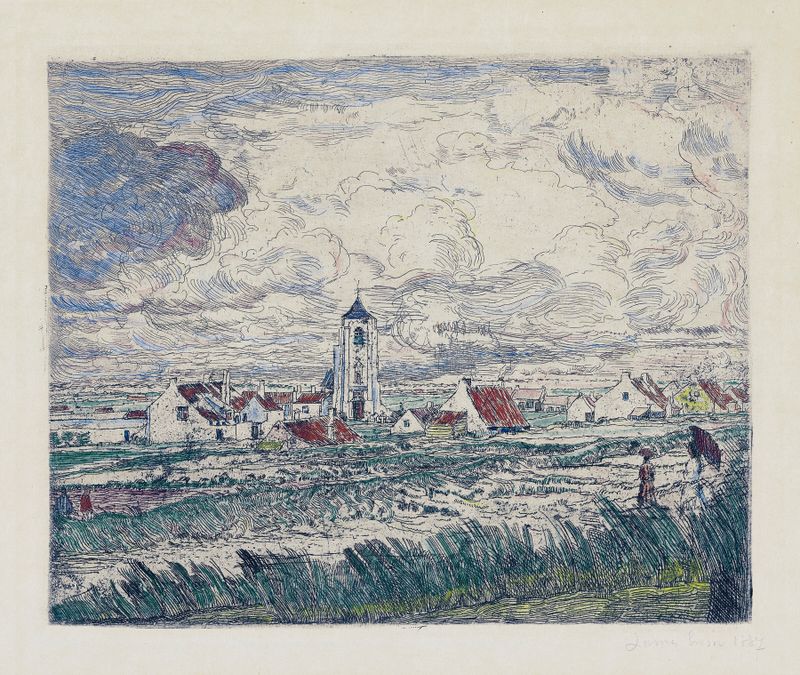
Grande vue de Mariakerke
James Ensor
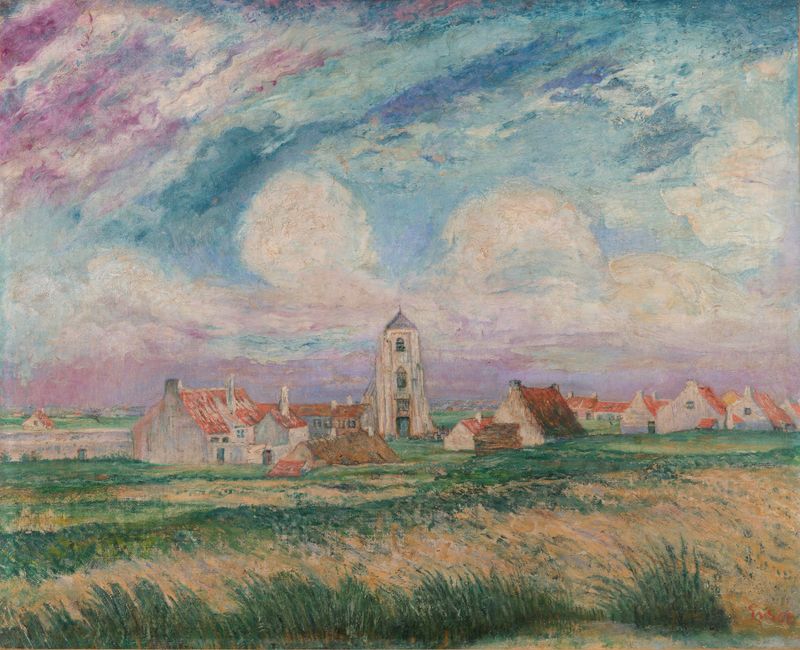
View of Mariakerke
James Ensor
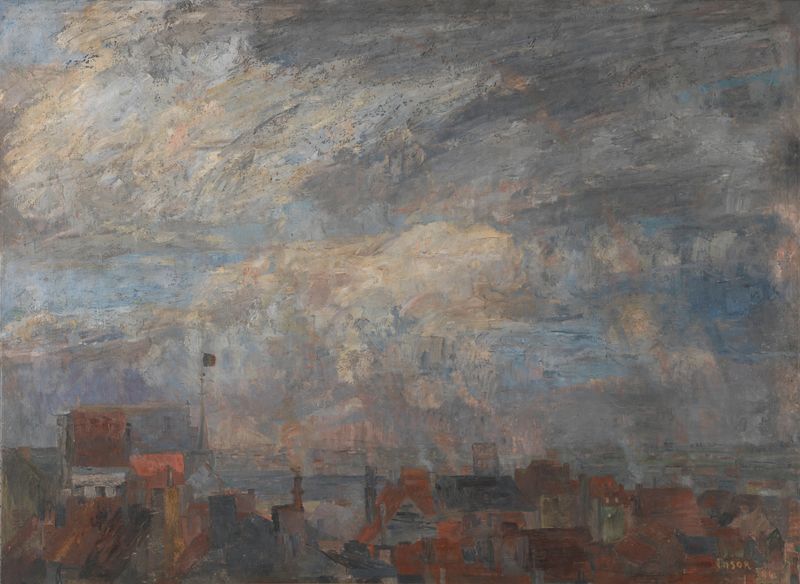
The Rooftops of Ostend
James Ensor
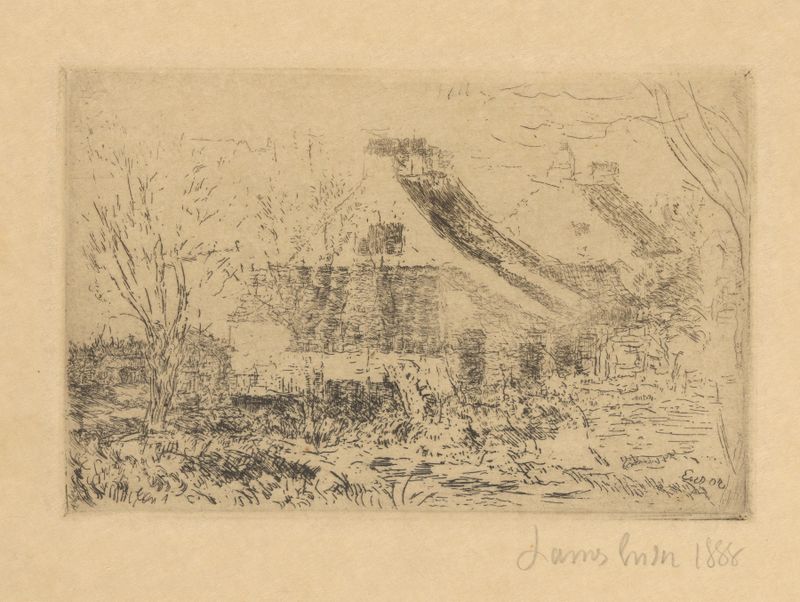
Huisjes in Mariakerke
James Ensor
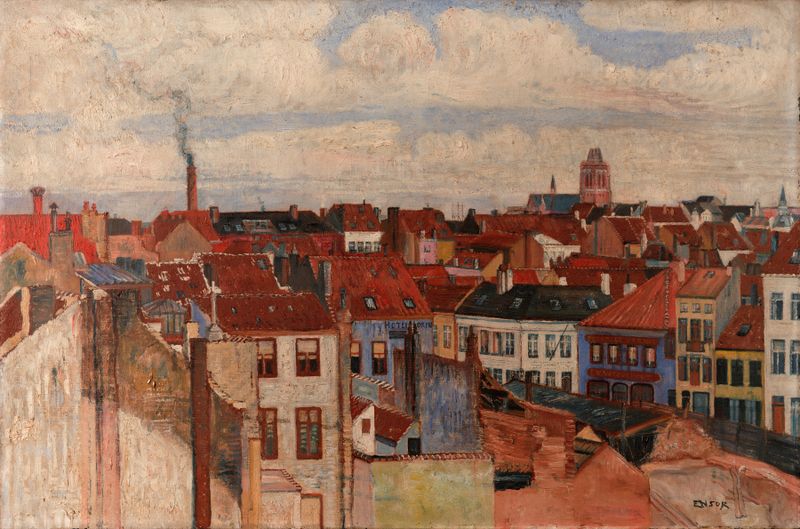
The rooftops of Ostend
James Ensor
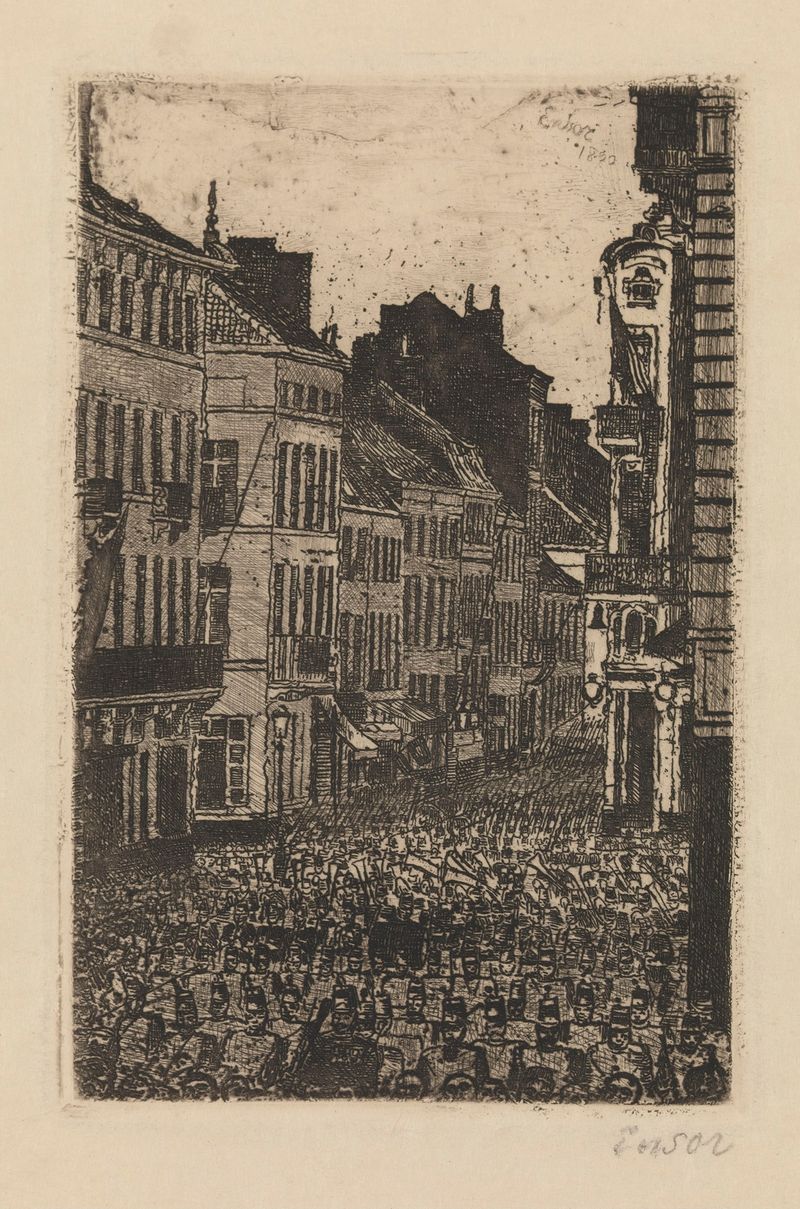
The Music in the rue de Flandre, Ostend
James Ensor
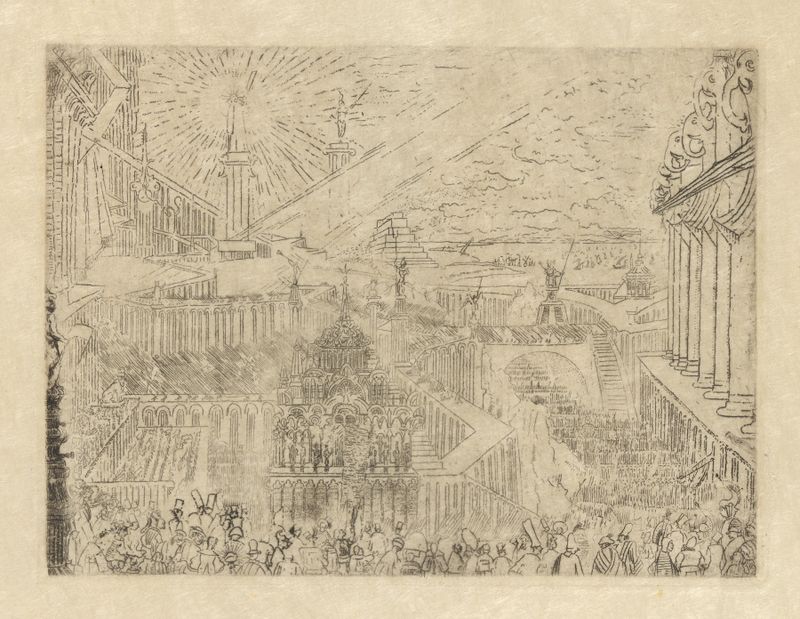
Verovering van een vreemde stad
James Ensor
More Architecture Art
Browse all →
The statue of Liberty
Frédéric Auguste Bartholdi

View of Houses in Delft, Known as ‘The Little Street’
Johannes Vermeer

View of Houses in Delft, Known as ‘The Little Street’
Johannes Vermeer

The Cathedral in Rouen. The portal, Grey Weather
Claude Monet

The yellow house
Vincent van Gogh

The Church in Auvers-sur-Oise, View from the Chevet
Vincent van Gogh