H.M.S. St. Vincent at Plymouth — History & Facts
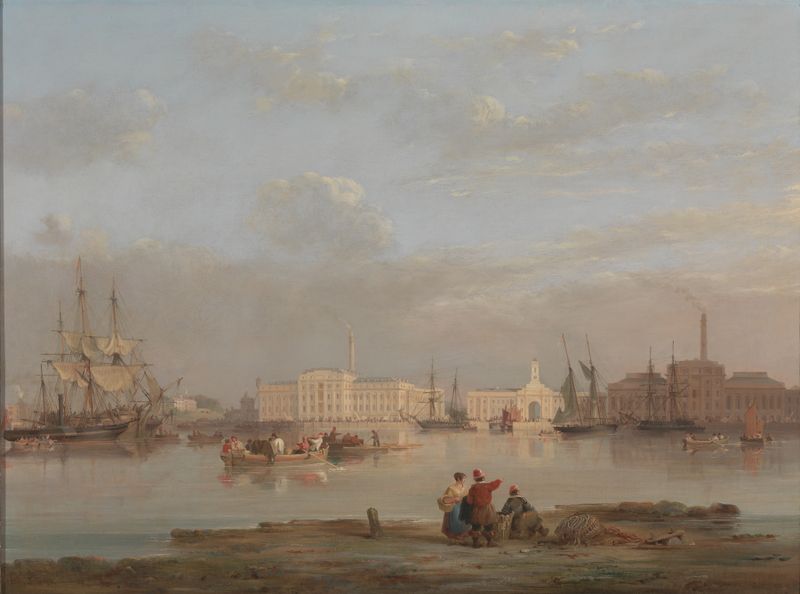
Did the painter know this moment would outlive them? A fleeting breath caught between the waves and the sky, H.M.S. St. Vincent at Plymouth resonates with nostalgia, inviting reflection on the passage of time and the endurance of memory. Look to the horizon, where the ship, majestic and solid, casts a long shadow upon the water.
The billowing sails, white against the deepening blue, draw the viewer's eye upwards, contrasting the sturdy hull anchored in the shimmering bay. Notice how the sunlight dances upon the ocean’s surface, each glimmer reflecting the vitality of the scene while the soft pastels in the clouds evoke a sense of calmness, inviting a moment of contemplation amidst the activity. Beneath the surface, layers of meaning emerge—an interplay of power and fragility. The ship, a symbol of naval might, stands resilient against the vastness, yet its stability is juxtaposed by the delicate ripples of the water.
The presence of smaller boats, dotted around like fleeting thoughts, hints at the interconnectedness of lives and stories, each with their own narrative. This tableau captures not just a moment in maritime history but a poignant reminder of humanity's relationship with nature and the yearning for permanence in an ever-changing world. Nicholas Condy painted this piece during the early 19th century, a time marked by the Napoleonic Wars and an increasing fascination with maritime themes. Living in a coastal town, he was surrounded by the bustle of port life, which influenced his work.
During this period, artists sought to capture the grandeur of naval power, reflecting both the pride and the vulnerability of society in an age defined by naval battles and exploration.