The Victualling Office, Plymouth — History & Facts
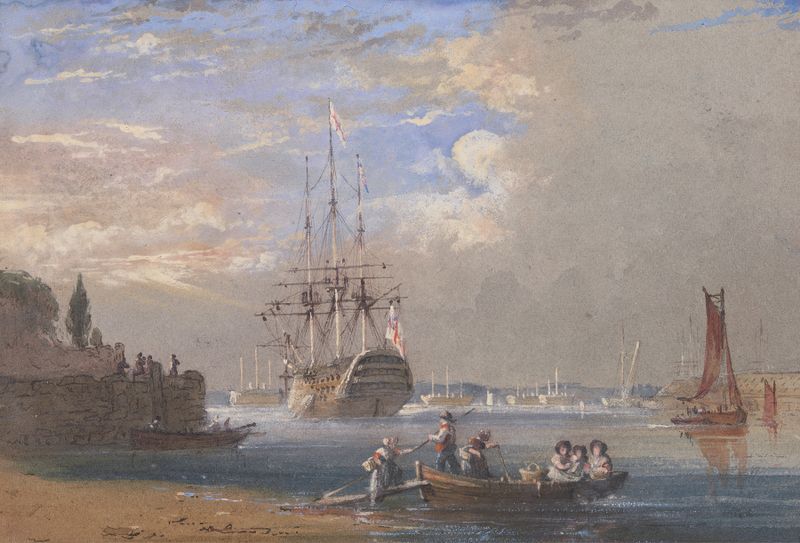
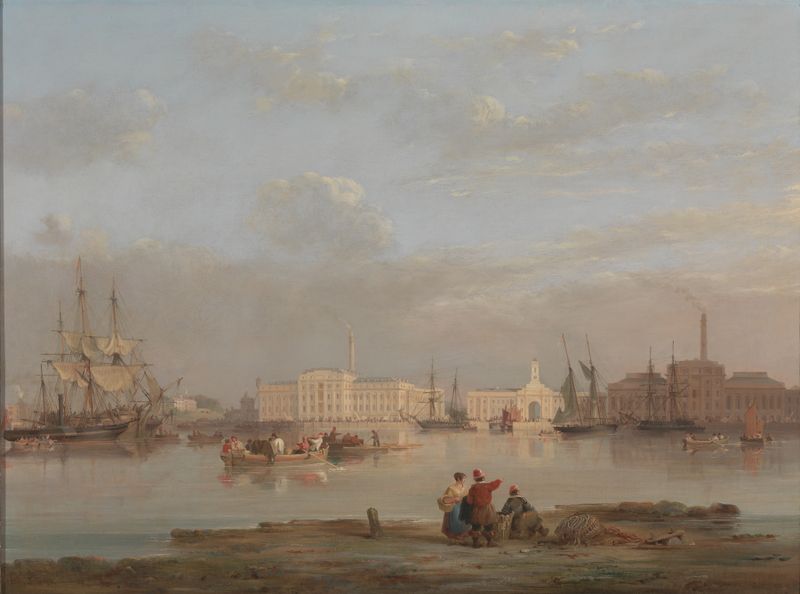
In the stillness of The Victualling Office, Plymouth, shadows stretch and mingle, inviting contemplation of the histories that linger in the dim corners. This space, rich with untold stories, whispers of labor and industry, while the darkened corners hold the weight of secrets that have shaped a maritime world. Look to the right at the intricately detailed wooden beams, their deep browns and grays contrasting with the muted yet warm light spilling in from the left. Notice how the play of light creates a tapestry of shadow across the floor, guiding your gaze to the meticulous arrangement of goods—barrels and supplies—hinting at the bustling life that once filled this room.
The artist's precision in rendering each object showcases a mastery of texture and form, allowing the viewer to feel the coolness of the stone and the roughness of the timber. Within this work lies an intricate tapestry of tension: the juxtaposition of abundance and neglect, the stark contrast between the vibrancy of the marine supply and the eerie stillness of the empty space. The shadows evoke a sense of waiting, as if the room itself breathes in anticipation of the next wave of sailors and merchants. Every item, meticulously placed, bears the burden of history, hinting at the lives intertwined with this locale and the silent exchanges that took place here. Nicholas Condy painted this piece during a time when maritime activity was flourishing, yet the exact date remains unknown.
Working in the 19th century in Britain, he was part of a burgeoning artistic movement that sought to celebrate the sea and its associated trades. His focus on everyday life at the port reflects not only his personal experiences but also the economic vitality and cultural significance of coastal towns during this period.