The Victualling Office, Plymouth — History & Facts
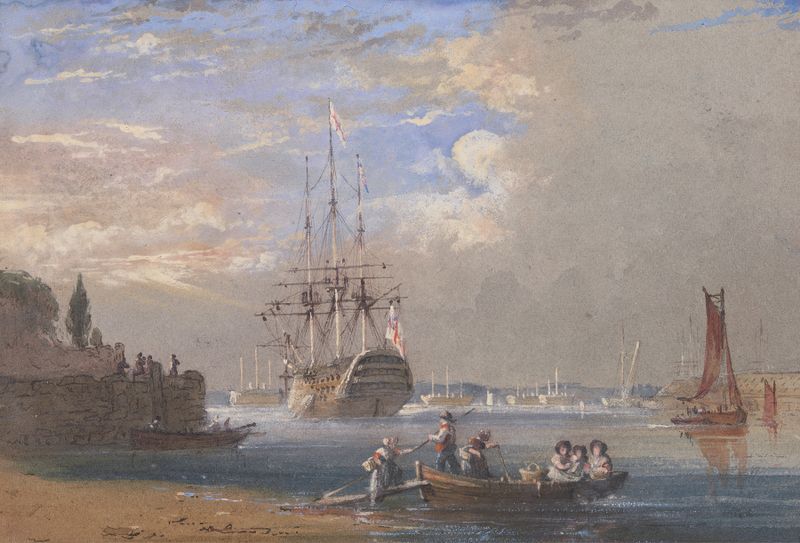
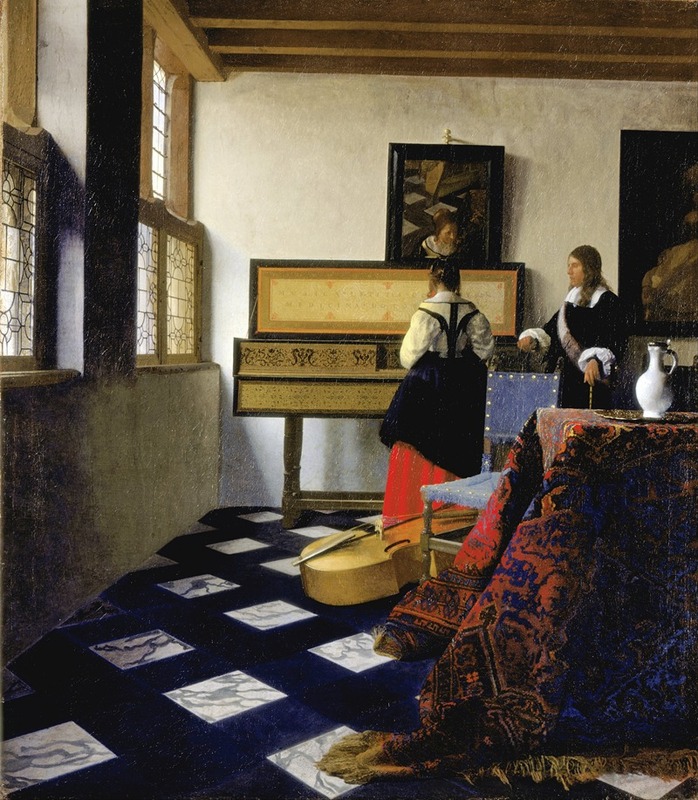
In the intricate play of light and shadow, an unspoken narrative unfurls, beckoning the viewer to explore the depths of stillness. Focus on the shadows that stretch along the walls of the victualling office, where the warm tones of ochre and muted greens mingle. The soft illumination captures the worn wooden beams overhead, inviting your gaze to dance from the rustic shelves laden with provisions to the silent figures engaged in their tasks. Notice the careful brushwork that breathes life into the scene, where each detail speaks—an apple's sheen, a loaf of bread nestled against a barrel—creating an atmosphere laden with history and purpose. Beneath the surface, this work reveals the tension between abundance and neglect.
The contrast of light and dark suggests not only the physical offerings within the office but also the shadows of uncertainty that loom over maritime life. The figures, though busy, appear absorbed in their own thoughts, capturing a moment of introspection amidst the bustle—a metaphor for the struggles faced by those who rely on the sea for their livelihood. In 1835, The Victualling Office, Plymouth emerged during a time of profound transition for Nicholas Condy, who was deeply engaged in capturing the maritime spirit of England. The Industrial Revolution was reshaping both society and the arts, as the nation expanded its naval powers.
Painting from his studio in Devon, Condy reflected the complexities of this era while contributing to the burgeoning genre of marine art, intertwining the vibrancy of life and the poignant stillness of labor.