Plymouth Sound from the Hoe — History & Facts
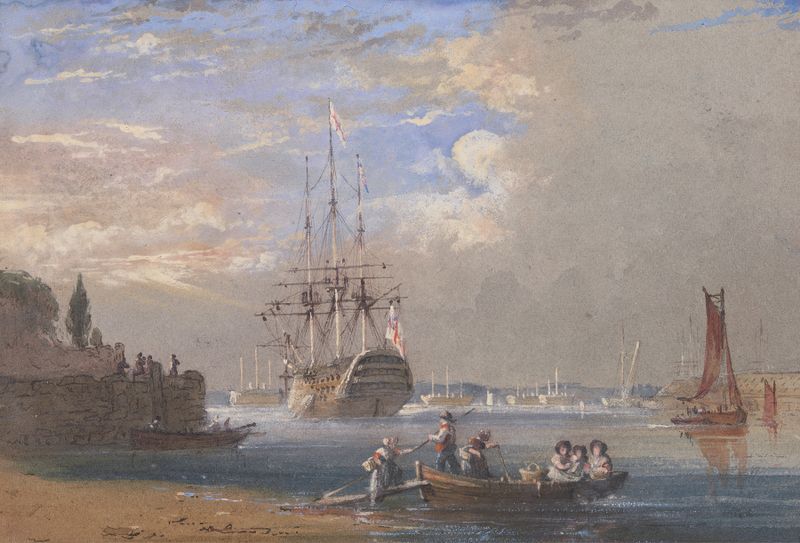
In the vast emptiness of a void, one encounters the essence of longing: an echo of what could have been. Direct your gaze toward the horizon where the sky kisses the sea, bathed in layers of soft blues and grays. Notice how the subtle shifts in color create a sense of depth, pulling you into the tranquil yet melancholic scene. The gentle strokes of the brush evoke a serene atmosphere, capturing the stillness of Plymouth Sound, while the delicately rendered clouds hover above like wisps of forgotten dreams. In this painting, the contrast between the vastness of the sky and the calm, reflective waters suggests an emotional dichotomy: peace interlaced with an undercurrent of yearning.
The absence of figures or bustling activity amplifies the sense of solitude, making the viewer ponder the stories hidden within such a seemingly desolate space. Each element, from the rippling water to the distant shores, resonates with the pulse of memories that the void encapsulates. Created during an undisclosed period of Nicholas Condy’s career, Plymouth Sound from the Hoe reflects a pivotal moment in his artistic exploration. Though specific events remain elusive, it’s known that Condy was active throughout the early 19th century, a time marked by an increasing focus on Romanticism and the natural world.
This painting captures not only the beauty of the landscape but also the spirit of an era devoted to introspection and emotional resonance in art.