
Holy Trinity Church, Stratford — History & Facts
What if silence could speak through light? The haunting stillness of Holy Trinity Church, Stratford evokes the deep emotions of betrayal hidden within sacred walls. The interplay of shadow and luminosity invites the viewer to ponder the stories that lie unspoken beneath its ornate façade. Look to the intricate stained glass windows, where every hue forms a radiant tapestry, filtering sunlight into the nave. Notice how the light falls upon the stone altar, illuminating its cold surface while the surrounding shadows deepen, creating a stark contrast that suggests the weight of secrets held within.
The careful brushwork and composition draw the eye upward, guiding us from the earthly realm towards the heavens, yet the muted tones hint at an underlying melancholy that permeates the scene. Within this architectural masterpiece, the details reveal layers of meaning. The juxtaposition of light and shadow can be seen as a metaphor for faith and doubt, suggesting a fragile balance where certainty is undermined by hidden turmoil. The positioning of the pillars, strong yet confining, speaks to a sense of entrapment, as if the sanctuary itself bears witness to moments of deception and unfaithfulness among its parishioners.
The overall ambiance evokes a powerful tension between reverence and betrayal, inviting contemplation of the human experience. In 1888, as Louis Kinney Harlow painted Holy Trinity Church, Stratford, he was part of a larger movement that sought to blend architecture with emotional resonance. Living in an era of burgeoning industrialization, the artist sought refuge in the beauty of sacred spaces, reflecting the societal struggles of his time. His work not only captures the physicality of the church but also serves as a commentary on the complexities of faith amidst a rapidly changing world.
More Artworks by Louis Kinney Harlow
Browse all →
West Chop Light, Vineyard Sound, Mass.
Louis Kinney Harlow
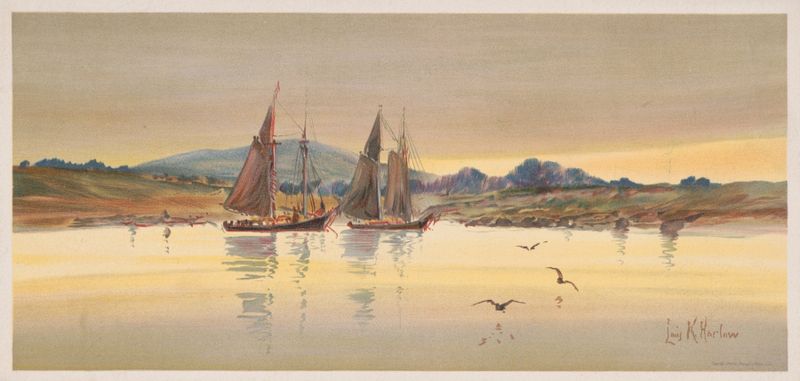
Sunset in Rockland Harbor
Louis Kinney Harlow
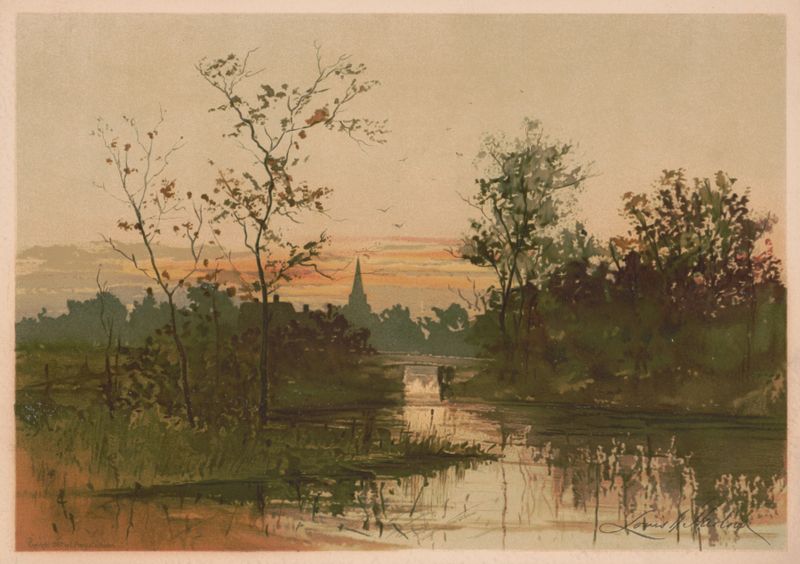
Nemasket River, Maine
Louis Kinney Harlow
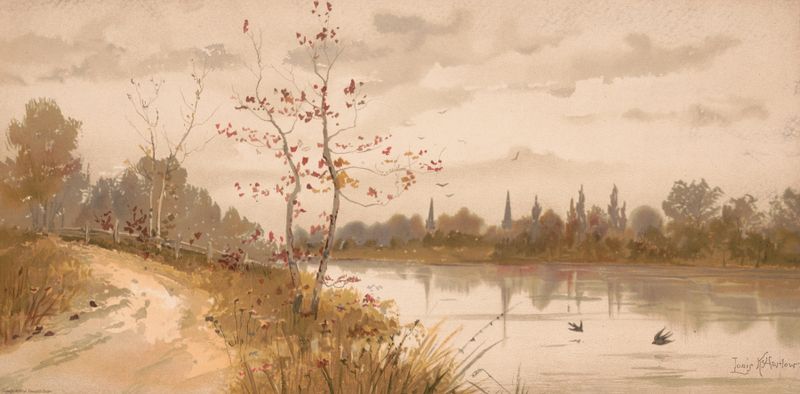
A river path
Louis Kinney Harlow

Castine, Maine
Louis Kinney Harlow

A bit of Monhegan, Maine
Louis Kinney Harlow
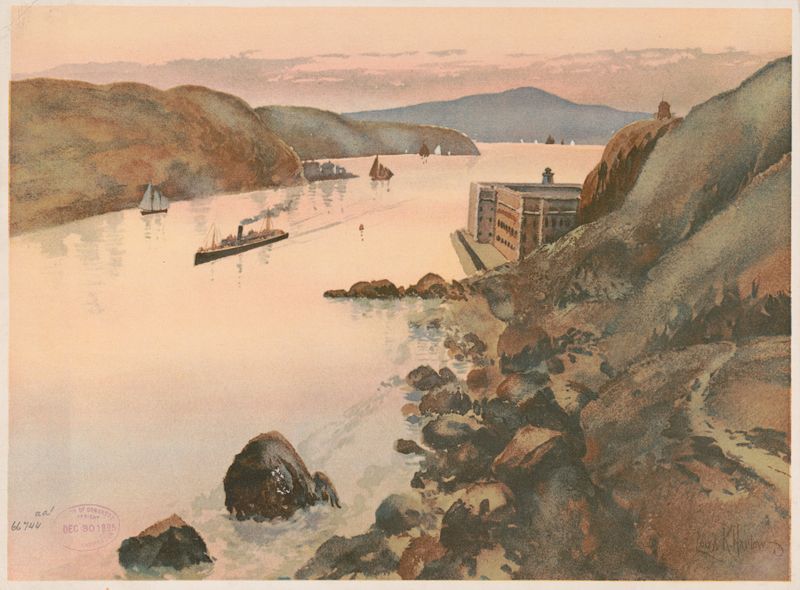
Fortifications and Golden Gate
Louis Kinney Harlow

Blue Hills, Camden, Me.
Louis Kinney Harlow

Near Boothbay Harbor, Maine coast
Louis Kinney Harlow

Evening rest
Louis Kinney Harlow
More Architecture Art
Browse all →
The statue of Liberty
Frédéric Auguste Bartholdi

View of Houses in Delft, Known as ‘The Little Street’
Johannes Vermeer

View of Houses in Delft, Known as ‘The Little Street’
Johannes Vermeer

The Cathedral in Rouen. The portal, Grey Weather
Claude Monet

The yellow house
Vincent van Gogh

The Church in Auvers-sur-Oise, View from the Chevet
Vincent van Gogh