Holzarbeiter am Ufer der Wolga unterstützt von Frauen — History & Facts
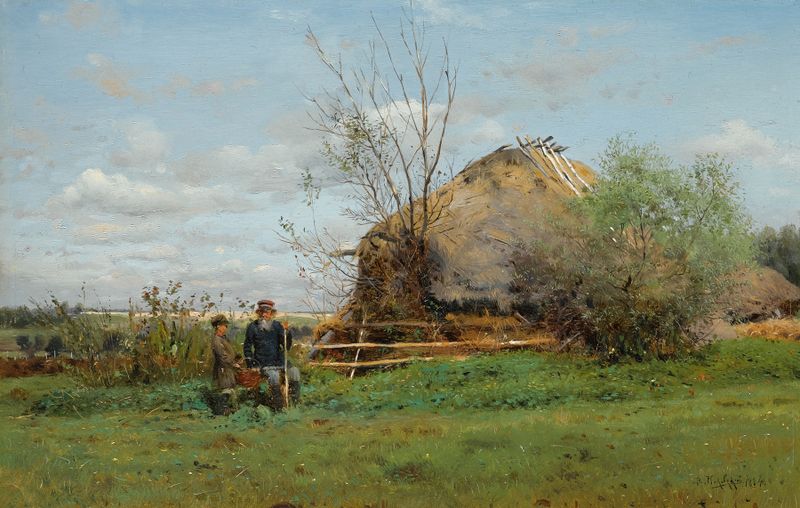
What secret hides in the quiet of the canvas? Behind the serene surface of Holzarbeiter am Ufer der Wolga, a deeper obsession simmers, revealing the unspoken connection between labor and community. Look to the left at the strong, sinewy figure of the woodworker, his hands rough with toil, contrasting against the delicate gestures of the women who surround him. Each stroke of paint captures the raw textures of their clothing and skin, and the warm earth tones speak of sweat and the weight of hard work under the golden light of afternoon. Notice how the diagonal lines of the riverbank lead the gaze toward the horizon, inviting viewers to ponder the endless cycle of labor and support that shapes this intimate moment. Beneath the harmony lies tension, as the woodworker's determined expression hints at an unrelenting commitment to his craft, overshadowed by the gentle yet persistent presence of the women, who embody both support and expectation.
This juxtaposition of strength and vulnerability creates a dialogue about gender roles and societal obligations at the time. The seemingly peaceful scene is a reminder of the sacrifices and hidden struggles that define communal life, forcing us to question what lies beneath the surface. In 1895, during a pivotal time in Russia’s socio-political landscape, Makovsky created this work while deeply engaged with themes of realism and social commentary. He was part of the Wanderers movement, which sought to depict the lives of ordinary people, reflecting the growing awareness of social issues in art.
This painting not only represents a moment but also a broader narrative of labor, connection, and the complexities of human experience on the banks of the Volga.