Woodworkers with horses on the banks of the Volga — History & Facts
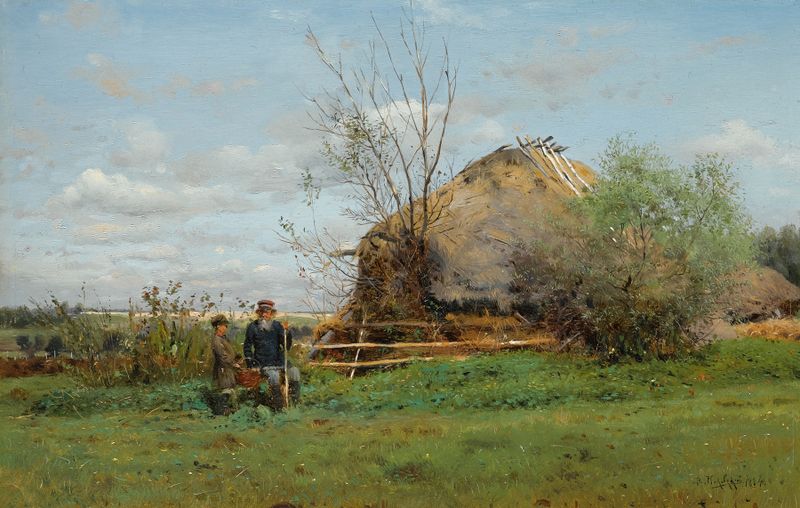
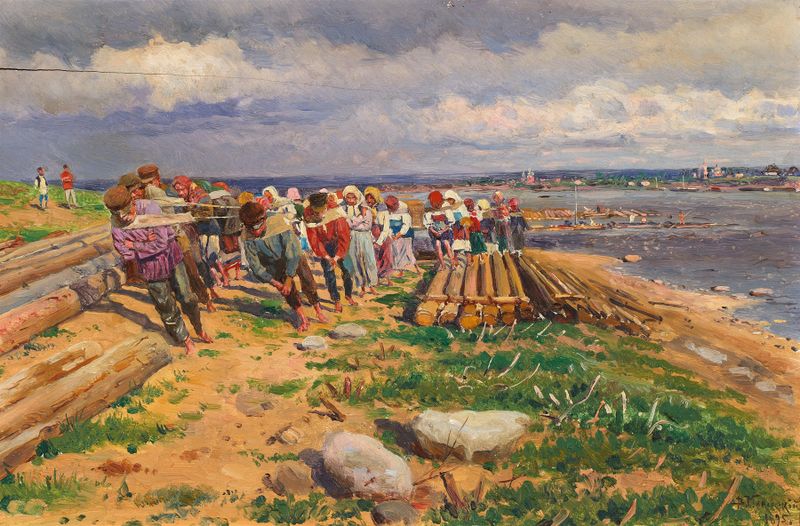
In the stillness of time, destiny breathes life into a moment that is yet to unfold. Each brushstroke tells a story, whispering of labor, tradition, and the quiet rhythm of nature that surrounds us. Focus on the two figures to the left, their sturdy forms contrasting against the gentle curve of the Volga’s banks. The rich browns and earthy greens dominate, grounding the scene in the solidity of their labor.
Notice how the light catches the horses’ glistening coats, illuminating their strength and vitality. The composition draws the eye in a tranquil dance, from the woodworkers to the serene river, evoking a sense of harmony in their shared purpose. As you delve deeper, consider the weight of their tasks against the backdrop of the flowing river. The harmonization of man, beast, and nature reflects a timeless bond, yet hints at the changes looming over society.
The subtle expressions on their faces suggest a mixture of pride and weariness, a silent acknowledgment of the shifting tides of progress and tradition. Created in 1895, this work emerged during a pivotal era for the artist, who was deeply immersed in depicting Russian life and folk culture. At this time, Makovsky was exploring the interplay of realism and sentimentality, reflecting a wider social consciousness as Russia grappled with industrialization. Such context enriches the canvas, revealing the artist’s understanding of a world straddling the past and a future yet unwritten.