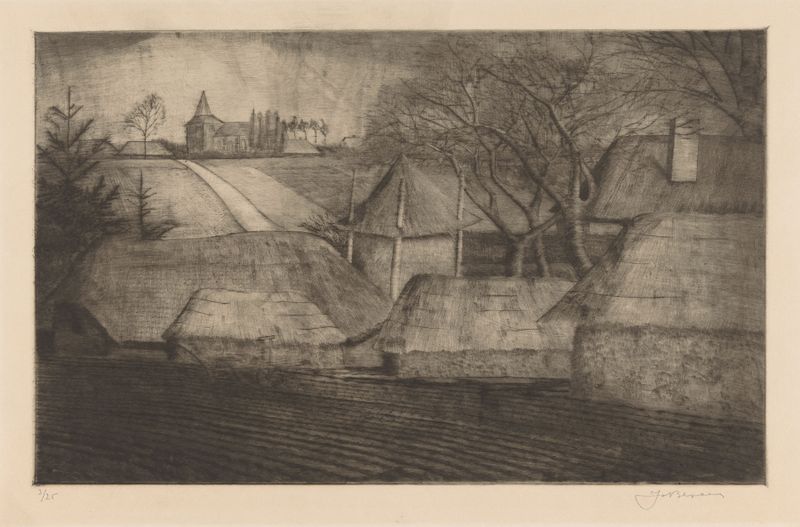
Hooischelf — History & Facts
In a time of upheaval and transformation, the canvas emerges as a sanctuary for the spirit, where revolution stirs not just in the streets but within the heart of the artist. Look to the center of the composition, where vibrant hues of red and gold clash with somber shades of gray. The figures, at once abstract and hauntingly familiar, seem to pulse with life as they twist and turn, caught in a dance of chaos and rebellion. Notice how light spills from the edges, illuminating the raw, expressive brushstrokes that form their bodies, creating a stark contrast that evokes both hope and despair. As you delve deeper, observe the small details that speak volumes.
The figures’ exaggerated gestures reflect a struggle for identity in a world that demands conformity. Each brushstroke conveys an emotional tension—passion against oppression, individuality against societal norms. The swirling lines and dynamic forms create a sense of movement, suggesting that the revolution is not merely external but an internal awakening, a redefinition of self. In 1929, Jo Bezaan crafted this work during a period of significant social change and artistic exploration.
Living in a post-World War I Europe, where traditional values were being challenged, he sought to capture the essence of personal and collective transformation. This piece emerged amidst the burgeoning movements of modernism, as the artist embraced new techniques to express the tumultuous spirit of his time.