
Horse cart in a dune landscape — History & Facts
The first thing to catch the eye in Horse cart in a dune landscape is the way the world seems to tilt beneath the heavy wooden cart, as if the land itself is in motion. The artist, Adriaen van der Cabel, sets the viewer on a sandy rise, where ruts in the earth pull your gaze up to a horse laboring against the slope. Three travelers huddle together in the cart, their faces shaded by broad hats and bonnets, while a dog sniffs the ground below, oblivious to the distant bustle.
The light, cool and gentle, pools in the clouds overhead and glances off the travelers’ clothing, hinting at a pause between journeys rather than a dramatic arrival or departure. To the right, men crouch by the water’s edge, their backs turned, while ships with pale sails anchor the horizon, their flags barely stirring. This work belongs to the world of the Dutch Golden Age, a time when painters found poetry in the everyday and landscapes became a stage for both human endeavor and nature’s quiet drama. Scenes like this—halfway between town and country, land and water—were prized by collectors who saw in them a reflection of their own society’s rhythms and ambitions.
Adriaen van der Cabel was active during the second half of the seventeenth century, a period when such landscapes were both fashionable and commercially successful. While little is recorded about the specific journey of this painting, now in the collection of the Nederlands Instituut voor Kunstgeschiedenis and dated between 1646 and 1705, its mood and motifs are unmistakably of its era. The next time you look, let your eye follow the cart’s path and wonder where these travelers might be bound.
More Artworks by Adriaen van der Cabel
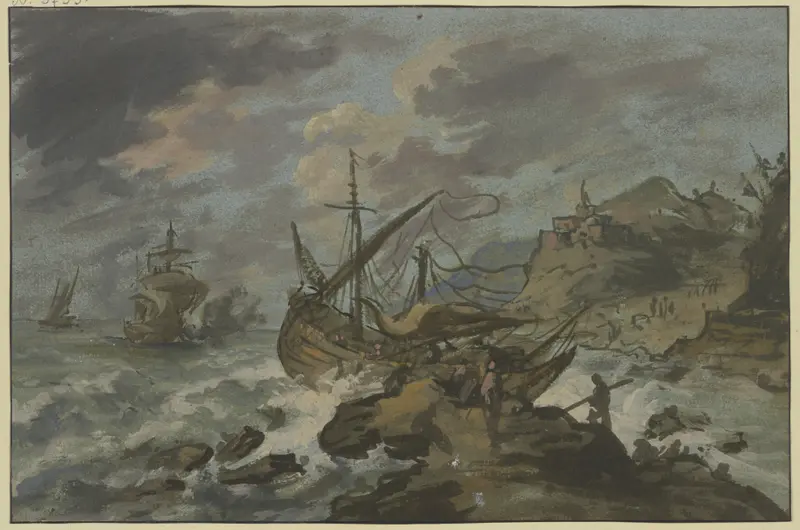
Seesturm an felsiger Küste, vorne ein gestrandetes Schiff
Adriaen van der Cabel
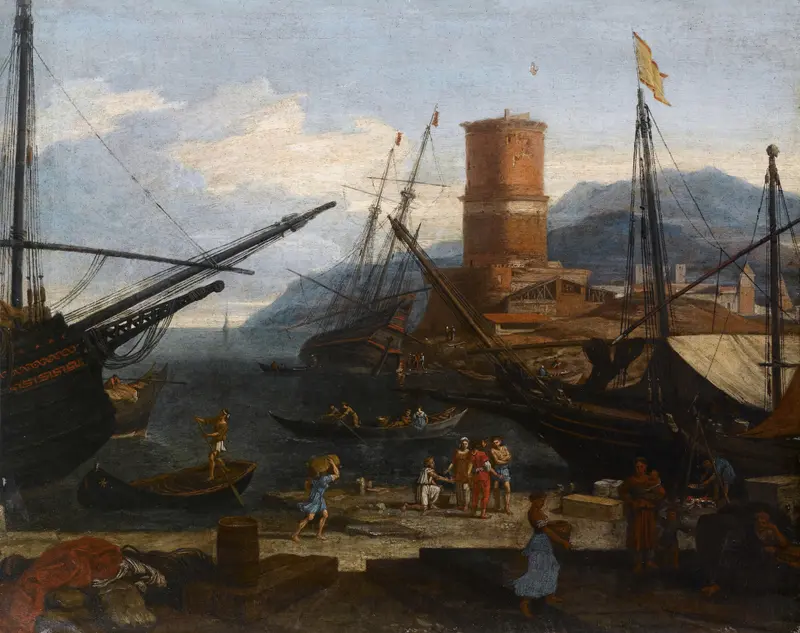
View of a southern port
Adriaen van der Cabel
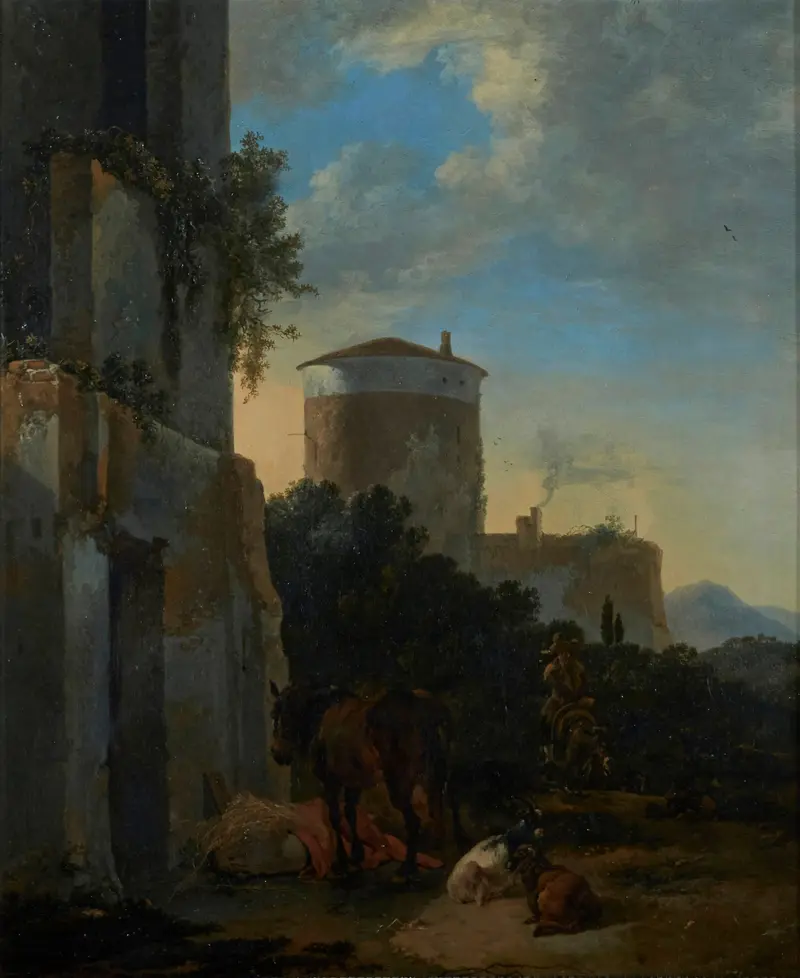
An italianate village street with a horse, goats, and man on a donkey
Adriaen van der Cabel
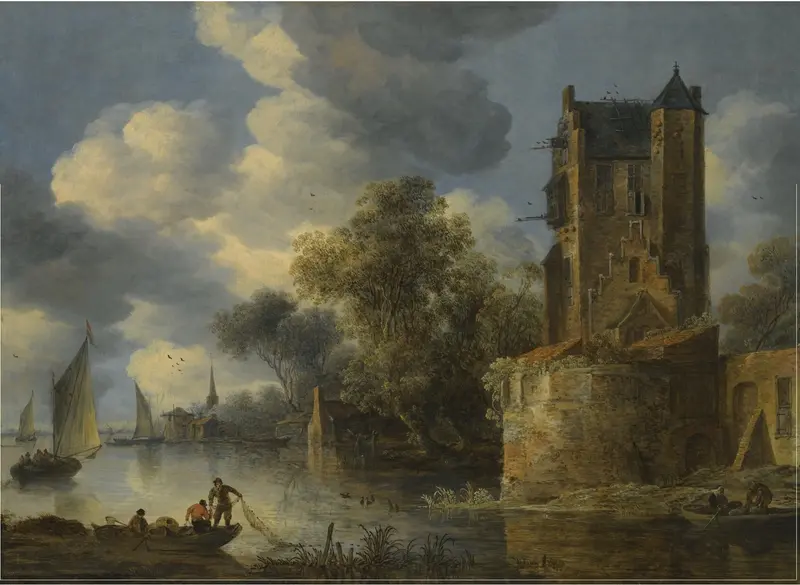
River Landscape with a Bastion
Adriaen van der Cabel
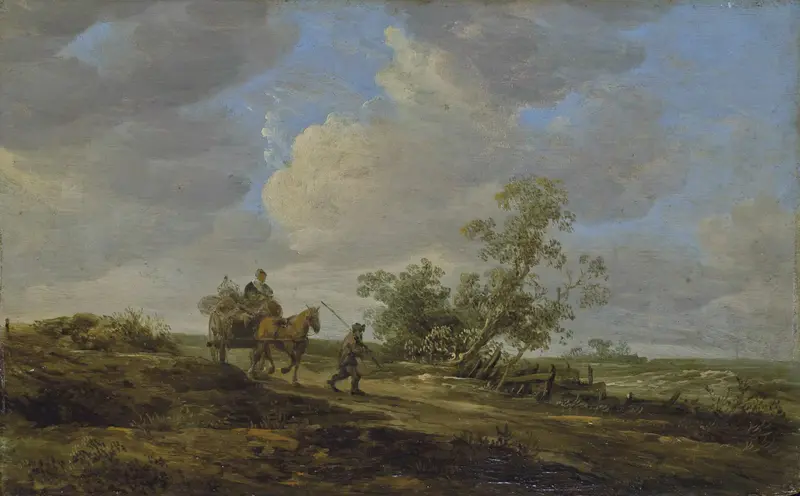
Farmer's cart on a road
Adriaen van der Cabel
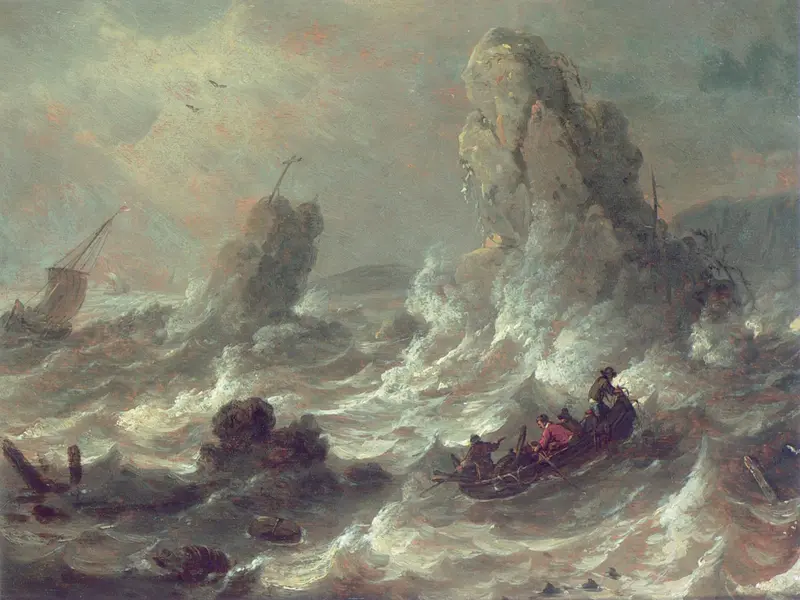
Stormy sea with some boats nearby cliffs
Adriaen van der Cabel
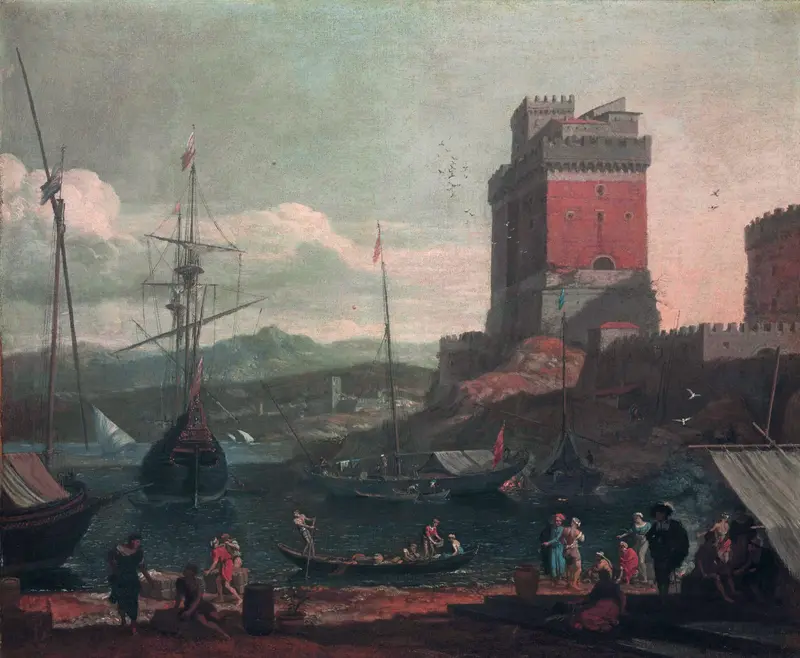
View of a Mediterranean harbor
Adriaen van der Cabel
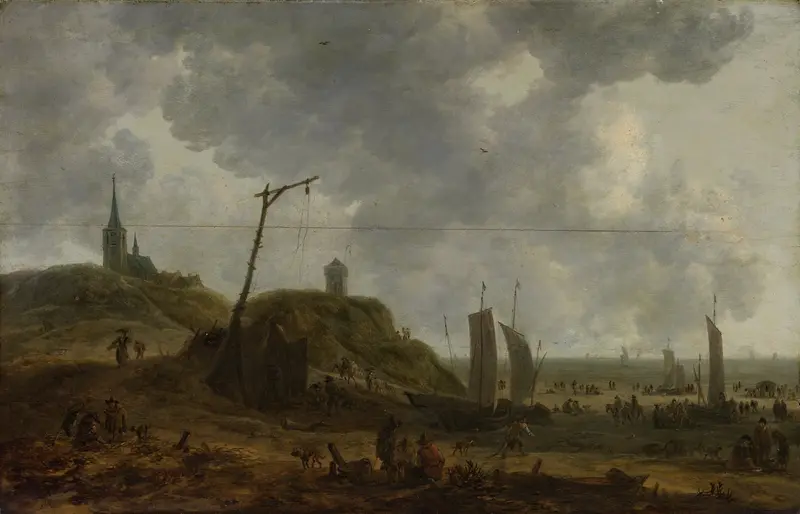
Beach at Katwijk
Adriaen van der Cabel
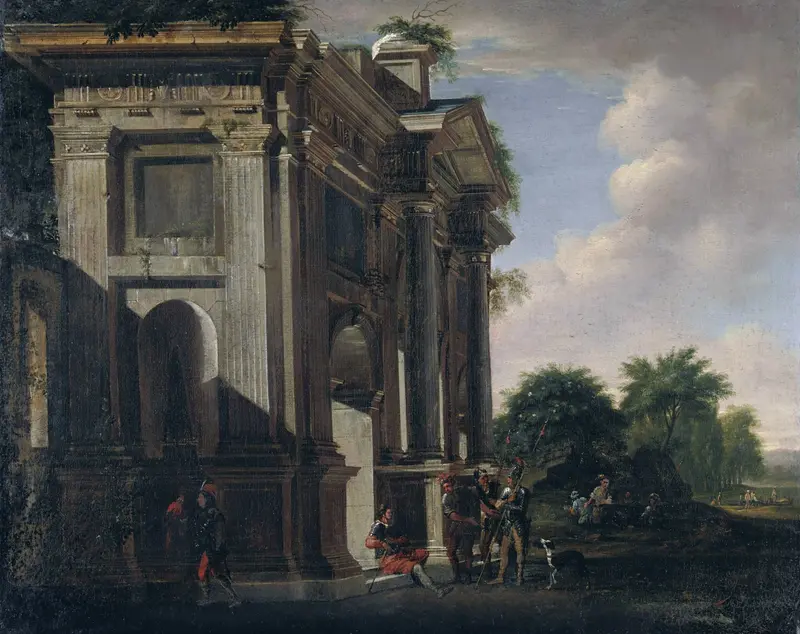
Caprice of a triumphal arch and soldiers
Adriaen van der Cabel
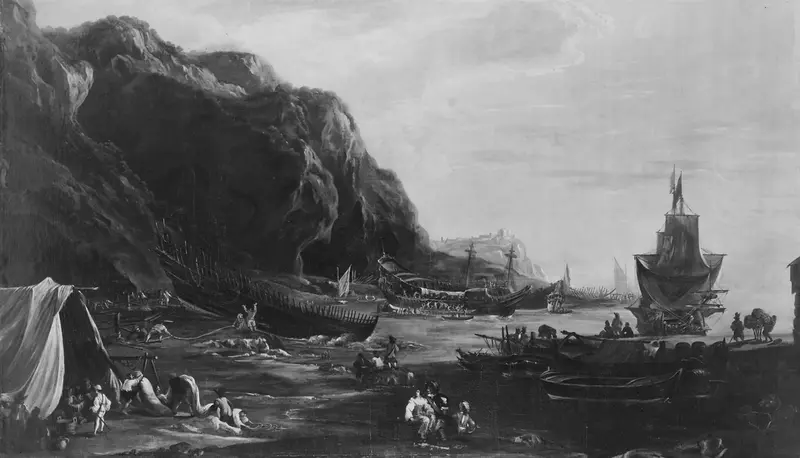
Adriaen van der Kabel Küstenlandschaft mit Hafenplatz
Adriaen van der Cabel
More Landscape Art

The Starry Night
Vincent van Gogh

View of Delft
Johannes Vermeer

Water Lilies
Claude Monet

The Grand Canal, Venice, looking north-west from the Ca' Corner to the Ca' Contarini degli Scrigni, with the campanile of Santa Maria della Carità
Canaletto

Windsor Castle
Canaletto

The Grand Canal looking North-East from the Palazzo Dolfin-Manin to the Rialto Bridge
Canaletto