
Horse market, Syria — History & Facts
Sunlight pours across the domed architecture and dusty square, drawing the viewer into a moment that feels both bustling and suspended. The eye is first caught by the gleaming white horse in the foreground, its handler pausing as if awaiting a verdict, while a swirl of figures negotiate, observe, and linger in the market’s lively current. The grand, timeworn façade anchors the scene, its pale stone and turquoise panels echoing the cloud-streaked sky above.
Each detail—the sellers’ wares, the relaxed posture of the seated man, the cluster of men in animated conversation—serves to conjure a day of commerce and encounter, where every gesture and glance is part of the market’s choreography. The palette, dominated by sun-bleached ochres and cool shadows, sets a tone of warmth and clarity, inviting the viewer to wander through the scene as if stepping into the square itself. Painted by Alberto Pasini around 1850, Horse market, Syria belongs to a world captivated by the allure and spectacle of the “Oriental” city. In the nineteenth century, European artists and collectors alike were drawn to scenes of daily life in the Ottoman East, eager for images that promised both documentary truth and exotic wonder.
Works like this were often commissioned by travelers or acquired by collectors fascinated by distant cultures, their accuracy sometimes shaped as much by imagination as by observation. While little is recorded about the specific journey of this painting, its presence in a digital collection today speaks to the enduring fascination with these cross-cultural encounters. Look again at the play of light on stone and skin, and consider how much of history’s traffic—of horses, people, and ideas—once passed through such sunlit spaces.
More Artworks by Alberto Pasini

Mercato in Oriente
Alberto Pasini
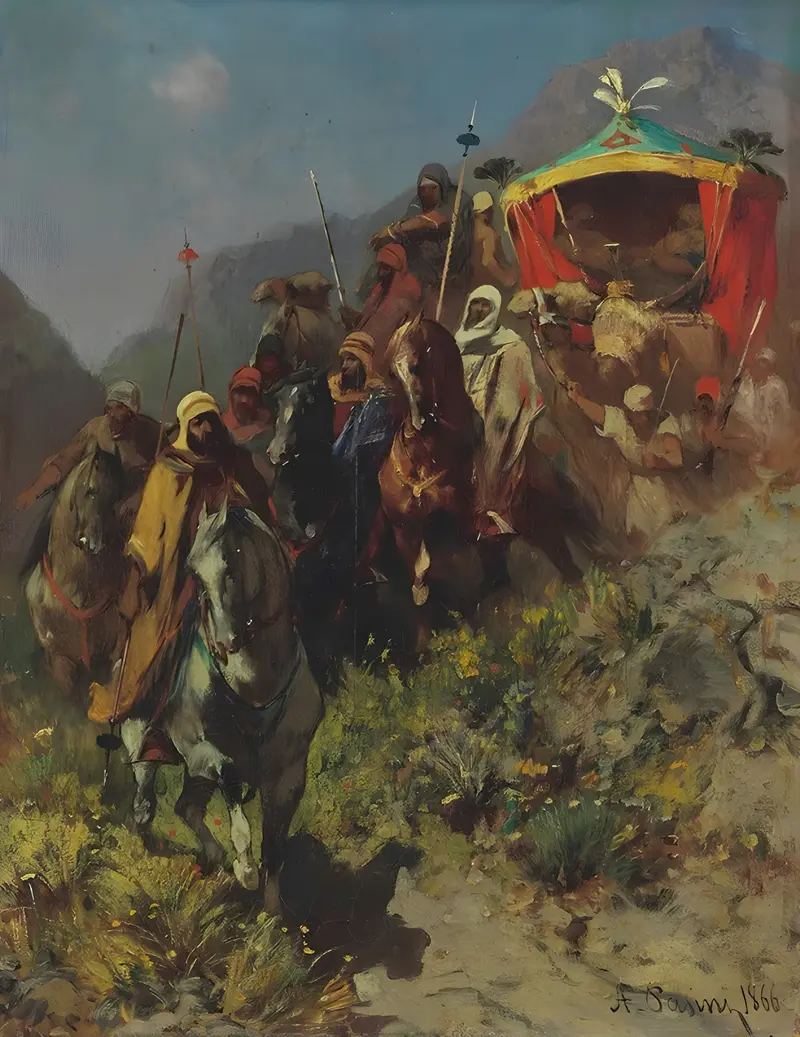
A Caravan on a Mountain Pass
Alberto Pasini

The blacksmith’s shop
Alberto Pasini
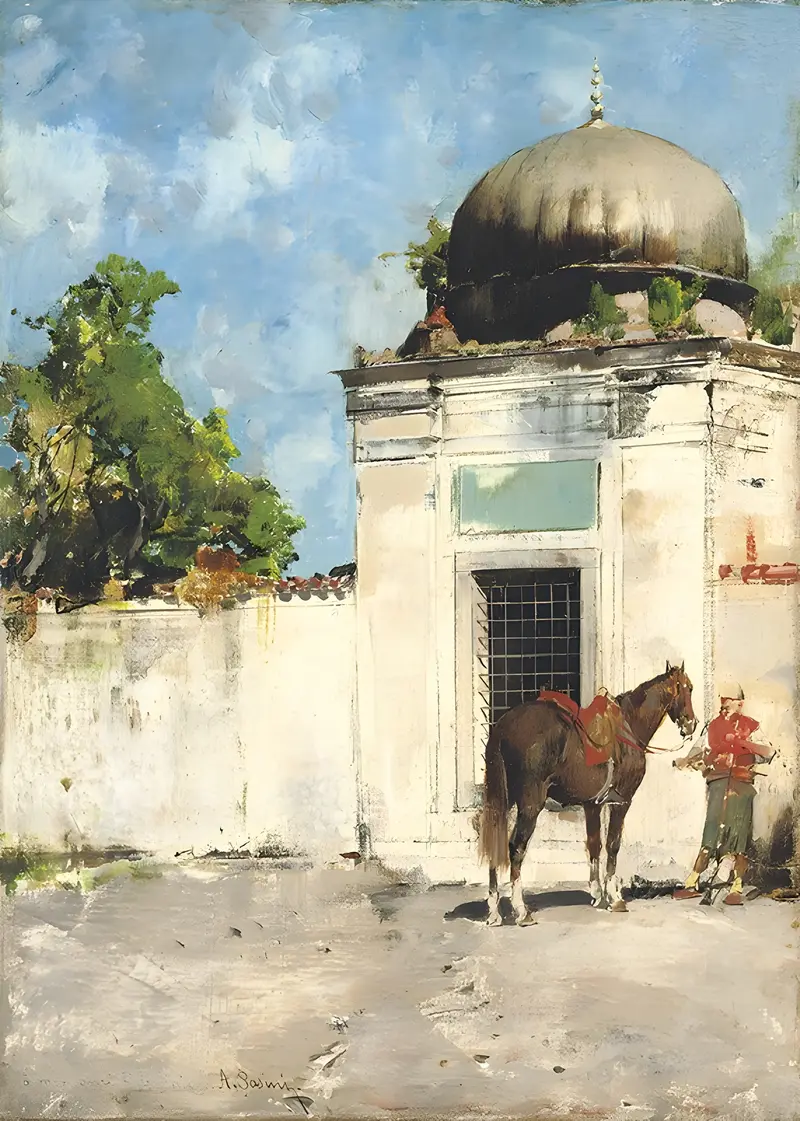
The Sentinel
Alberto Pasini
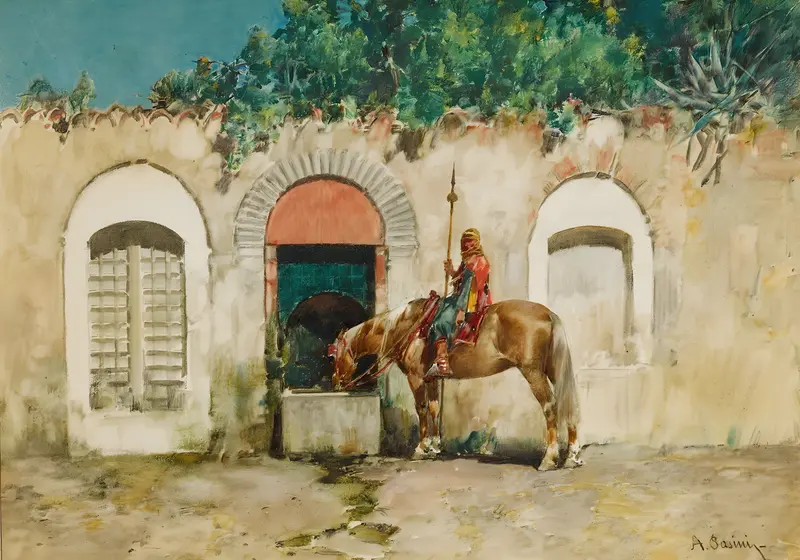
Horseman At A Fountain
Alberto Pasini
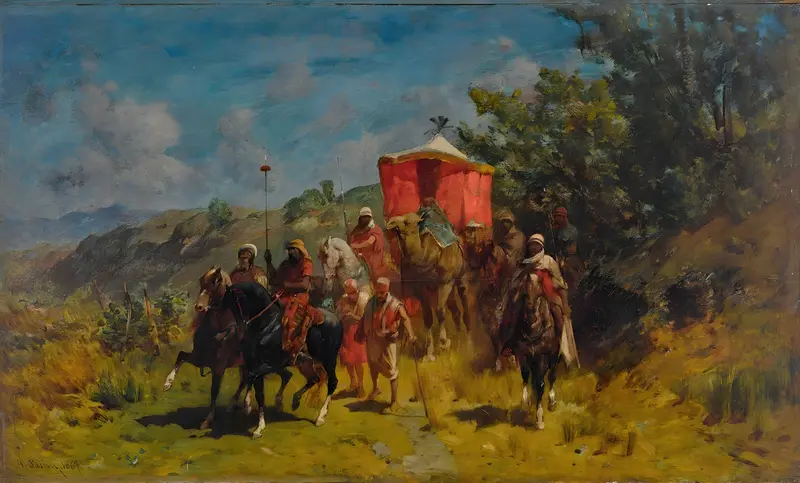
An Arab Caravan
Alberto Pasini
Mercato
Alberto Pasini
Arab merchants at a market by the city walls
Alberto Pasini
Outside the mosque
Alberto Pasini
Outside the Mosque
Alberto Pasini
More Genre Scene Art

Banquet of the Officers of the St George Civic Guard
Frans Hals

Rembrandt and Saskia in the Scene of the Prodigal Son
Rembrandt van Rijn

Bal du moulin de la Galette
Pierre-Auguste Renoir

Quadrille at the Moulin Rouge
Henri de Toulouse-Lautrec

A Burial at Ornans
Gustave Courbet

When Will You Marry?
Paul Gauguin