Hot Spring — History & Facts
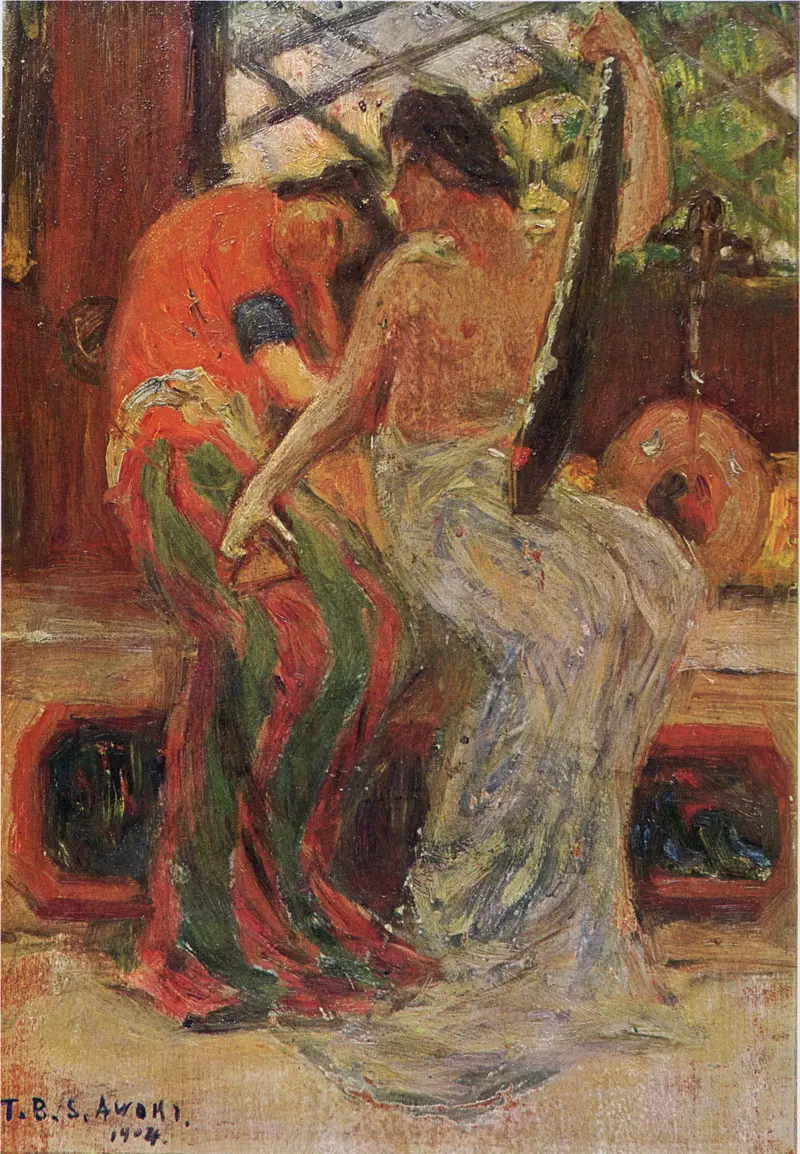
A figure stands in the filtered light of a lush, tiled bath, caught in the private act of combing wet hair. What draws the eye first is not just the nudity, but the sense of absorption: the subject’s gaze is inward, the gesture unhurried, as water from a spout ripples quietly at her feet. The patterned ceramics and vases behind her, with their deep blues and ochres, create a stage that feels both intimate and exotic, while the large white flowers overhead soften the scene with a dreamlike haze.
Every brushstroke seems to savor the play of water and skin, the way light glances off the body and is swallowed by the shadows of the bath. The palette is warm and humid, inviting the viewer to linger in the steam and silence. Painted in 1910, Hot Spring by Aoki Shigeru belongs to a moment when Japanese artists were absorbing and transforming Western painting techniques, merging them with their own traditions of beauty and everyday life. The era saw the rise of the yōga movement—Western-style painting in Japan—where artists explored new freedoms of subject and brushwork.
While little is recorded about the specific journey of this work, its presence in the 1972 collection 現代日本美術全集 7 青木繁・藤島武二 marks it as a piece of that restless, searching period. In the early twentieth century, scenes of bathing were both a nod to European art and a meditation on the rituals of modern life. The painting asks us to pause and look again, to notice the quiet drama of water, tile, and flesh in the changing light.