
Eric Layed Now — History & Facts
What first draws the eye in Eric Layed Now is not action, but a hush: a young man in dark, ornate dress lies prostrate, his head resting on the lap of a woman robed in luminous gold and blue. She sits on a marble bench, her posture languid yet regal, her face turned in dreamy contemplation, fingers idly tracing the air. The patterned cushions behind her and the mosaic underfoot set the stage—a world of patterned luxury, yet the mood is one of quiet surrender.
Dulac’s palette, all soft pastels and shimmering textures, turns the scene into a waking dream, where the boundaries between reverence, longing, and repose blur. The man’s gesture signals devotion or exhaustion, the woman’s a distant, gentle absorption; the space between them is filled with silent narrative. Painted in 1915 for The dreamer of dreams by The Queen of Roumania, this illustration belongs to the golden age of book art, when artists like Edmund Dulac transformed stories into visual jewels. Such works were often commissioned for deluxe editions, intended as treasures for collectors and gifts for the cultured elite.
Dulac, a master of the fantastical and the exotic, drew on the decorative traditions of Persian miniatures and the dreamy escapism prized in Edwardian England. History has kept few traces of the specific journey of this image, but its presence in the Harvard collection today is a testament to the enduring allure of illustrated tales. Let your gaze linger on the details—the trailing sleeve, the mosaic’s glimmer—and imagine the world of stories that once flickered behind these quiet figures.
More Artworks by Edmund Dulac
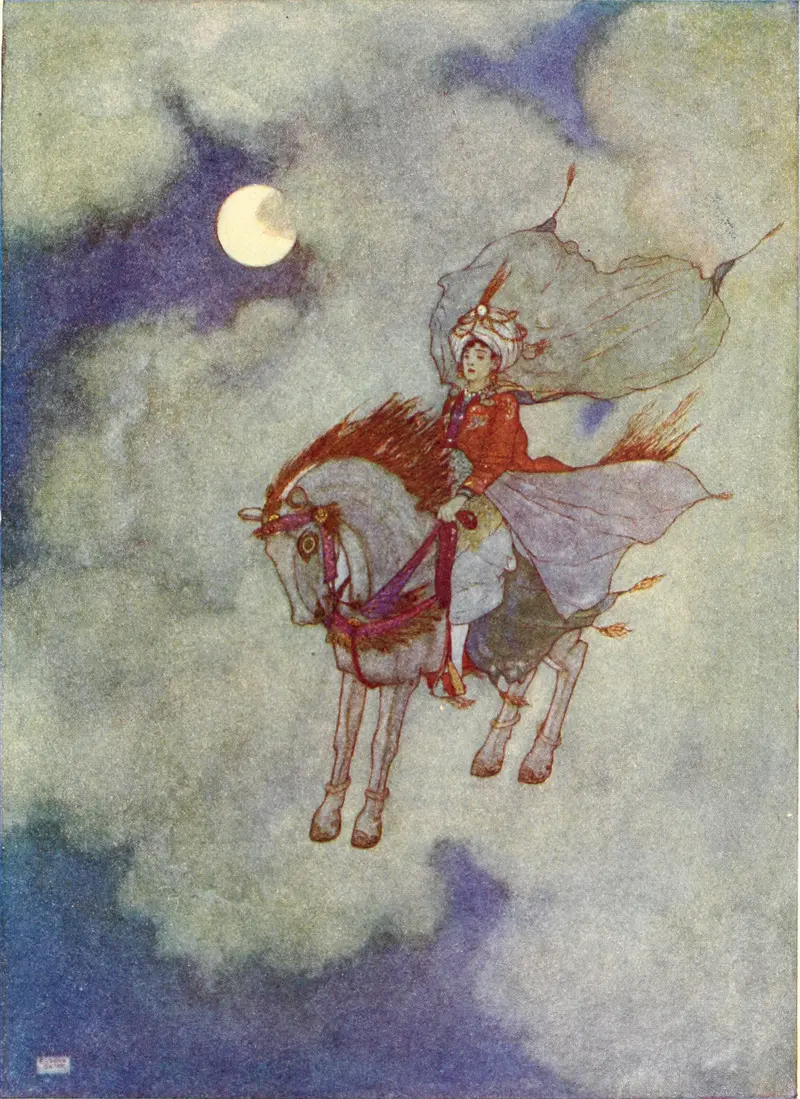
The Magic Horse: As He Descended, the Daylight Faded
Edmund Dulac
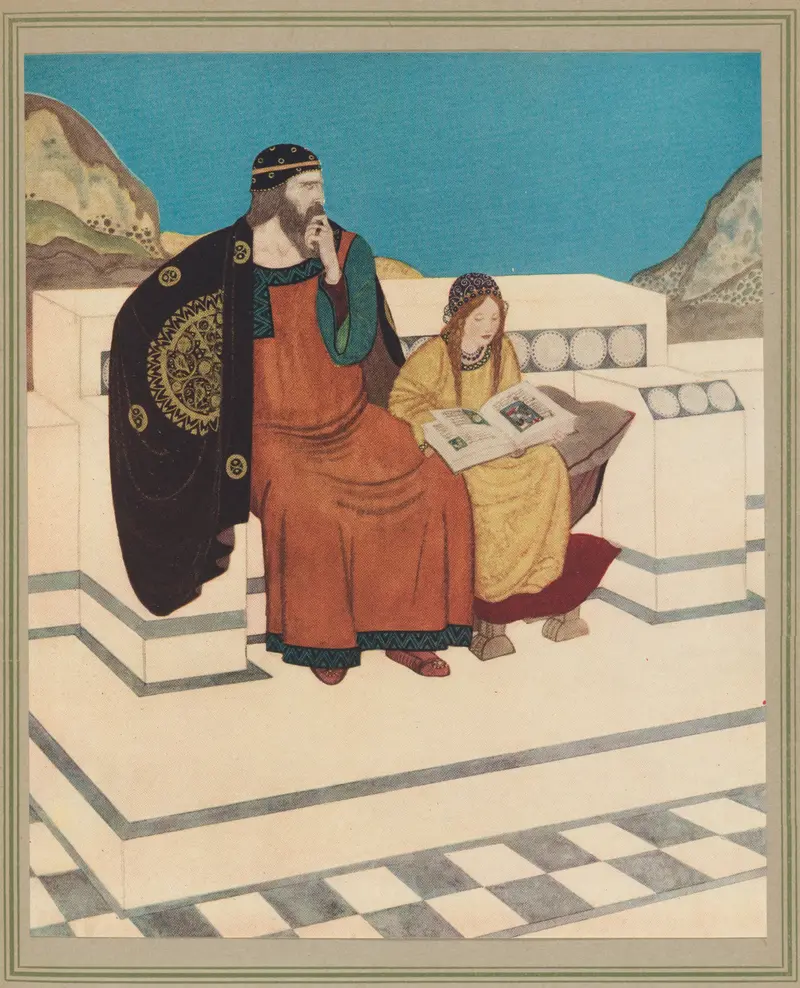
King Wanda Sat
Edmund Dulac
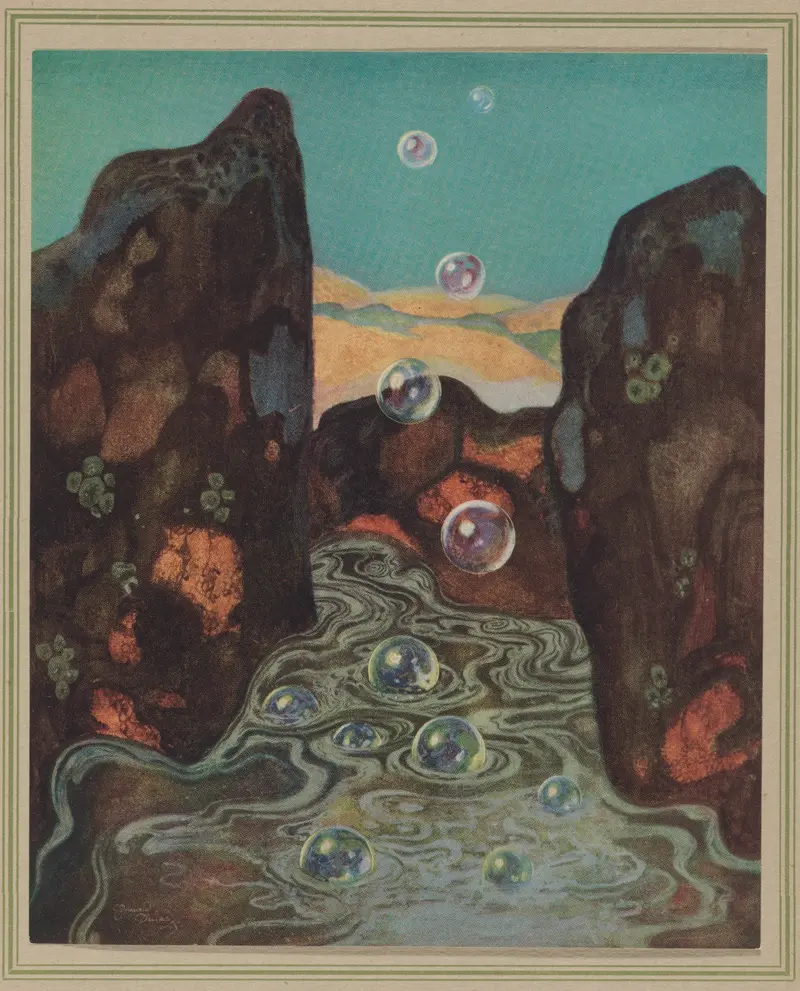
Miraculous Bubbles
Edmund Dulac
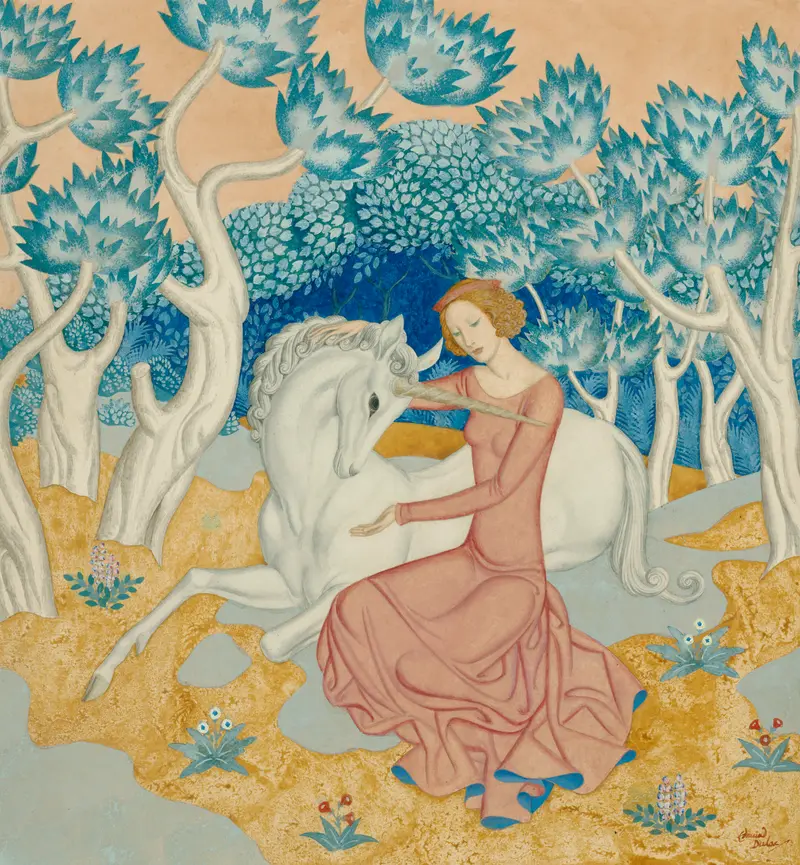
The Maid and the Unicorn
Edmund Dulac
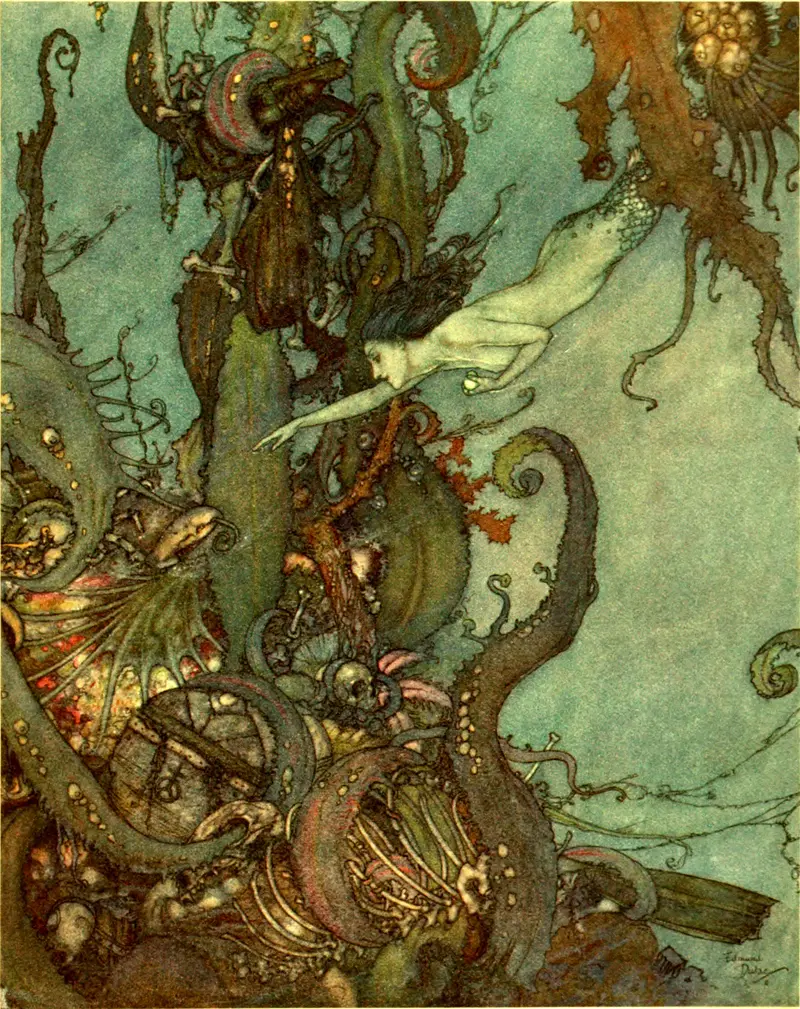
The Little Mermaid: At the Mere Sight of the Bright Liquid
Edmund Dulac

Urashima Taro
Edmund Dulac

And There Leaning
Edmund Dulac
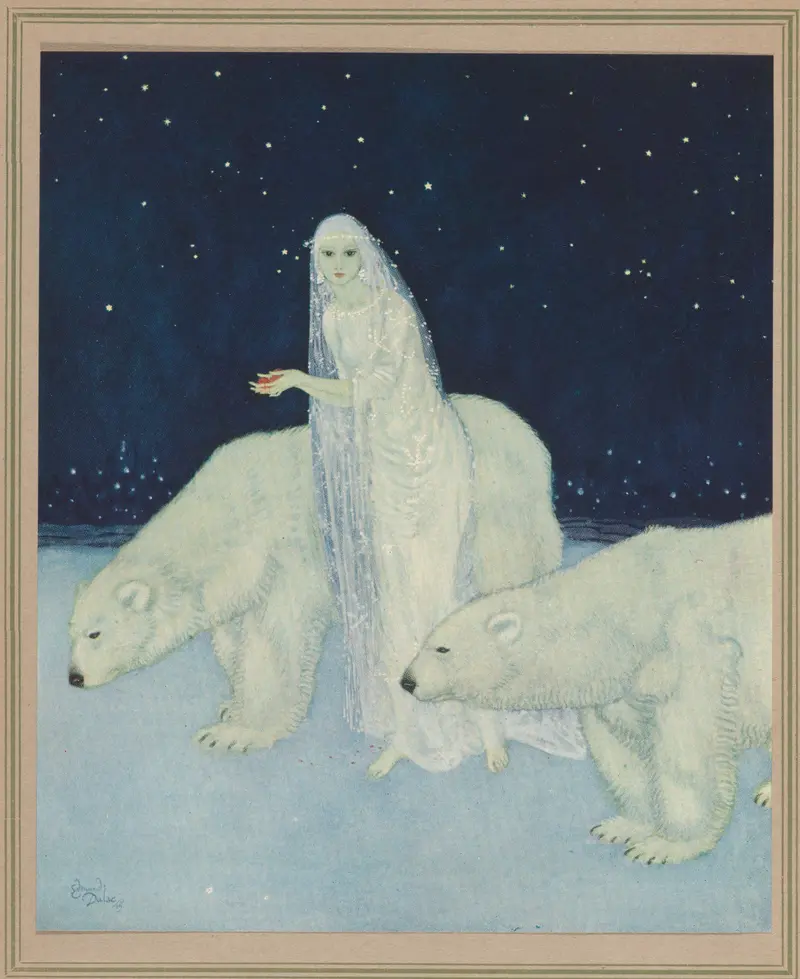
Everything About Her
Edmund Dulac
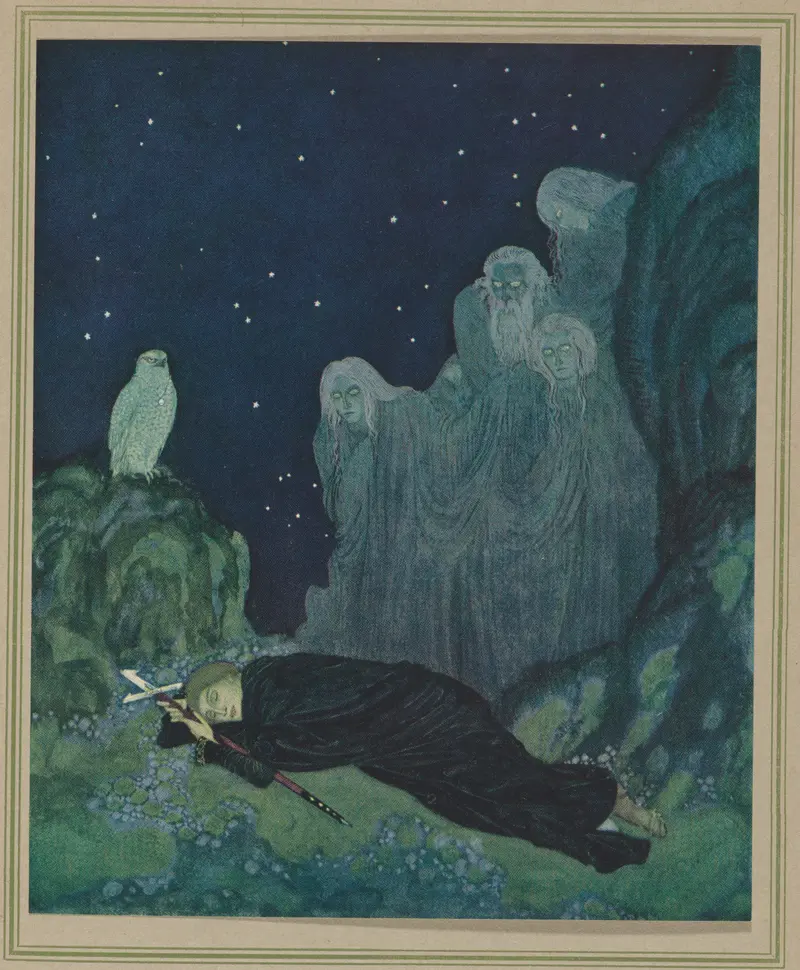
Circle Of Mist
Edmund Dulac
The Circle of Mist
Edmund Dulac





