Houses and Landscape — History & Facts
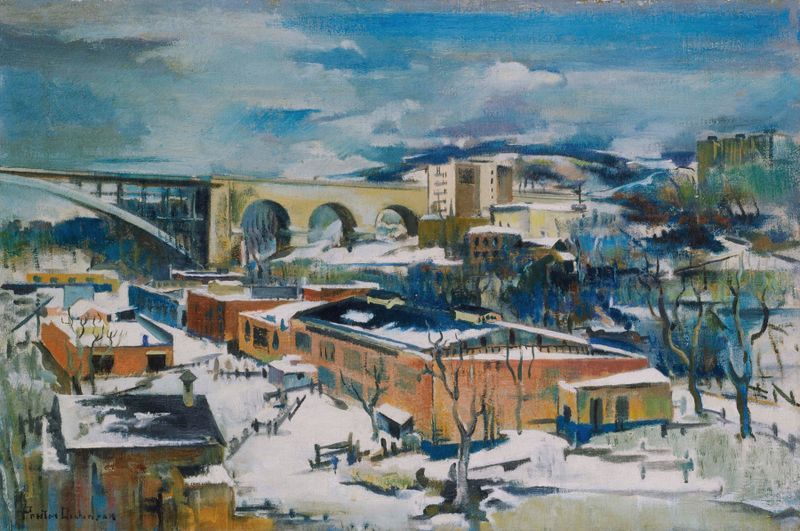
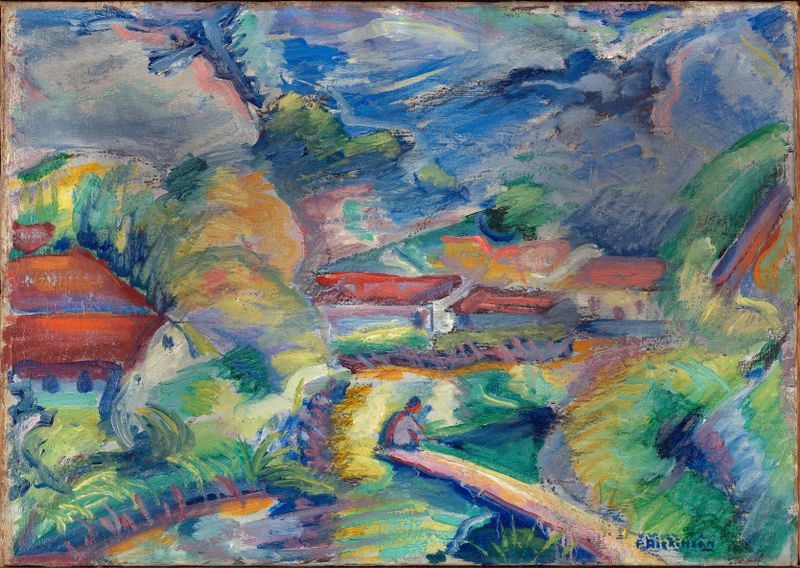
In the act of creation, one finds solace, a mirrored reflection of the world distilled into shapes and hues. Each brushstroke becomes a whisper, inviting the viewer to delve deeper into its narrative. Look to the left, where the earthy browns of the houses rise against the verdant green landscape. Notice how the angular forms of the buildings contrast with the gentle curves of the hills, creating a dialogue between stability and fluidity.
The muted palette, punctuated by touches of soft blue and amber, evokes a serene yet contemplative atmosphere, drawing you into a realm where time seems to pause. The composition balances structure and freedom, inviting exploration of each element within the frame. Within the quietude lies a complexity of emotions. The houses, seemingly solitary, suggest the isolation of existence, while the expansive landscape embodies an invitation to escape.
There’s a palpable tension between the man-made and the natural, reflecting the artist's contemplation of urbanization and the yearning for connection with the earth. This duality speaks to our own struggles, revealing both the beauty and burden of our choices. In 1918, the artist painted this piece during a time of great upheaval, just as the world emerged from the shadows of war. Living in New York, he was influenced by the vibrant modern art movements, grappling with both personal and societal transformations.
This work captures his exploration of place and identity, rooted in a moment when the act of creation became not just an expression but a necessity for understanding a complex reality.