The Hills — History & Facts
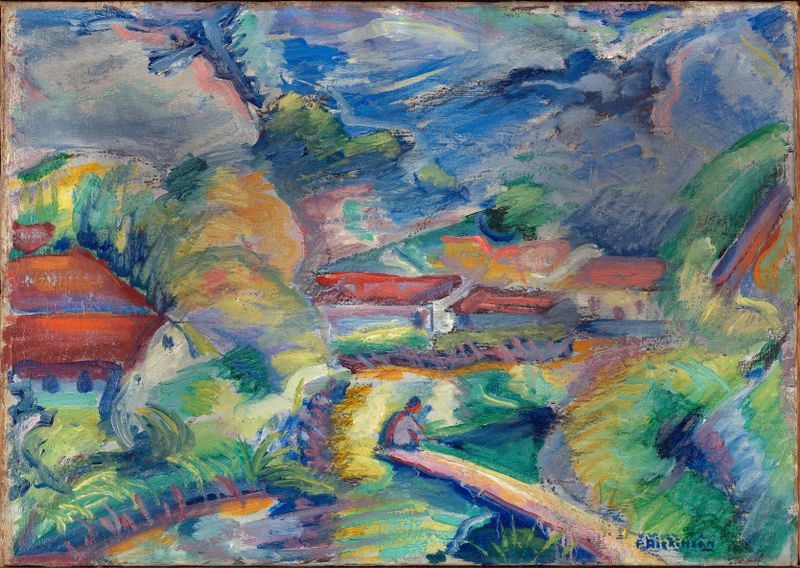
Who listens when art speaks of silence? In The Hills, the canvas resonates with a yearning that transcends time and space, inviting contemplation of the quiet moments we often overlook. Look to the horizon, where the undulating shapes of the hills meet the expansive sky, a symphony of muted greens and grays. Notice how the brushstrokes dance, flowing gently from one contour to the next, creating a sense of rhythm and movement that evokes both tranquility and solitude. The play of light across the landscape reveals subtleties; patches of sun break through the clouds, illuminating certain areas while casting others into shadow, enhancing the emotional depth of the scene. Within this serene vista lies a profound contrast between the stillness of the hills and the tumult of human experience.
The palette of cool, earthy tones suggests a somber reflection, while the gentle curves invite a deeper connection to nature. It is as if the land itself holds secrets, whispering stories of longing to those who pause to listen. The quietude of the setting speaks to a universal yearning for peace in a world that often feels dissonant and chaotic. Created in 1919, this work emerges from a period of significant change for its creator.
Preston Dickinson painted during a time when the art world was embracing modernism, shifting away from traditional representations. He captured the essence of the American landscape at a moment when artists were beginning to explore abstraction and emotional resonance, reflecting the shifting tides of both the art movement and the broader societal landscape in the aftermath of World War I.