Winter, Harlem River — History & Facts
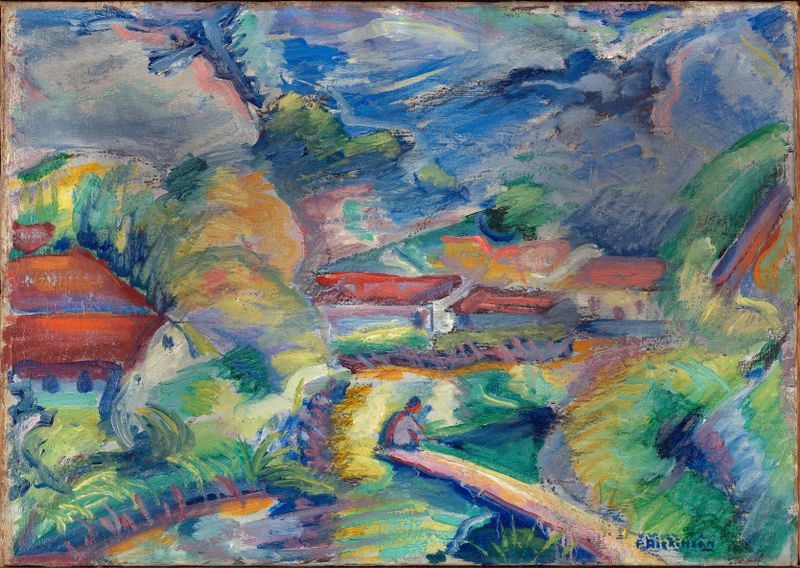
This sentiment encapsulates the transformative power of color in art, where hues dance and clash to evoke emotion and memory. Focus first on the vibrant blues and whites that dominate the canvas, a striking portrayal of a wintry Harlem River. Notice how the swirling strokes suggest movement, as if the wind itself is breathing life into the frozen scene. The artist's bold use of color captivates the eye, creating a visual rhythm that pulls you deeper into the landscape, inviting contemplation of the stark beauty of winter. As your gaze wanders, you'll uncover a world of contrasts: the shimmering icy surface juxtaposed against the deep, brooding clouds.
The interplay of light and shadow hints at an underlying tension, perhaps a reflection of the human condition in the midst of nature's quiet majesty. This juxtaposition speaks to the fleeting moments of beauty amid an indifferent landscape, evoking a sense of solitude and peace. Created during the vibrant yet tumultuous early 20th century, the artwork emerged as the artist navigated the complexities of urban life and modernity. Dickinson produced this piece amidst a blossoming art scene in New York, where the Harlem Renaissance began to shape cultural narratives.
His exploration of color and form reflects not only personal introspection but also a broader dialogue about the evolving identity of American art during this transformative period.