Industry — History & Facts
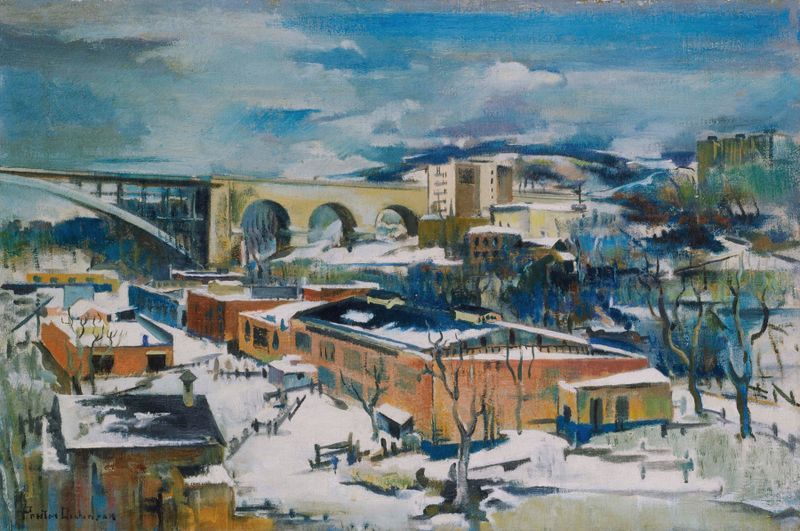
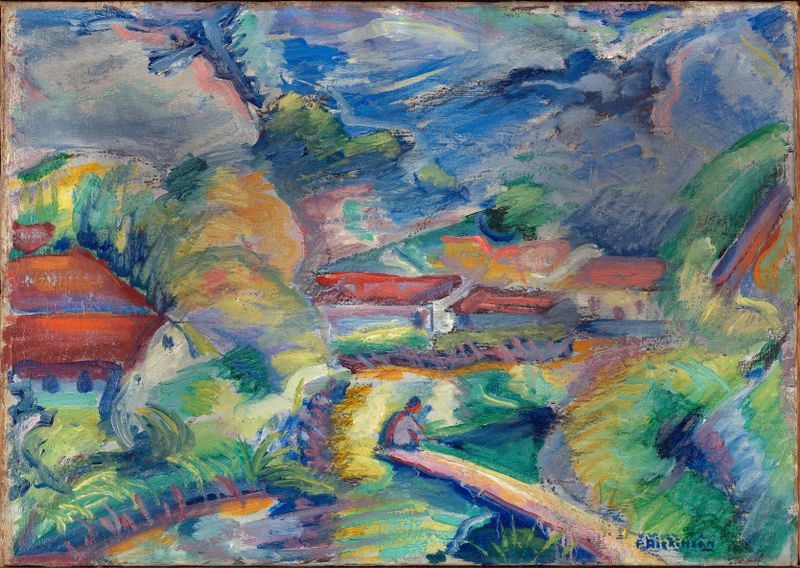
In the midst of mechanical chaos, serenity whispers through the layers of color—an eloquent reminder of life's quiet pulse beneath the clamor. Look to the center of the canvas, where a gentle blend of blues and greens creates a tranquil sky, contrasting sharply with the jagged silhouettes of smokestacks that stretch upwards. Notice how Dickinson employs bold, sweeping brushstrokes, inviting the viewer’s eye to flow across the surface, weaving through the industrial landscape with an unexpected sense of grace. The warm light dapples the scene, highlighting the edges of machinery while casting long shadows that speak to the relentless march of progress. In this work, the juxtaposition of nature and industry unfolds a narrative of coexistence.
The serene color palette evokes a feeling of calm amidst the turmoil of the factories, suggesting that even in the heart of an industrial epoch, there is beauty to be found. Furthermore, the deliberate placement of the horizon implies a dialogue between the earth and human endeavor, as if nature gently reminds us of her enduring presence, despite the encroachment of man-made structures. Created in 1923, during a period marked by rapid industrialization in America, this piece reflects the artist’s contemplation of a changing world. Dickinson was deeply influenced by the bustling energy of urban environments, yet he sought to capture the quiet moments that often go unnoticed.
As the art world began to embrace modernism, he carved a niche that harmonized the tension of innovation with the tranquility of the natural world, forging a unique visual language.