Untitled Landscape — History & Facts
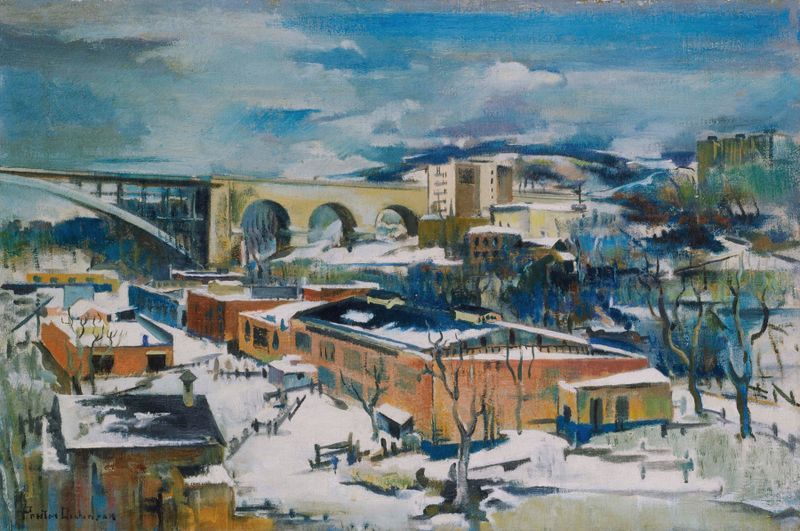
In the delicate embrace of an untitled landscape, fragility spills across the canvas, revealing not just a scene, but an emotion that lingers long after the gaze has shifted. Focus on the gentle undulations of the hills, where muted greens and browns whisper secrets of the earth. Notice how the soft brushstrokes create a sense of movement—clouds drift lazily, while the horizon melts into a hazy line. The interplay of light and shadow invites the eye to dance across the canvas, capturing the fleeting nature of time and memory.
Each hue is expertly blended, suggesting that every element, no matter how small, contributes to the overall breath of the landscape. Yet within this serene portrayal lurks an underlying tension. The palette holds a melancholic quality, hinting at loss, while the stillness suggests a moment suspended—perhaps caught between what was and what might be. The absence of figures amplifies the feeling of solitude, raising questions about the stories that the land has witnessed.
In its essence, the canvas becomes a mirror for our own fragility, reflecting our connection to nature and the quiet truths we often fail to acknowledge. Painted in 1918, the year the world emerged from the shadow of World War I, the artist was grappling with a transformative period in both his personal life and the broader art world. Reviving a traditional landscape style amidst the rise of modernism, he sought to convey depth through simplicity, capturing the resilience of nature even as humanity faced uncertainty. In this untitled work, he encapsulated a fragile beauty that resonates through time.