
Hôtel passage Charlemagne — History & Facts
In a world where shadows dance and form fleeting connections, the interplay of light and dark reveals the hidden stories of urban life. Focus on the delicate interplay of light that illuminates the cobblestone street, where the soft glow creates a contrast against the enveloping shadows. The viewer's eye is drawn to the subtle reflections in the rain-slicked pavement, where the figures of passersby seamlessly merge with their surroundings. The warm palette of ochres and browns evokes a nostalgic atmosphere, while the architectural lines of the buildings lead the gaze upward, inviting contemplation of both structure and space. Beneath the serene exterior lies a tension between solitude and community.
The solitary figure in the foreground, shrouded in shadow, embodies the silent struggles of city life, while the illuminated areas suggest fleeting moments of connection. Elements like the open doorway in the background hint at stories untold, evoking a sense of curiosity about those who dwell within. Each brushstroke conveys a depth of emotion, transforming the chaotic nature of urban existence into a harmonious tableau. Created in 1866, the work reflects Delauney’s time in Paris—a city undergoing rapid transformation and modernization.
His embrace of light and shadow during this period aligns with the broader Impressionist movement, which sought to capture the ephemeral qualities of everyday life amidst a backdrop of societal change. As Delauney navigated this shifting landscape, he found ways to express the profound beauty hidden within the ordinary.
More Artworks by Alfred Alexandre Delauney
Browse all →
Eglise St-Etienne du Mont, côté nord
Alfred Alexandre Delauney
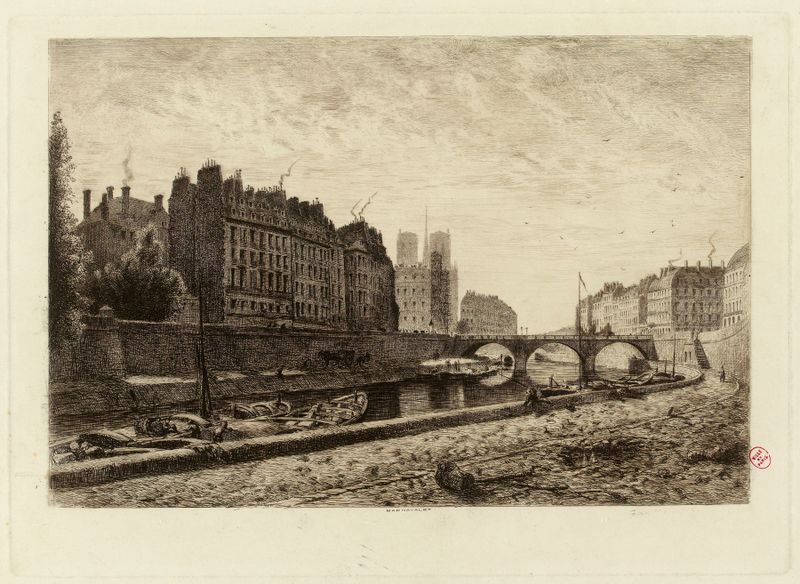
Pont St-Michel
Alfred Alexandre Delauney

Ancienne poterne du Palais de Justice, quai des Orfèvres
Alfred Alexandre Delauney
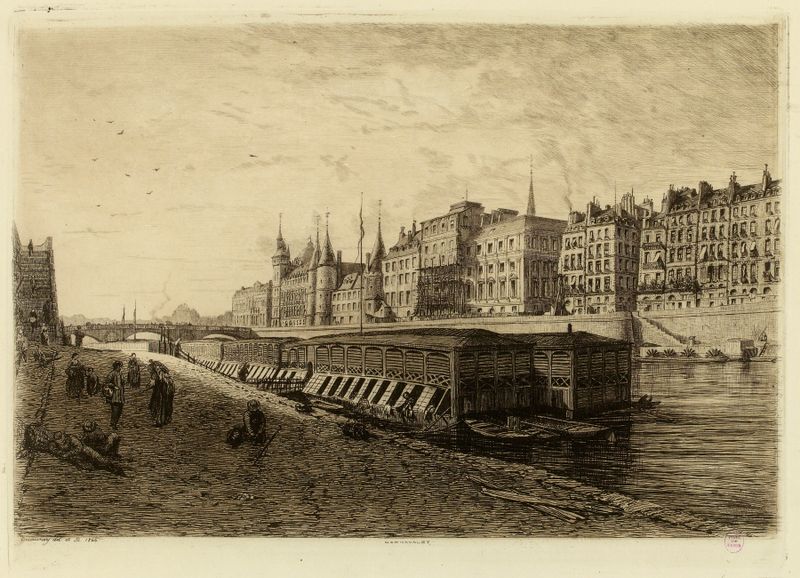
Quai de l’Horloge
Alfred Alexandre Delauney
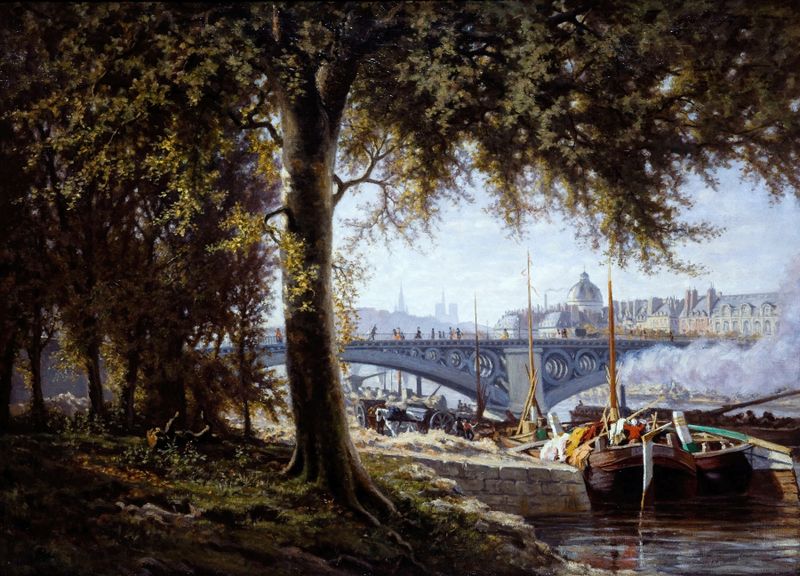
Le Pont des Saints-Pères
Alfred Alexandre Delauney

Pont-Neuf et quai Conti
Alfred Alexandre Delauney
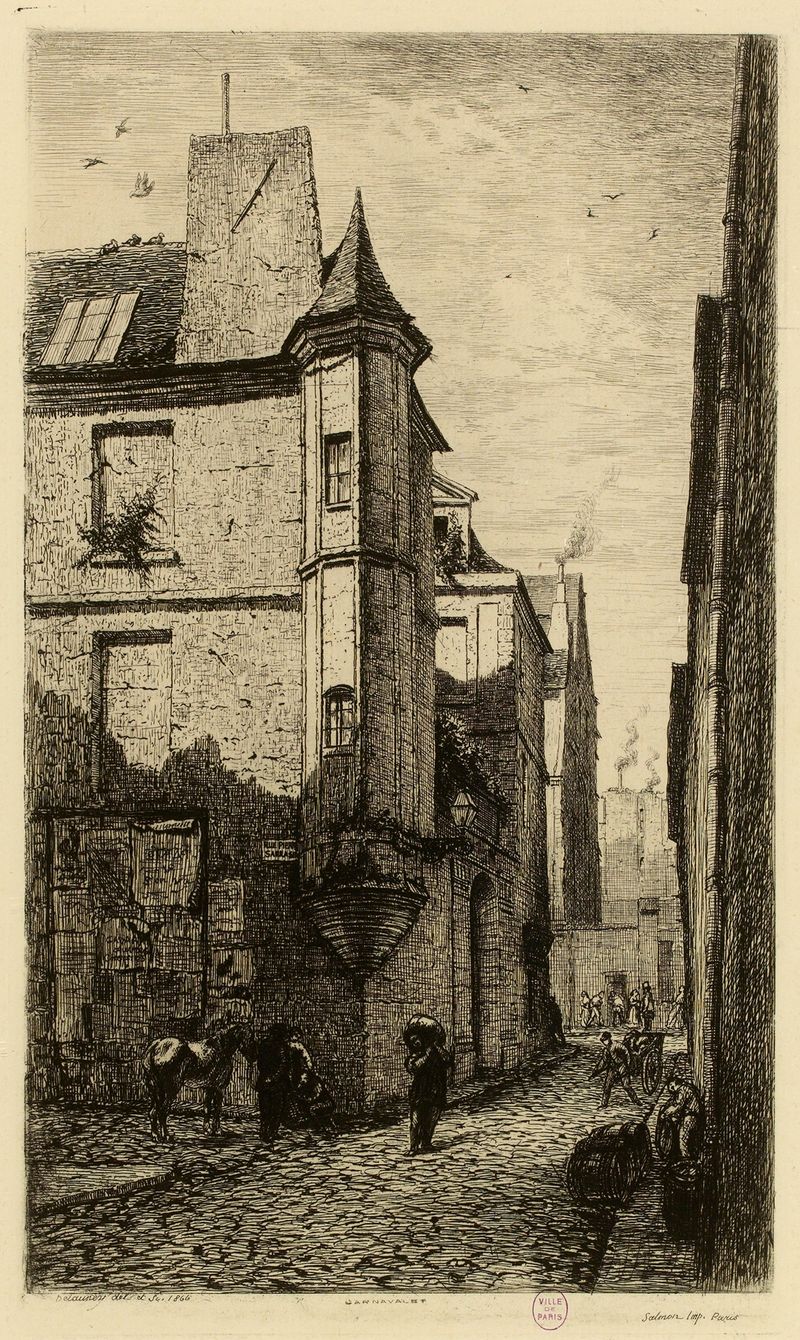
Tourelle rue Hautefeuille
Alfred Alexandre Delauney
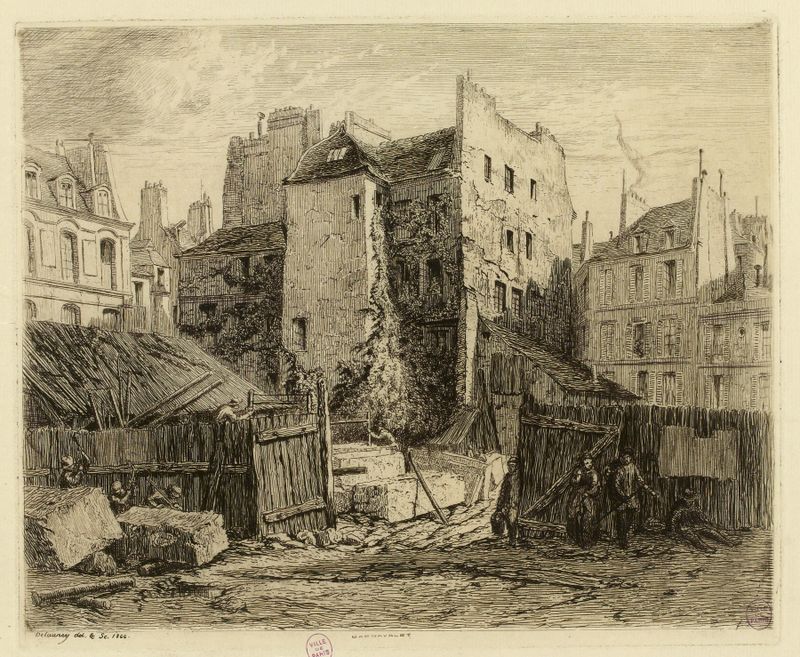
Maisons rue du Cloître Notre-Dame
Alfred Alexandre Delauney
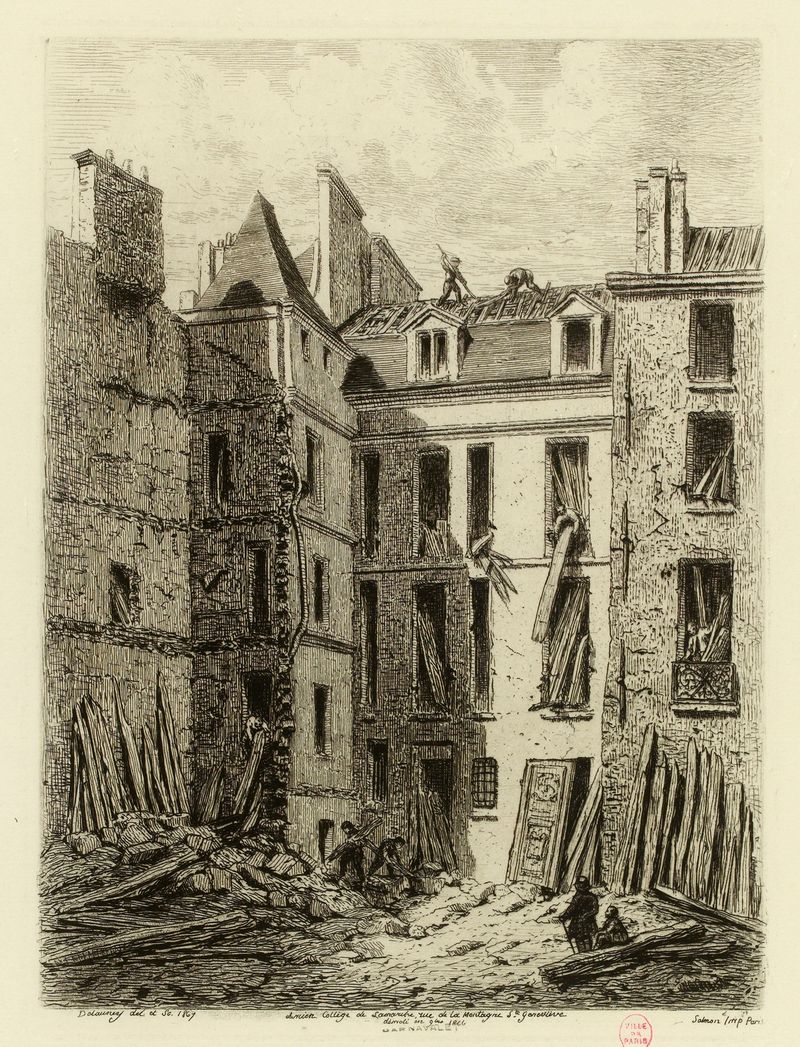
Ancien collège de Lamarche rue de la Montagne Ste-Geneviève, démoli en octobre 1866
Alfred Alexandre Delauney

Rue Grenier sur l’eau à Paris
Alfred Alexandre Delauney





