Hütte auf einer Waldhöhe — History & Facts
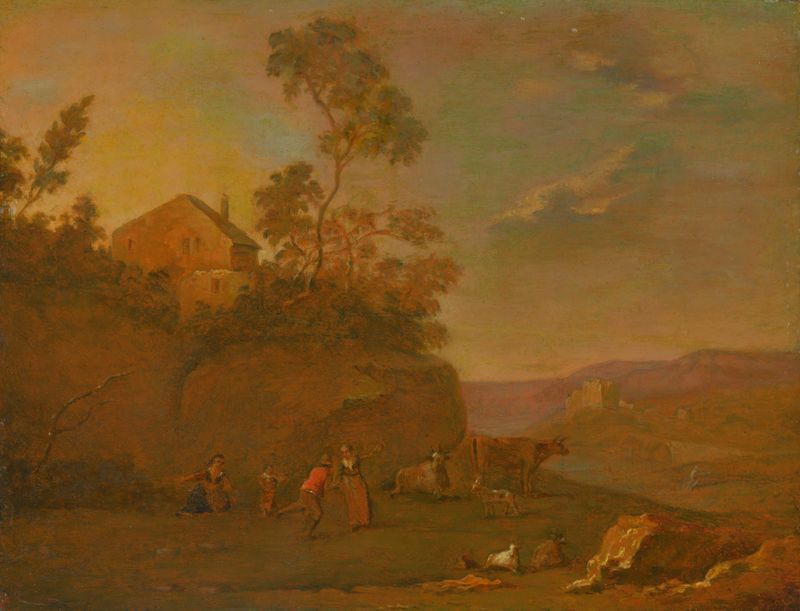
It holds a mirror to the soul, reflecting a quiet melancholy that lingers like a distant echo. In the stillness of the painted forest, a solitary hut stands resilient, a testament to the passage of time and the whispers of nature. Look to the left at the humble structure nestled among tall trees, half-obscured by dense foliage. Soft greens and muted browns envelop the scene, while dappled light filters through the leaves, casting gentle shadows that dance beneath the eaves.
The composition draws the eye inward, suggesting both refuge and isolation, a balance captured with deft brushwork that evokes both warmth and solitude. Notice the intricate details — the worn texture of the hut's wood, the subtle fading of its color, and the encroaching underbrush that hints at nature reclaiming its space. The horizon stretches beyond, a reminder of the vast world outside, while the stillness of the foreground invites contemplation. This tension between the shelter and the wilderness speaks to the human condition, where comfort exists alongside a persistent yearning for belonging. Norbert Joseph Carl Grund created this work in 1760, amidst a Europe steeped in the aftermath of the Enlightenment.
As the art world began to explore themes of nature and emotion, Grund found himself at the crossroads of tradition and innovation. The painting reflects not only his personal journey as an artist but also the broader cultural movement towards appreciating the sublime beauty of the natural world, and its inherent truths.